Santa Barbara short-term rental ban to cut coastal tax-paying units to 65
The city council approved an ordinance that staff estimates will reduce coastal tax-paying units from 265 to 65, causing a transient occupancy tax drop of up to $3 million.

An estimated 65 units paying transient occupancy tax will remain in the coastal zone of Santa Barbara once a newly approved short-term vacation rental ordinance is implemented, according to city staff. The Santa Barbara City Council voted unanimously on Tuesday to approve the new regulations, which will prohibit whole-house short-term rentals in all inland residential zones and high-fire-risk areas while heavily restricting them in coastal neighborhoods.
The sweeping policy change represents a major shift in how the city regulates residential vacation rentals listed on platforms like Airbnb and Vrbo. While the inland rules are scheduled to take effect early next year, the coastal regulations must first undergo a review by the California Coastal Commission before they can be implemented.
What the data shows
Staff estimates show that implementing the ordinance in the coastal zone will reduce the 265 units currently paying transient occupancy tax to an estimated 65 units. This reduction represents a significant contraction of the legal short-term rental market in the city's coastal strip. The reduction in active, tax-paying units directly translates to a projected fiscal loss for the municipal government. According to city staff, the drop in transient occupancy tax revenues is estimated to range between $2.3 million and $3 million. These taxes are paid by guests staying at hotels, motels, and short-term rentals within the city limits.

The data also shows a strict geographical divide in where short-term rentals can legally operate. Under the approved ordinance, short-term rentals are prohibited in all inland residential zones and high-fire-risk areas. They are allowed only in non-residential zones or mixed-use residential zones. These permitted areas include the downtown corridor, the Milpas Street corridor, and Upper State Street.
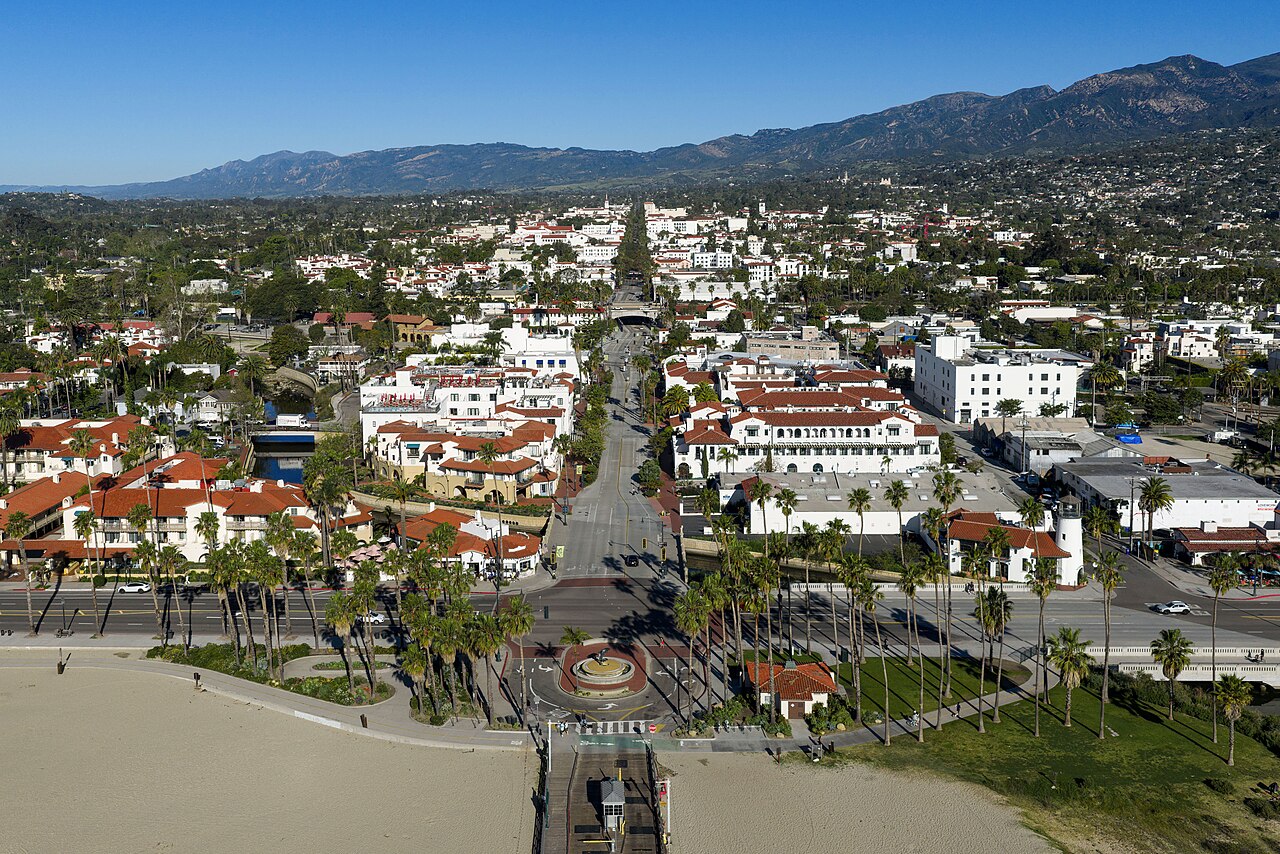
In contrast, homeshares—where a guest rents an individual room with the owner present on the property, rather than renting the entire house—will be allowed in all residential and non-residential zones of the coastal zone. The coastal zone includes the waterfront, the Funk Zone, and the Coast Village Road area.
The ordinance also mandates a two-night minimum stay for all permitted short-term rentals. This rule is expected to affect booking patterns, as local operators have noted that a portion of their current business relies on single-night stays.
How it was measured
The figures regarding unit counts and tax revenue projections were produced by Santa Barbara city staff and presented to the City Council during the meeting. The estimate of 265 units currently paying transient occupancy tax in the coastal zone represents the registered properties actively contributing to the city's tax collection system prior to the vote.
The projected drop to 65 units is an estimate calculated by city staff based on the spatial restrictions imposed by the new zoning rules. Staff mapped the existing registered units against the newly defined boundaries of permitted non-residential and mixed-use residential zones to determine how many properties would be disqualified from operating as whole-home short-term rentals.
The projected revenue loss of $2.3 million to $3 million in transient occupancy tax represents the estimated reduction in annual collections from the coastal zone. The city did not publish the exact mathematical formula or the historical average daily rates used to calculate this range. Additionally, the city has not yet established the enforcement mechanisms that will be used to monitor compliance once the rules take effect, though City Administrator Kelly McAdoo noted that these mechanisms must be in place before further changes to the ordinance can be considered.
What moves these numbers
The primary driver of the reduction in tax-paying units is the strict zoning boundary lines established by the ordinance. By excluding whole-home short-term rentals from all inland residential zones and high-fire-risk areas, the city is removing a substantial portion of its residential housing stock from the short-term rental market.
Another key factor is the regulatory review process. While the inland ordinance will go into effect on Jan. 11, the coastal zone ordinance must be reviewed by the California Coastal Commission next year. Councilwoman Meagan Harmon, who also serves as the current chair of the commission, noted that the ordinance contains regulations similar to those the commission has supported in the past. If the commission approves the ordinance, the coastal restrictions will proceed as planned, triggering the estimated reduction to 65 units. If the commission insists on modifications, the final unit count and revenue impact could change.
The physical safety concerns of local residents also influenced the council's decision to implement these strict boundaries. Residents in several neighborhoods argued that short-term guests lack the long-term connection needed to maintain neighborhood safety, particularly in areas prone to wildfires. Craig Leeds, a resident of the Yankee Farm area near Arroyo Burro Beach, expressed concern about fire safety risks.
“I’m worried that a guest with no financial or emotional attachment to the neighborhood will either carelessly or unwittingly start a fire that could easily spread to the whole neighborhood,” Leeds said.
Such community feedback and safety concerns drove the council to adopt a unanimous, zero-tolerance approach for inland residential and high-fire-risk zones.
Who the regulations affect
The ordinance directly impacts short-term rental hosts, property managers, local business operators, and the city government itself.
For hosts and property managers, the prohibition of whole-home rentals in residential zones represents a major disruption to their business models. Many operators argued during public comment that the permitted homeshare model—where the owner must be present on the property—is not a viable alternative. According to operators, guests are generally not interested in renting individual rooms in a shared house when they are looking for vacation accommodations. Local operators also stated that renting out their homes is a necessary source of income to help pay their mortgages. Tony Shibata spoke against the homeshare model and pointed out that local hotels are too expensive for many tourists, suggesting that the ban will limit affordable lodging options.
The two-night minimum stay requirement is another point of friction for local businesses. Kelly Arie noted during public comment that many visitors only stay for a single night to attend events such as weddings.
“Losing that would cut our business by almost a third and the city’s TOT along with that,” Arie said.
For property owners on multi-unit lots, the rules present additional limitations. In areas like West Beach, which is a tourist district near the harbor and train station, current rules limit short-term rentals to one per lot. Sean Black argued that if there are separate owners of a duplex or two condos on the same lot, only one can operate as a short-term rental. Black suggested that preserving short-term rental capacity in West Beach would provide more freedom to protect residential neighborhoods like the Mesa.
While Councilman Mike Jordan supported having staff look into allowing multiple short-term rentals on one parcel in the West Beach area, doing so immediately would have delayed the adoption of the overall ordinance. Consequently, any potential adjustments for West Beach have been deferred until after enforcement mechanisms are established. The city government itself is affected by the projected loss of $2.3 million to $3 million in transient occupancy tax revenues. This reduction represents a direct hit to the city's general fund, which relies on these taxes to fund public services.
What the figures do not tell you
The projected drop to 65 units and the associated revenue loss do not account for the potential growth of the illegal short-term rental market. If enforcement is weak, some of the displaced coastal units may continue to operate without registering or paying taxes, which would alter both the active unit count and the actual tax revenue collected.
The figures also do not tell us the exact economic impact on the local tourism economy outside of direct tax revenues. While the city expects a drop in transient occupancy tax, the data does not measure how a reduction in short-term rental guests will affect spending at local restaurants, retail shops, and tourist attractions.
Furthermore, the projections do not quantify the impact on the long-term housing market. While supporters of the ordinance, such as Councilwoman Wendy Santamaria, hope that restricting short-term rentals will return units to the long-term rental market for local residents, the city's data does not guarantee how many of the displaced short-term units will actually transition to long-term housing. Some owners may choose to keep the properties vacant as personal second homes rather than renting them to long-term tenants.
What to watch
As Santa Barbara prepares to implement these sweeping changes, short-term rental operators, property managers, and investors should monitor several key developments over the coming months.
- The California Coastal Commission review of the coastal zone ordinance next year, which will determine the final boundaries and unit counts for the waterfront and beach areas.
- The implementation of the inland short-term rental ban on Jan. 11, which will serve as the first test of the city's transition away from whole-home rentals in residential zones.
- The development and deployment of the city's new enforcement mechanisms, which City Administrator Kelly McAdoo stated must be in place before any modifications to the West Beach parcel rules can be considered.
- The response of the local hotel market, to see if hotel room rates adjust in response to the reduced supply of short-term vacation rentals.
- The volume of homeshare registrations, to determine if local hosts actually adopt the owner-present rental model or if they exit the short-term market entirely.
Figures checked by the standards desk (Paul Ostrowski): every figure in this story was matched to the source material listed below before publication. The desk's review raised 1 point, corrected before publication.
Report an error in this story · Corrections policy and log

Related stories

Weekend occupancy ran 62% higher than weekday levels in Cincinnati rentals

Kingston Common Council to vote on proposed 3% occupancy tax

Why seasonal occupancy swings shape short-term rental returns in Naples

Santa Barbara collects $4.4 Million in lodging taxes for August 2026
Read the desk every morning.
Leave your address for the Booked News briefing: the day's figures on rates, occupancy, demand, fees, supply and returns, each with its source, in one short email.
Comments