Edinburgh councillors reject three Royal Mile short term let plans
Nine councillors voted against officer advice to refuse planning permission for three short-term rentals at 219 High Street.
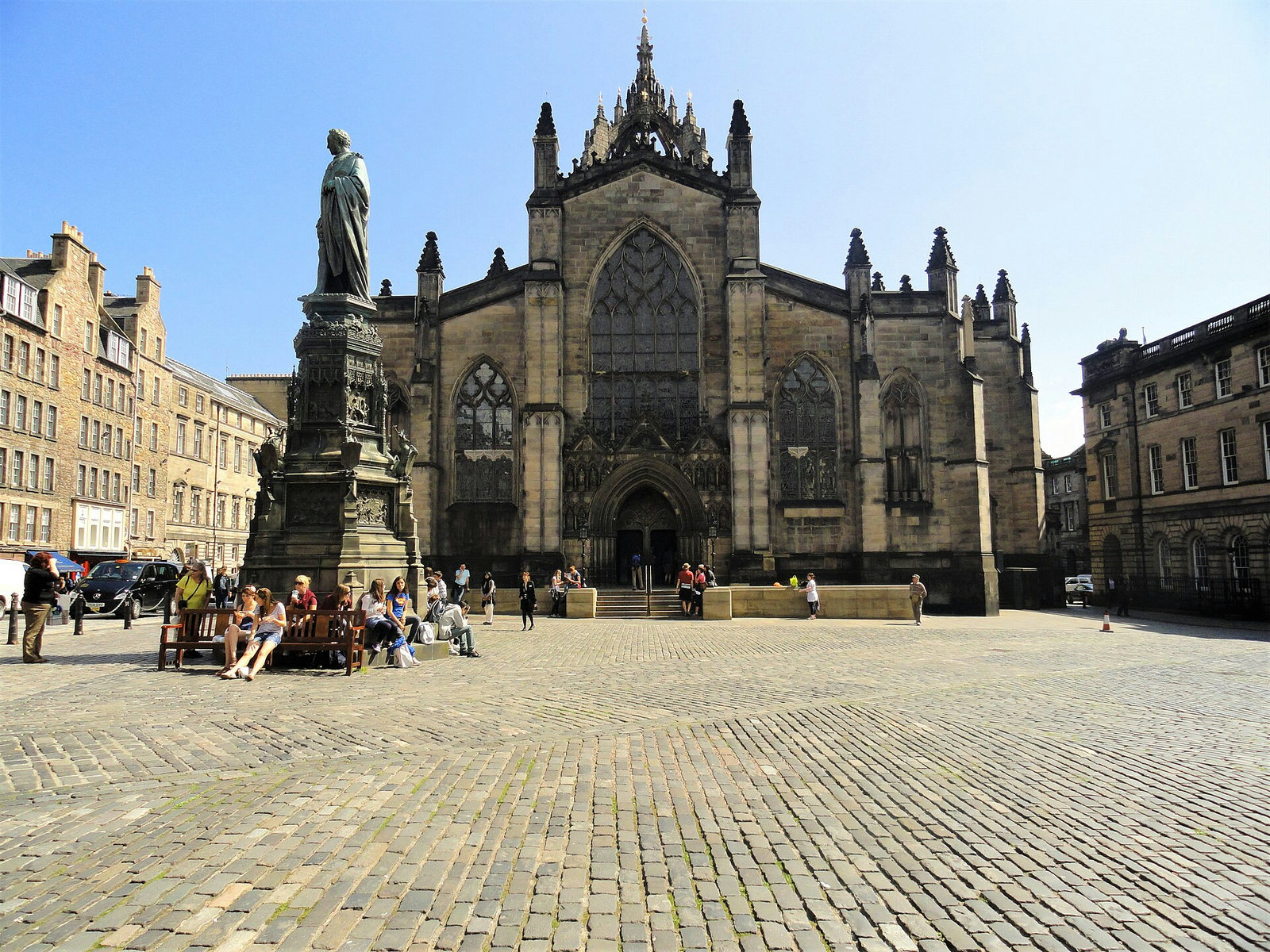
St Giles Cathedral on the Royal Mile in Edinburgh, photographed in 2010. Photo: “St Giles'Cathedral Edinburgh” by Eléonore Gaudry, licensed CC BY-SA 4.0, via Wikimedia Commons. Resized from the original.
Nine councillors on Edinburgh Council's Development Management Sub-committee voted to reject planning applications for three short-term lets at a single Royal Mile property against the recommendation of planning officers, according to reporting by The Edinburgh Reporter. The decisions targeted individual applications for flats six, seven, and nine at 219 High Street, an 11-unit tenement building located in the Old Town conservation area between St Giles' Cathedral and Tron Kirk.
The rejected proposals involved adding three short-term lets to six holiday properties already operating within the same stair. During the Wednesday committee session, councillors weighed officer assessments of tourism economic benefits against neighbour objections regarding housing loss, stair noise, and amenity impacts. The votes saw a nine to two majority reject each proposal individually, overriding officer advice that additional short-term lets would cause no materially detrimental impact to remaining residents.
What the data shows
The decisions by the Development Management Sub-committee centered on three specific property planning applications at 219 High Street. According to committee records reported by The Edinburgh Reporter, the building contains 11 residential units in total. Prior to the vote, six holiday lets were already operating within the shared tenement stair. The addition of flats six, seven, and nine as short-term lets would have brought the total count of approved holiday properties in the building to nine.
During committee debate, Councillor David Key stated that approving the three applications would mark a 50% increase in short-term lets within the building. He identified this proposed expansion as a direct loss of residential housing supply. The sub-committee evaluated individual reports for each flat and conducted separate votes on all three properties.
The rejection decisions were taken despite planning officer Lesley Porteous recommending that all three applications be approved.
The applications differed in their past operating history. Flats six and seven were submitted as retrospective change of use applications, having operated as holiday lets for several years prior to the committee meeting. Flat nine was submitted as a standard change of use application to transition from residential housing to short-term rental accommodation.
How it was measured
The figures originate from official planning documentation and voting tallies recorded during a meeting of Edinburgh Council's Development Management Sub-committee on Wednesday, as reported by Local Democracy Reporter Nicholas Malizia for The Edinburgh Reporter.
The planning department evaluated the properties through officer assessments. Officer Lesley Porteous compiled reports evaluating the potential impact of changing the usage of flats six, seven, and nine from residential housing to short-term rental accommodation. The official planning assessment stated that the few remaining residential flats within the tenement stair already experience a high degree of activity and noise. Based on this baseline assessment, planning officers concluded that three additional holiday lets would not result in any further materially detrimental impact on local resident amenity.
Public participation was recorded through official planning objections filed during the statutory consultation period. The planning department received four objections from neighbours who opposed converting the residential units into commercial short-term accommodation.
Officer recommendations versus committee action
The divergence between planning officer recommendations and the elected committee's decisions highlights a central regulatory tension in Edinburgh's historical core. Planning officer Lesley Porteous advocated for approving the applications on the grounds that short-term lets deliver economic benefits to the city through tourism. She argued that potential negative consequences for residents, including elevated noise levels, were negligible because several short-term lets were already operating within the same stair.
Conservative councillors on the sub-committee supported the officers' evaluation. Councillor Christoper Cowdy argued that existing short-term lets had already established the operational character of the building. In committee remarks, Councillor Cowdy stated:
“There are already a significant number of STLs here. Any detriment is already embedded.”
However, committee Convener Hal Osler and a majority of councillors rejected the argument that pre-existing holiday lets justified further approvals. Convener Osler called on the committee to overturn the officer recommendations, stating:
“I would be strong in supporting the fact that we overturn the officers' recommendation on this. I still feel there is a level of impact on amenity we need to protect.”
Neighbour objections and housing impact
The decisions directly affect property owners seeking short-term rental permissions, long-term residents living in shared tenement stairs, and the broader housing supply in Edinburgh's Old Town conservation area.

Neighbours submitted four formal objections warning that expanding short-term lets would diminish housing stock and harm community cohesion. In a public objection submitted to the committee, a resident from nearby Tron Square described the cumulative effect of short-term rentals on tenement living:
“In the Old Town as with in other areas of the city, we have seen the loss of valuable housing to the short term letting industry and the damage this causes to our local community. Their impact is corrosive, as more tenement housing is used for short term visitors. The constant stream of different people in a stair is alarming for the residents and often disturbing.”
Scottish Labour Councillor Tim Pogson expressed concerns over reaching a holiday let tipping point in central Edinburgh. He urged the committee to exercise stronger powers to prevent the erosion of the Old Town conservation area's residential character and expressed hope that rejected short-term lets would rejoin long-term housing stock:
“I hope this system will work and do its job to say what is and isn't reasonable. I'm concerned about where this tipping point may be.”
The rejection of retrospective applications for flats six and seven leaves operators who have run holiday lets for several years facing potential regulatory enforcement, unless alternative planning pathways or legal appeals succeed. For flat nine, the decision blocks an immediate conversion from residential housing to tourist accommodation.
What the figures do not tell you
While the committee's voting tallies and unit counts document specific regulatory outcomes for 219 High Street, the figures do not reveal the exact timeline or enforcement actions that will follow for flats operating without planning consent.
First, the public record does not indicate whether the operators of flats six and seven will appeal the sub-committee's decision to Scottish Ministers or cease short-term operations immediately. Because both properties operated as short-term rentals for several years prior to applying for retrospective planning permission, the vote does not automatically clarify when or how these units will return to residential use.
Second, the numbers do not track the occupancy rates, average daily rates, or total revenue generated by the six established holiday lets operating within 219 High Street. While officers noted that remaining residential units already experience high activity and noise, planning documentation does not quantify guest turnover figures or actual noise measurements within the shared stair.
Third, the four neighbour objections filed against the applications represent submitted written feedback, but they do not measure broader sentiment across all residents in the High Street area or calculate the cumulative loss of residential housing across the wider Old Town conservation area.
What to watch
Hosts, property managers, and real estate investors navigating short-term rental regulations in Edinburgh should monitor several upcoming compliance and policy milestones.
- Planning appeal filings submitted by operators of retrospective applications following council rejections.
- Enforcement notices issued by Edinburgh Council against short-term lets operating without planning permission.
- Sub-committee voting patterns on future change of use applications in high-density conservation areas.
- Conversion rates of former short-term rentals returning to the long-term residential lease market.
Figures checked by the standards desk (Paul Ostrowski): every figure in this story was matched to the source material listed below before publication.
Checked by the accuracy gate: 33 specifics checked, 29 traced to the source material, 3 general background, 1 removed before publication.
Sources
- The Edinburgh Reporter - reported October 21, 2026.
- Yahoo News UK - Edinburgh city centre holiday lets refused by councillors amid 'tipping point'.
Read and analysed by the Booked News desk.
Report an error in this story · Corrections policy and log

Related stories

Edinburgh began charging a 5% visitor levy on overnight stays, holiday lets included, in July 2026
UK Short-Term Rental RevPAR Holds Firm as Hotels Fall 8% in Q3 2026
Photo: Dominic Nelson, CC BY-SA 4.0, via Wikimedia Commons

Highland Council consulted on a visitor levy worth about £9 million a year in August 2026

Scotland received 38,040 short-term rental licence applications by June 2025
Read the desk every morning.
Leave your address for the Booked News briefing: the day's figures on rates, occupancy, demand, fees, supply and returns, each with its source, in one short email.
Comments