Geneva approves 3% short-term rental tax while facing collection hurdles
City officials track 114 rentals while working through platform remittance gaps caused by county framework decisions.
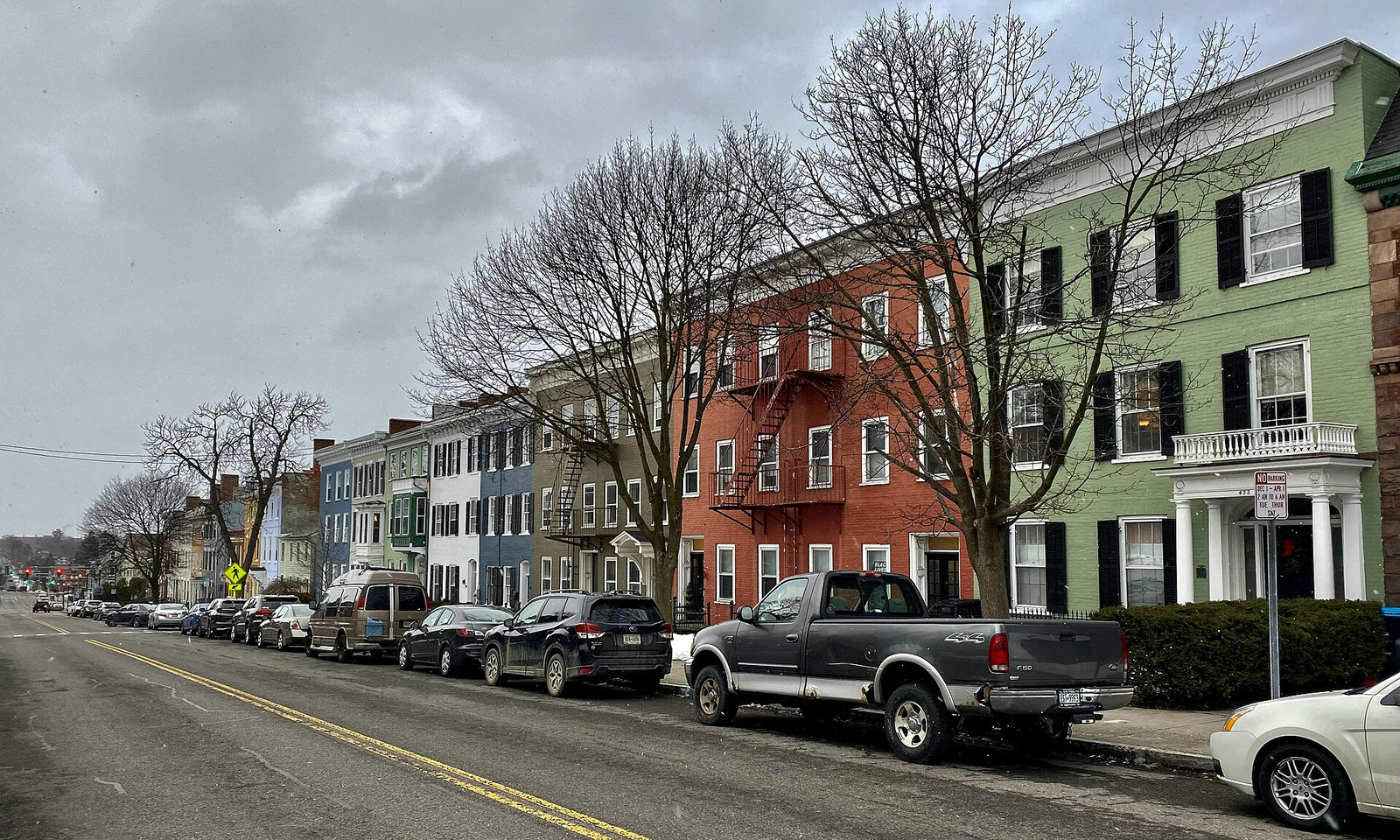
Historic row houses along South Main Street in Geneva, New York, photographed in 2022. Picture from Wikimedia Commons: “Row houses along South Main Street, Geneva, New York - 20220212 - 01”. Photographer Andre Carrotflower. Licence CC BY-SA 4.0. Resized from the original.
Geneva City Council has approved a 3% occupancy tax on short-term stays, establishing a new municipal revenue mechanism for transient lodging across the city. However, municipal administrators face significant operational barriers to gathering the funds after Ontario County decided to opt out of the state’s short-term rental tax collection framework.
Acting City Manager Taylor Youngs informed the council on Tuesday that the county’s opt-out decision prevents Geneva from relying on automated tax collection and direct remittance from major online booking channels. Without county-level participation in the state framework, the city must construct its own administrative machinery or negotiate standalone agreements with platform operators to collect the 3% fee.
What the data shows
Municipal records reviewed by city leaders indicate that Geneva contains approximately 114 active short-term rentals within its borders. That count represents a small decrease from the city’s historic high of 119 short-term rental properties reported in earlier municipal surveys.
Compliance tracking by municipal code staff shows that out of the 114 operating units currently tracked by the city, 94 properties are in full compliance with municipal permit rules. The remaining 20 properties identified in the city inventory are subject to active code enforcement or are proceeding through multi-stage administrative compliance channels.
The council extended the city’s traditional room occupancy tax to capture short-term rentals to align transient residential rentals with hotels and conventional commercial lodging establishments, which already pay the 3% rate directly to local tax authorities.
How it was measured
The reported count of 114 properties and the compliance figure of 94 units were drawn directly from municipal permit applications and municipal inspection records maintained by city staff. These internal databases catalogue permitted address listings, structural floor plans, and bedroom numbers across all registered properties.
However, city staff noted that internal licensing databases do not measure actual market transaction volume. The existing regulatory framework records registered physical inventory but does not track how frequently properties are booked by visitors, the daily rates charged by property owners, or the gross annual revenue earned by individual operators.
To generate revenue projections for the 3% tax, municipal staff plan to combine physical licensing inventories with third-party market data, platform disclosure reports, and comparable performance metrics gathered from neighboring Finger Lakes municipalities.
Platform remittance and county frameworks
The primary administrative complication facing Geneva stems directly from intergovernmental tax policy decisions at the county level. Because Ontario County opted out of New York state’s short-term rental collection mechanism, booking platforms are under no obligation to process city taxes automatically at checkout.
Preliminary regulatory research conducted by Geneva staff revealed that Vrbo explicitly excludes Ontario County from its published local occupancy tax remittance schedules. Consequently, guests booking accommodations through Vrbo within Geneva boundaries are not automatically charged the city’s 3% tax rate during checkout transactions.
To address this structural gap, city staff plan to initiate formal discussions with Airbnb and Vrbo to determine whether voluntary collection and remittance contracts can be established for Geneva. If voluntary platform agreements cannot be secured, the city will be forced to institute an independent direct-reporting framework that requires individual property managers and property owners to calculate, file, and remit tax payments to the city treasury every reporting period.
Operational models and administrative costs
City staff are examining neighboring municipal operational models to design an effective tax administration process. The city of Canandaigua currently issues tax compliance notices directly to short-term rental owners, operating a direct operator remittance framework rather than relying on automated platform transfers.

Youngs confirmed that staff contacted Canandaigua officials to evaluate whether that municipality can isolate short-term rental tax revenues from broader commercial hotel collections. This operational data will help Geneva establish reliable yield benchmarks. However, administrators cautioned that relying on direct operator billing places full tracking, billing, auditing, and enforcement burdens on Geneva city personnel.
Councilor Cecere emphasized that the city must thoroughly evaluate the net financial balance of direct collection. Council members need to establish the precise cost of printing bills, auditing operator accounting statements, processing quarterly payments, and litigating non-payment cases before approving a final administrative workflow. Council members have urged conservative revenue estimates until actual operational performance data is established.
Licensing fees and regulatory timelines
Geneva’s current short-term rental permits charge upfront licensing fees designed strictly to offset staff expenditures for safety inspections, property administration, and zoning code enforcement. In contrast, the newly approved 3% occupancy tax functions strictly as a revenue measure linked directly to lodging sales activity.
City Council must decide whether to activate the 3% occupancy tax under existing permit rules or delay tax collection until the city’s overall short-term rental licensing schedule is overhauled. Municipal staff are completing a full cost analysis of program expenses, permit validity periods, and renewal schedules prior to submitting formal fee recommendations.
Cecere noted that the city’s ad hoc housing committee is scheduled to review permit fee structures, administrative costs, and general short-term rental policies early in 2027. No immediate implementation date or binding administrative ruling was requested during Tuesday’s council session.
Zoning debates and housing considerations
Beyond fiscal logistics, city leaders continue to debate the broader structural impact of short-term lodging on local real estate dynamics. Council member Lavin asked the council to evaluate how transient rentals affect year-round housing supply, local public school enrollments, and worker housing availability in Geneva.
Lavin proposed introducing geographic density limits on short-term rentals, specifically suggesting a complete ban on commercial short-term lodging operations within single-family residential zoning districts. That geographic restriction proposal was not adopted by the council during Tuesday’s meeting.
Concurrently, Geneva municipal officials are urging broader regional coordination. Cecere noted that Geneva previously passed a formal municipal resolution encouraging Ontario County supervisors to reconsider and opt into the state short-term rental collection framework. County supervisors are scheduled to attend Geneva’s Dec. 2 council meeting to discuss intergovernmental tax coordination.
What to watch
- The outcome of Geneva’s Dec. 2 council meeting featuring visiting Ontario County supervisors regarding countywide tax framework alignment.
- Formal outreach responses from Airbnb and Vrbo regarding whether voluntary tax collection contracts can be established for Geneva listings.
- Specific fee recommendations and policy proposals expected from the ad hoc housing committee early in 2027.
- Staff reports evaluating the administrative cost of direct operator tax billing versus potential yield from the 3% tax.
- Enforcement progression for the 20 short-term rental properties currently operating outside full municipal permit compliance.
Figures checked by the standards desk (Paul Ostrowski): every figure in this story was matched to the source material listed below before publication.
Tally from the accuracy gate: 20 details tested; 19 found in the stored source; 1 allowed as background knowledge; nothing cut.

Related stories

Kingston Common Council to vote on proposed 3% occupancy tax

Airbnb challenged Ocean City 3% tax over council conflicts in October 2025

Stonington Maine non-resident vacation rental listings drop 14% after local rules

Alicante caps holiday lets at 1.56% of housing stock in municipal overhaul
Picture from Wikimedia Commons; licence CC BY-SA 4.0; photographer kallerna
Comment thread