Airbnb challenged Ocean City 3% tax over council conflicts in October 2025
The platform argued that two council members who voted for the lodging tax had financial conflicts of interest, threatening a projected $1.8 million in annual revenue.

On October 3, 2025, Downbeach News reported that Airbnb was employing a new legal strategy to pressure Ocean City, New Jersey, into repealing a 3 percent occupancy tax that municipal officials estimated would generate an additional $1.8 million in annual revenue. The tax, which was approved by the Ocean City City Council on July 17 by a 4-3 vote, targeted transient accommodations booked through online travel platforms.
The online travel platform argued that the local tax was discriminatory because it did not apply to traditional hotels, motels, bed-and-breakfasts, or vacation rentals booked directly through local real estate agencies. In its latest challenge, the company focused on alleged conflicts of interest involving two council members who voted in favor of the measure, asserting that their financial ties to the local real estate and rental markets should have disqualified them from the vote.
What the data shows
According to figures released by Ocean City officials, travelers booked more than $60 million in vacation rentals in the municipality during 2024 using Airbnb, Vrbo, and other online travel services. Based on that booking volume, city officials estimated that the newly enacted 3 percent occupancy tax would generate an additional $1.8 million in annual revenue for the municipal budget. Supporters of the tax argued that this extra revenue would help ease the financial burden on local taxpayers by providing additional funding for municipal operations without raising property taxes on local homeowners.
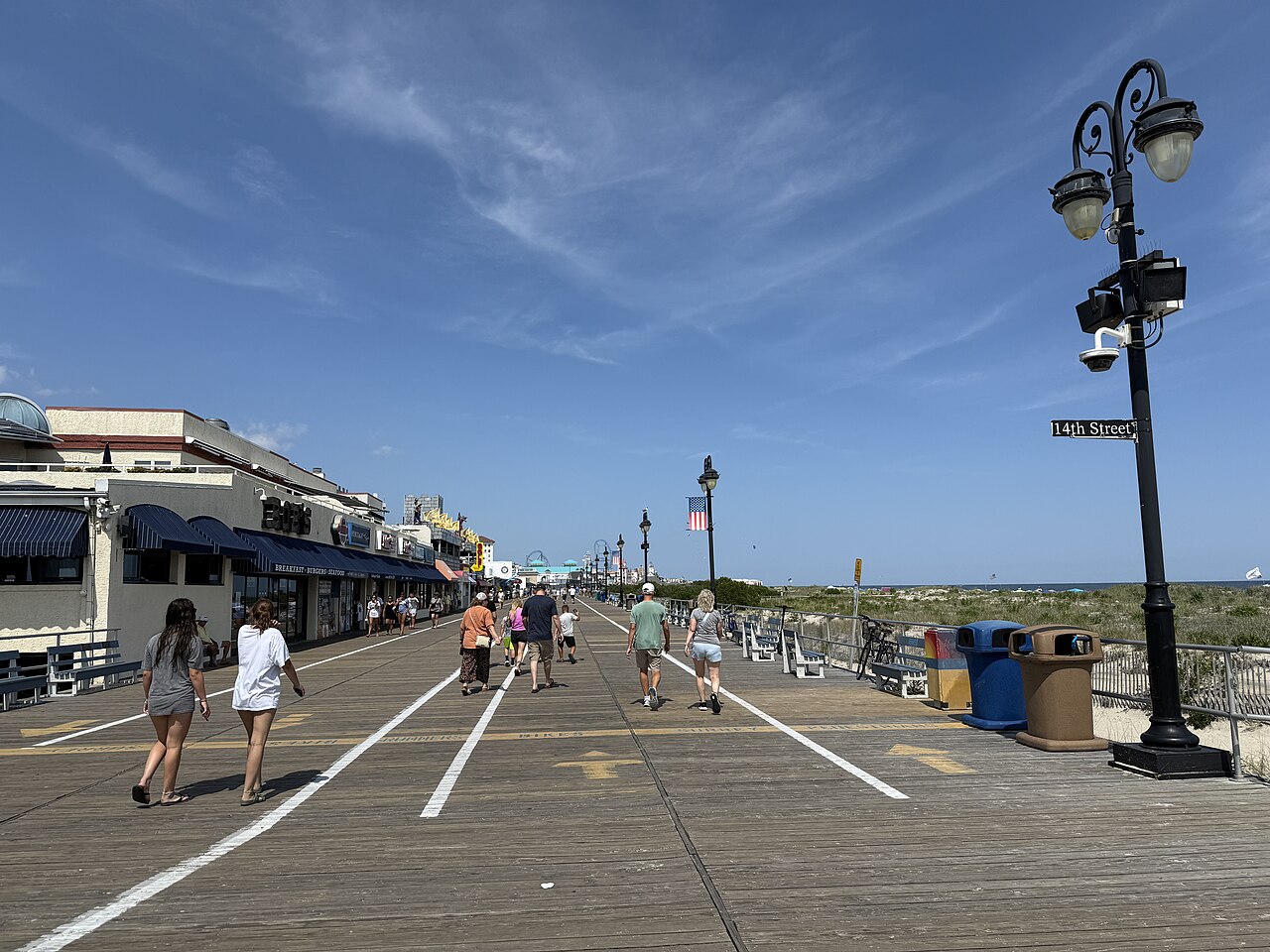
The tax structure created a regulatory distinction between different types of lodging providers in the coastal resort town. The 3 percent levy was designed to apply only to transient accommodations booked through online platforms. It did not apply to traditional hotels and motels, nor did it apply to vacation rentals booked through local real estate agencies or bed-and-breakfast properties. According to the New Jersey Treasury Department, hotels and motels in the state were already subject to a 5 percent state occupancy tax and a 6.625 percent state sales tax, whereas online vacation platforms did not pay any local occupancy taxes in Ocean City prior to the passage of this ordinance.
New Jersey Treasury Department records also revealed how Ocean City’s tax compared to other municipalities across the state. The department’s data showed that 209 New Jersey municipalities had an occupancy tax in place for hotels and motels. Out of those 209 municipalities, only 20 also charged an occupancy tax on bookings made through online vacation platforms. This left Ocean City among a small minority of New Jersey towns attempting to extend occupancy taxes to digital short-term rental platforms.
How it was measured
The figures cited in the dispute were compiled from multiple government and corporate sources. The booking volume of more than $60 million for the year 2024 was tracked and reported by Ocean City municipal officials, who monitored transactions completed through online travel services operating within the city limits. The estimated annual revenue of $1.8 million was a mathematical projection calculated by applying the 3 percent tax rate directly to that 2024 booking total.
The state-level tax rates, including the 5 percent state occupancy tax and the 6.625 percent state sales tax, were published on the official website of the New Jersey Treasury Department. The department was also the source of the registry tracking municipal tax codes, which documented that 209 municipalities levied hotel taxes and 20 levied taxes on online platforms. The voting records, including the 4-3 council split on July 17 and the historical rejection of a previous ordinance version in December of the prior year, were recorded in the official minutes of the Ocean City City Council.
The conflict of interest allegations
In its effort to block the tax, Airbnb shifted its focus from the legality of the tax itself to the ethics of the council members who voted for it. Attorneys from the law firm Lowenstein Sandler, representing Airbnb, sent an Aug. 7 letter to Ocean City Solicitor Dorothy McCrosson. The letter asserted that Vice President Pete Madden and Councilmember Jody Levchuk had conflicts of interest under the Local Government Ethics Law and should have recused themselves from the July 17 vote.
The law firm pointed out that Madden was an owner of Goldcoast Sotheby’s International Realty in Ocean City, and Levchuk was the owner of several rental properties within the town. Because the local ordinance exempted rentals booked through traditional real estate agencies and did not apply to certain privately owned properties, Airbnb’s attorneys argued that both councilmen stood to benefit financially from the tax. The exemption could theoretically steer budget-conscious travelers away from online platforms and toward traditional real estate offices or direct rentals.
The letter emphasized that the 4-3 vote represented the slimmest possible majority to pass the ordinance. Lowenstein Sandler wrote that if either Madden or Levchuk had recused themselves, the ordinance would have failed due to a lack of votes. The other council members who voted in favor of the tax were Terry Crowley Jr. and Dave Winslow. The three council members who voted against the measure were Tony Polcini, Sean Barnes, and Keith Hartzell.
Market impact and industry opposition
The debate over the tax highlighted a deep division within the local tourism and lodging industry. Council members who supported the tax framed it as a necessary tool to generate municipal revenue without placing an extra tax burden on local property owners. Conversely, those who opposed the measure questioned the timing of introducing new fees on tourists and overnight guests, arguing that it could harm the local economy.
Councilman Sean Barnes argued that the tax was unfair because it was not applied uniformly across all lodging options in Ocean City. The local hotel and motel industry, along with the Ocean City Regional Chamber of Commerce, had previously demonstrated their political influence by successfully defeating an earlier draft of the ordinance in December of the prior year. That original version would have imposed the 3 percent tax on traditional hotels and motels as well, but it was abandoned after intense industry opposition.
Airbnb warned that the targeted tax would make vacations in the resort town more expensive, potentially driving visitors to other coastal destinations. Alain Xiong-Calmes, the public policy manager for Airbnb, expressed concern about the regional impact of the tax on middle-class families. He argued that the tax could price out visitors who rely on short-term rentals to access the coast.
“In Ocean City, where most guests come from within the New Jersey region, this short-term rental tax risks pricing out families seeking affordable stays with access to the coast and threatens the local businesses and attractions that rely on visitor spending from short-term rentals,”
Both Madden and Levchuk defended their votes and denied having any conflict of interest. Madden suggested that Airbnb was simply trying to protect its brand and market share by using any legal avenue available. Levchuk stated he believed Airbnb would not have raised the conflict of interest issue if he had voted against the tax. Ivan Valladares, Airbnb’s communications manager of U.S. policy, declined to comment further on the matter beyond the contents of the Aug. 7 letter.
What the figures did not tell you
While the reported figures outlined the projected revenue and the scale of the online booking market, they left several key questions unanswered. First, the $1.8 million revenue projection assumed that booking volumes would remain completely flat after the tax was implemented. The data did not provide any elasticity models to show how many travelers might shift their bookings from online platforms to local realtors or hotels to avoid the 3 percent fee, which could result in lower-than-expected tax collections.
Second, the figures did not disclose the total value of bookings made through traditional real estate agencies, hotels, motels, or bed-and-breakfasts in Ocean City. Without this baseline data, it was impossible to determine the exact market share held by online platforms or to measure the full economic impact of the exemptions granted to traditional lodging businesses. Additionally, while the New Jersey Treasury Department noted that 20 of the 209 municipalities with hotel taxes also taxed online platforms, the records did not indicate whether Airbnb was actively challenging the legality of those taxes in any of those other 20 jurisdictions.
Finally, the timeline for the tax implementation remained uncertain. Although city officials expected the New Jersey Treasury Department’s review and approval process to take 90 days, allowing the tax to take effect late in the year, the figures and reports did not account for potential administrative delays or the impact of the formal litigation that Airbnb’s attorneys had threatened in their initial July correspondence.
What to take from it
The regulatory battle in Ocean City offers several critical lessons for short-term rental hosts, property managers, and real estate investors tracking local tax policies.
- Analyze local exemptions: Always check if local occupancy taxes apply uniformly or if they contain carve-outs for traditional realtors and hotels, which can distort local market pricing.
- Evaluate distribution channels: In markets with platform-specific taxes, hosts should consider diversifying their booking channels, including listing with local real estate agencies to offer tax-free booking options to guests.
- Track state approval timelines: Local tax ordinances often require state-level treasury reviews, which typically introduce a multi-month buffer period before new taxes can legally be collected.
- Anticipate platform legal pushback: Major platforms like Airbnb will leverage ethics rules, local government laws, and litigation threats to delay or block local taxes, creating periods of regulatory uncertainty that hosts must navigate.
Figures checked by the standards desk (Paul Ostrowski): every figure in this story was matched to the source material listed below before publication. The desk's review found nothing to correct.
Sources
- Downbeach News (Donald Wittkowski) - published October 3, 2025.
Part of the Booked News record for October 2025. The desk filed this story on October 9, 2026 from a source published in the month it covers, under the same figure rule as the daily news.
Report an error in this story · Corrections policy and log

Related stories

Kingston Common Council to vote on proposed 3% occupancy tax

Over a quarter of travelers shift demand to hotels over listing discrepancies

Santa Barbara short-term rental ban to cut coastal tax-paying units to 65

Chatham raises short-term rental registration fee to $325 in second hike in two months
Read the desk every morning.
Leave your address for the Booked News briefing: the day's figures on rates, occupancy, demand, fees, supply and returns, each with its source, in one short email.
Comments