Greece Short-Term Rental Revenue per Available Night Rises 8.7% in 2026
Hosthub data tracking more than 17,000 listings shows higher nightly rates lifted national RevPAR to €42.36 while occupancy remained flat at 34.85%.
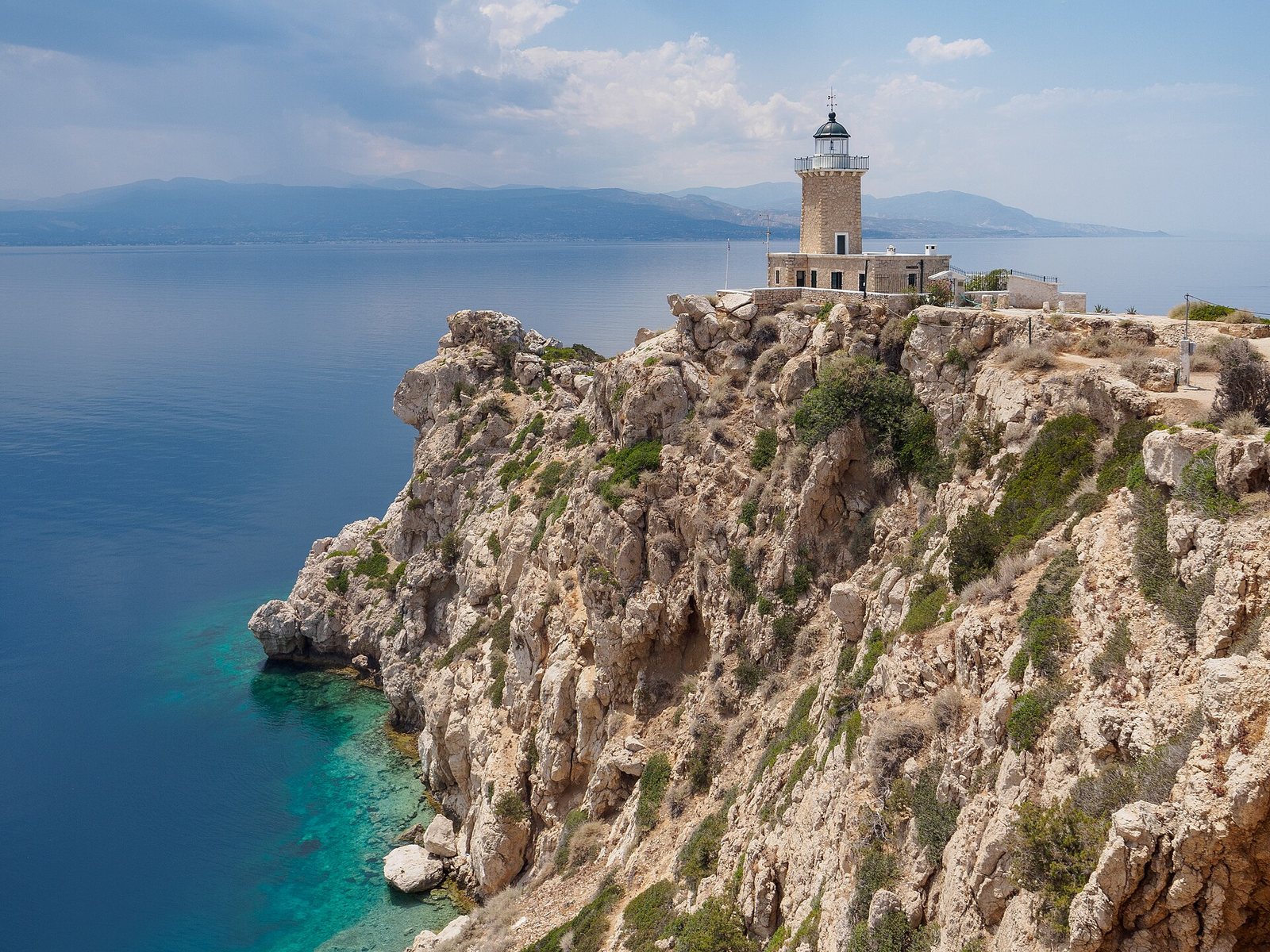
The Melagavi lighthouse at Cape Melagavi in Korinthia, Greece, photographed in 2022. Picture from Wikimedia Commons: “Φάρος Μελαγκάβι 7382”. Photographer C messier. Licence CC BY-SA 4.0. Resized from the original.
Revenue per available night across Greece’s short-term rental market rose 8.7% in 2026 to reach €42.36, according to a performance study published by property management platform Hosthub. The gain was produced by higher nightly prices rather than heavier booking volume, as property managers adjusted rates to absorb channel costs and capture extended demand.
Nationwide average nightly rates climbed 7.9% to €121.55 across the country, while calendar occupancy stood almost unchanged at 34.85%, compared with 34.58% recorded over the identical window in 2025. Hosthub compiled the metrics from more than 17,000 properties, covering performance up to September 25 and folding Greece’s quiet winter months into the baseline figures.
What the data shows
The top-line metrics gathered by Hosthub indicate that short-term rental performance across Greece decoupled from occupancy growth during 2026. RevPAR increased by 8.7% to reach €42.36 nationwide. Over the same timeline, the average nightly rate increased by 7.9% to €121.55. Nationwide occupancy moved by a narrow margin, climbing from 34.58% in 2025 to 34.85% in 2026.
This dynamic represents a reversal from 2025 market trends. In 2025, revenue gains across Greece were supported primarily by expanding occupancy levels while nightly rates moved downward. In 2026, operators maintained baseline calendar utilization while capturing additional yield on every booked night.
Regional revenue changes diverged across urban and island markets:
- The southern suburbs of Athens posted the largest RevPAR expansion among all tracked areas, rising 22.7%.
- The Cyclades recorded the second-strongest RevPAR improvement, gaining 18.2%.
- Thessaloniki registered a RevPAR increase of 12.8%.
- The Ionian Islands recorded RevPAR growth of 11.8%.
- Central Athens recorded the lowest revenue expansion in the sample, with RevPAR rising 1.5%.
Despite logging lower occupancy than mainland urban centers, the Cyclades produced the highest total RevPAR of any tracked destination, averaging €61.76 per available night.
How it was measured
The dataset was collected directly by Hosthub, an international property management software platform. The sample followed reservations and calendar activity at more than 17,000 properties in Greece. The report aggregated operational data from the start of the year through September 25, 2026.
Because the reporting window spans from January 1 through late September, the published metrics represent year-round performance figures rather than isolated peak-summer measurements. Hosthub confirmed that the sample includes Greece’s low-demand winter months, which lowers the annual occupancy baseline compared to mid-summer reports. Regional comparisons evaluate identical periods between 2025 and 2026.
Regional performance and urban divergence
Urban destinations demonstrated sharp differences in booking volume and unit pricing. Thessaloniki recorded the highest overall occupancy rate among all regions analyzed in the study, reaching 46.69%. That compared with 43.51% over the matching period of 2025. The northern port city recorded increases across both occupancy and nightly rates simultaneously, reversing its 2025 pattern when occupancy had contracted while rates moved higher.
Central Athens followed with an occupancy rate of 44.74%. That level represented a drop from 45.97% reported twelve months prior. Hosthub identified the central municipal market of Athens as increasingly mature. The report noted that incremental revenue growth in the city center will depend on property differentiation and competitive daily pricing rather than continuing inventory expansion or raw booking volume gains.
In contrast, the southern suburbs of Athens experienced the strongest rate of occupancy improvement in the country. Occupancy along the Athens Riviera moved up 12% to reach 43.30%, compared with 38.68% recorded in 2025. Hosthub reported that travelers visiting the capital are increasingly booking coastal properties that combine beach access with transport links into Athens, extending the active operating season beyond the limits seen on island markets.
Island destinations and seasonal demand
Greece’s island rental markets continued to show structural seasonal compression, delivering significantly lower annual occupancy figures than the major mainland cities. Summer leisure demand remains concentrated in a limited window, keeping full-year calendar averages low across the islands.
The Cyclades recorded the lowest average occupancy among all analyzed areas at 23.08%. Even with that low annual baseline, the market showed an 11.5% improvement over its 2025 occupancy rate of 20.70%. Hosthub linked the year-over-year recovery partly to soft comparisons against 2025, when seismic activity around Santorini depressed guest confidence and weakened reservation activity across the island cluster.
In Crete, calendar occupancy remained flat at 30.52%, representing an increase of 0.8% over the previous year. The Ionian Islands recorded an occupancy expansion of 4.6% to reach 28.35%, marking the second consecutive year of occupancy gains for that island grouping.
Forward pacing for the fourth quarter showed limited early commitment across the country. Bookings recorded by September 25 for the October to December period accounted for 10% occupancy, marginally higher than the 9.8% pacing level recorded at the identical point in 2025. Hosthub observed that fourth-quarter occupancy in 2025 ultimately expanded through late booking activity, meaning final 2026 results remain sensitive to late discounting and autumn reservation patterns.
Fee restructuring and pricing strategies
Hosthub attributed a meaningful share of the 2026 nightly rate increases to structural changes in distribution costs, specifically within Airbnb’s platform fee architecture. Airbnb transitioned its fee system from a split-fee framework—where costs were divided between host and guest—to a single 15.5% host commission.
Professional property managers who took up the 15.5% single host commission early raised their nightly rates in advance of October 13, 2026, the date the structure becomes mandatory in Greece. By raising listing prices, managers offset the commission previously paid directly by the traveler, insulating net property earnings against margin compression.
This operational defense elevated average daily rates across multi-calendar managers. Properties managed through software systems adapted their public pricing before the October 13 deadline, creating the rate increases that drove RevPAR up 8.7% nationally even as physical unit demand held flat.
Distribution shifts and direct booking growth
Alongside fee adjustments, the Hosthub report revealed continuous shifts in booking channel distribution across Greek rental properties. Online travel agencies lost reservation share while operator-direct booking engines expanded.
Booking.com maintained its position as the largest single reservation source in Greece, but recorded its second consecutive annual market share reduction:
- Booking.com accounted for 55.7% of bookings in 2026.
- The platform captured 56.4% of bookings in 2025.
- The platform held 57.2% of bookings in 2024.
Airbnb’s share of total reservations contracted to 32.2% in 2026.
Direct bookings captured 10.6% of reservations in 2026, rising from 8.9% in 2025 and 7.4% in 2024. Hosthub noted that Greek hosts and professional property management companies are deliberately channeling marketing efforts toward proprietary booking tools to avoid intermediary service charges, reduce third-party fee exposure, and establish unmediated access to returning travelers.
What to watch
Short-term rental performance across Greece heading into 2027 will depend on operational adaptation to platform rules and channel diversification:
- Pacing conversions in the fourth quarter, assessing whether late bookings lift final calendar occupancy beyond the initial 10% recorded by September 25.
- Price resistance following the October 13, 2026 mandatory deadline for Airbnb’s 15.5% host-only commission across all remaining Greek listings.
- Yield stabilization in Central Athens, where RevPAR grew by just 1.5% and occupancy fell to 44.74%, signaling inventory saturation.
- Direct channel expansion, tracking whether independent booking infrastructure can move past the 10.6% share achieved in 2026.
Figures checked by the standards desk (Paul Ostrowski): every figure in this story was matched to the source material listed below before publication. 1 figure that could not be matched was removed.
Tally from the accuracy gate: 63 details tested; 60 found in the stored source or in the sources listed below; 2 allowed as background knowledge; nothing cut.
Sources
- Greek City Times - reported November 12, 2026.
- bnbnews.gr - Greece short-term rentals 2026: Athens revenue shift.
- news.gtp.gr - Short-Term Rental Registrations in Greece Fall 2.1%, Says Report | GTP Headlines.
Read and analysed by the Booked News desk.

Related stories

Platform fee restructuring drives host price adjustments in short-term rental markets
Picture from Wikimedia Commons; licence CC BY 4.0; photographer Jakub Hałun

How property management fees and listing channels shape short-term rental revenue
UK Short-Term Rental RevPAR Holds Firm as Hotels Fall 8% in Q3 2026
Picture from Wikimedia Commons; licence CC BY-SA 4.0; photographer Dominic Nelson

Comment thread