Ocean City Planning Commission Votes 4-1 to Ban Short-Term Rentals in New ADUs
Ocean City's planning commission voted 4-1 to ban short-term rentals in new accessory dwelling units mandated under Maryland law HB 1466.

The ocean beach and pier at Ocean City, Maryland, photographed in 2015. Picture from Wikimedia Commons: “Ocean City beach and pier MD2”. Photographer Acroterion. Licence CC BY-SA 4.0. Resized from the original.
Ocean City's Planning Commission recommended a policy proposal by a vote of 4-1 to prohibit accessory dwelling units from being used as short-term rentals, according to reporting by Yahoo News and The Baltimore Sun. The decision sets up a municipal debate over whether new housing supply enabled by Maryland state law HB 1466 can enter the resort town's vacation listing pool.
The policy debate comes as municipalities across Maryland update local zoning codes to conform with statewide housing mandates. While Ocean City seeks to restrict accessory dwelling units strictly to long-term occupancy, neighboring Salisbury is moving forward with rules that allow owner-occupied accessory structures without a short-term rental ban, illustrating divergent local responses to state policy across the Eastern Shore.
What the data shows
The core figure shaping Ocean City's planning framework is the 4-1 vote recorded by its Planning Commission following a Friday hearing, according to reporting by Yahoo News and The Baltimore Sun. The commission's recommended language explicitly bars property owners from placing newly built accessory dwelling units—often referred to as in-law suites or mother-in-law suites—into the short-term rental inventory.

Both Ocean City and Salisbury have set structural size limits for secondary units under their respective draft ordinances. Each municipality's proposal permits exactly one accessory home per eligible lot, with the footprint of the secondary unit capped at no larger than 75% of the main house, according to municipal planning records cited in the report.
The two Eastern Shore jurisdictions diverge on operational requirements and rental restrictions:
- Ocean City's draft framework prohibits short-term rental activity for all accessory dwelling units across the board.
- Salisbury's proposed standards do not bar accessory dwelling units from use as vacation rentals.
- Salisbury requires the property owner to occupy one of the homes on the lot.
- Salisbury requires no additional off-street parking spaces for the secondary home.
The regulatory divergence highlights how adjacent markets are handling property rights and housing stock under identical state legislative mandates.
How it was measured
The data and policy details were published by Yahoo News and original reporting by Eastern Shore bureau chief Josh Davis of The Baltimore Sun. Legislative and administrative actions recorded in the coverage establish the legal and temporal benchmarks for both municipal ordinances.
Gov. Wes Moore signed HB 1466 in April 2025. The legislation was enacted to address Maryland's broader housing shortage by requiring local jurisdictions to allow accessory dwelling units on lots containing single-family homes. The state set an official compliance deadline of Oct. 1 for local governments to update their municipal codes.
Implementation schedules reported by city planning officials show varying degrees of adherence to the state deadline:
Ocean City planning director George Bendler stated that the town lacked formal accessory dwelling unit provisions prior to the current drafting process. Ocean City did not finalize its ordinance before the state's Oct. 1 compliance deadline, but Bendler noted that the town kept the Maryland Department of Planning informed of its schedule and progress. Ocean City officials planned to present the proposal to the mayor and city council on Tuesday, aiming to advance the measure to a formal first reading on the following Monday.
Salisbury city planner Gary Pusey reported that existing municipal rules already allowed accessory apartments within certain zoning districts, though expansion was necessary to meet the state mandate. Pusey stated that Salisbury began accepting applications under state law starting on the Oct. 1 deadline, prior to final adoption of its updated municipal ordinance. Salisbury's council scheduled a public hearing and second reading for its proposal on Monday night.
Policy intent and investor impact
The explicit objective behind Ocean City's proposed short-term rental ban on accessory structures is the preservation of residential housing, according to statements made during public commission proceedings.
“The reason for this is to increase housing, not to increase investments,”
Commissioner Tony Butta stated during the Planning Commission hearing, as recorded in the published report. Butta stated that secondary units could serve to house an older relative, a college student returning home, or a seasonal worker. He noted that even a seasonal rental lasting roughly three months could meet local housing needs rather than functioning as a high-turnover transient vacation rental.
The restriction directly impacts real estate investors and single-family homeowners looking to monetize secondary structures through transient rental platforms. Under the proposed rule, property owners who build an accessory dwelling unit cannot list the space on short-term rental distribution channels, limiting potential returns to long-term lease rates or seasonal residential arrangements.
The dissenting vote in the commission's 4-1 decision came from then-chair Joe Wilson. Wilson questioned the long-term flexibility of the prohibition, asking whether a homeowner who constructs an accessory unit for an aging parent should remain barred from renting the structure to vacationers after the parent passes away.
Political context and voter sentiment
The debate over accessory dwelling units touches on historic political divisions regarding transient lodging within Ocean City. Former commission chair Joe Wilson warned during deliberations that bringing short-term rental restrictions into the accessory dwelling unit debate risked repeating past municipal conflicts.
Wilson warned that the town's earlier political fight over vacation rentals was going to muddy the water on what officials were attempting to accomplish with state-mandated housing compliance, according to the news report.
Voter history and recent candidate positions indicate limited appetite among elected officials for broad new vacation rental limits across the municipality:

- Ocean City voters rejected broader minimum-stay restrictions for short-term rentals last year.
- In a recent election questionnaire conducted by The Baltimore Sun, none of the four council candidates called for new vacation-rental restrictions.
- The current ordinance proposal represents an early policy benchmark for newly elected Mayor Matt James, who succeeded outgoing Mayor Rick Meehan, as well as the reshaped town council.
While general municipal sentiment has resisted broader short-term rental bans on primary properties, the 4-1 Planning Commission recommendation shows that secondary structures created under HB 1466 face targeted legislative carve-outs.
Broader housing market dynamics
The regulatory focus on housing supply across Maryland's Eastern Shore comes amid wider scrutiny of residential property management practices in the region. Related legal filings highlight ongoing regulatory enforcement surrounding residential occupancy and housing access. For example, an Eastern Shore landlord recently agreed to pay $100,000 to resolve allegations regarding housing voucher bias, according to court reporting cited by The Baltimore Sun.
By separating short-term investment activity from state-mandated housing expansion, Ocean City officials aim to isolate new residential density from the commercial vacation market. Conversely, Salisbury's approach relies on owner-occupancy requirements rather than use-based rental prohibitions to maintain neighborhood stability while fulfilling HB 1466 requirements.
What to watch
Owners, managers and investors with property in Ocean City and Salisbury should track several concrete policy milestones over the coming legislative sessions:
- Monitor the outcome of Ocean City's mayor and council discussions and the scheduled first reading vote on the accessory dwelling unit ordinance.
- Track Salisbury's council vote following its public hearing and second reading to confirm final owner-occupancy standards and listing rules.
- Review the official position of Maryland's Department of Planning regarding Ocean City's post-Oct. 1 adoption timeline and compliance status under HB 1466.
- Check local municipal registry updates for specific language defining seasonal leases versus transient short-term rentals.
Figures checked by the standards desk (Paul Ostrowski): every figure in this story was matched to the source material listed below before publication.
Tally from the accuracy gate: 26 details tested; 25 found in the stored source; 1 allowed as background knowledge; nothing cut.
Sources
- Yahoo - reported November 9, 2026.
- The Baltimore Sun - Ocean City weighs vacation-rental ban for new in-law suites.
Read and analysed by the Booked News desk.

Related stories

Airbnb challenged Ocean City 3% tax over council conflicts in October 2025

Stonington Maine non-resident vacation rental listings drop 14% after local rules

Alicante caps holiday lets at 1.56% of housing stock in municipal overhaul
Picture from Wikimedia Commons; licence CC BY-SA 4.0; photographer kallerna
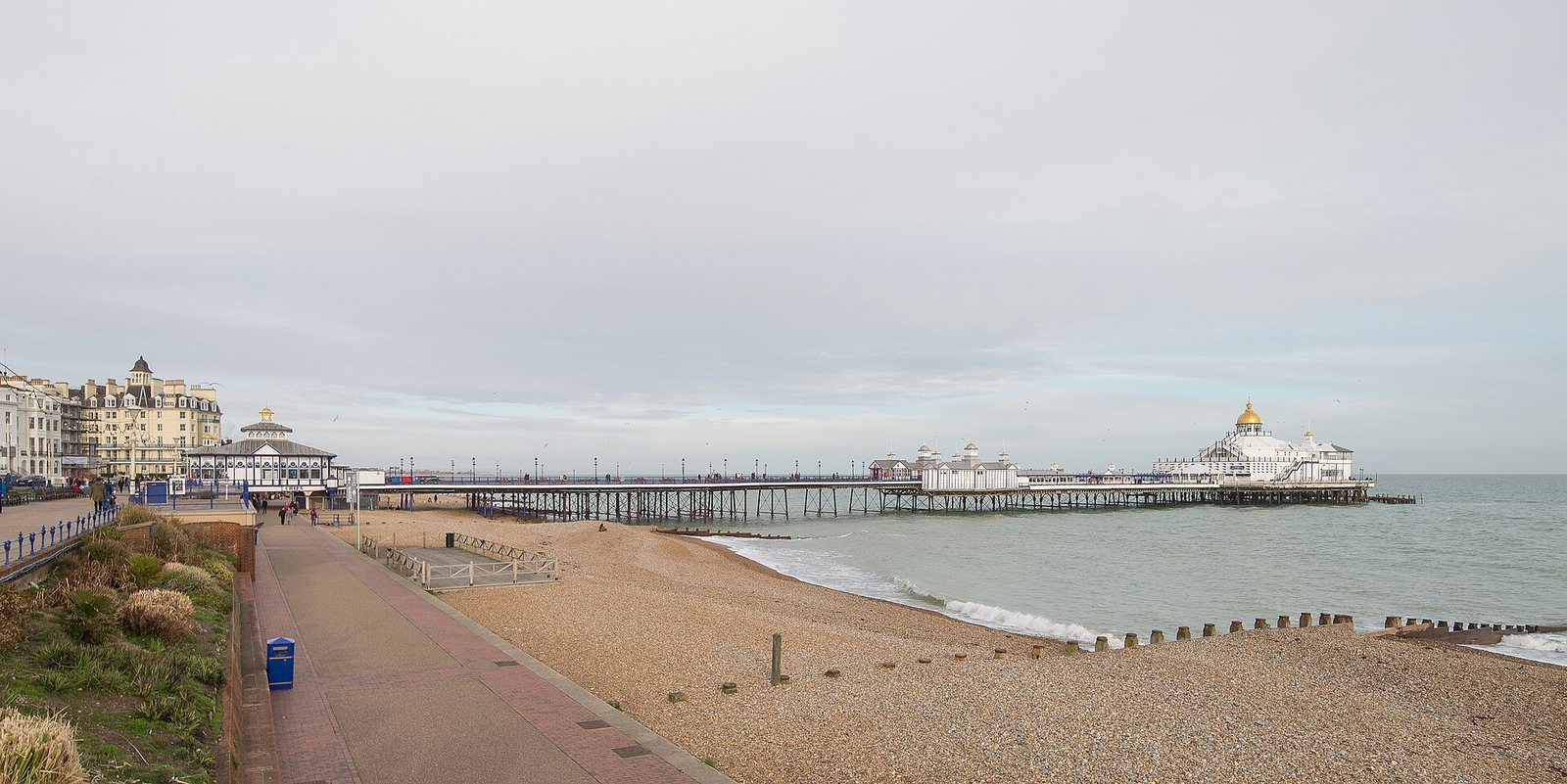
Eastbourne approves conversion of 19-letting room hotel into flats and holiday lets
Picture from Wikimedia Commons; licence CC BY-SA 4.0; photographer Arild Vågen
Comment thread