Foreign Buyers in Rio's South Zone by the Numbers
No official body counts foreign buyers in Rio de Janeiro. The shares that have been published cover single brokers and developers, mostly for new studios near the beach. Here is each one, with the prices, yields, taxes and exchange rate around it.
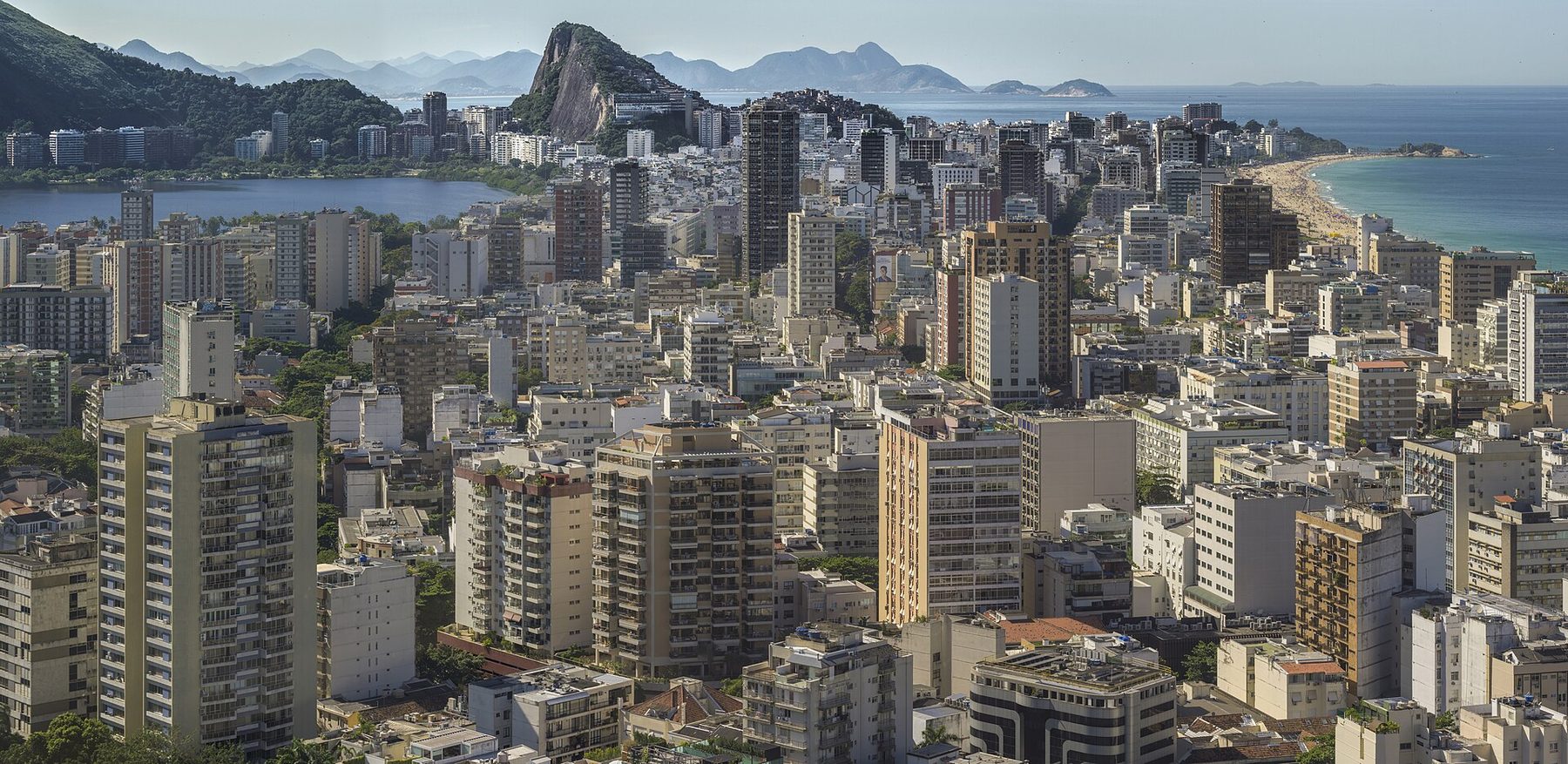
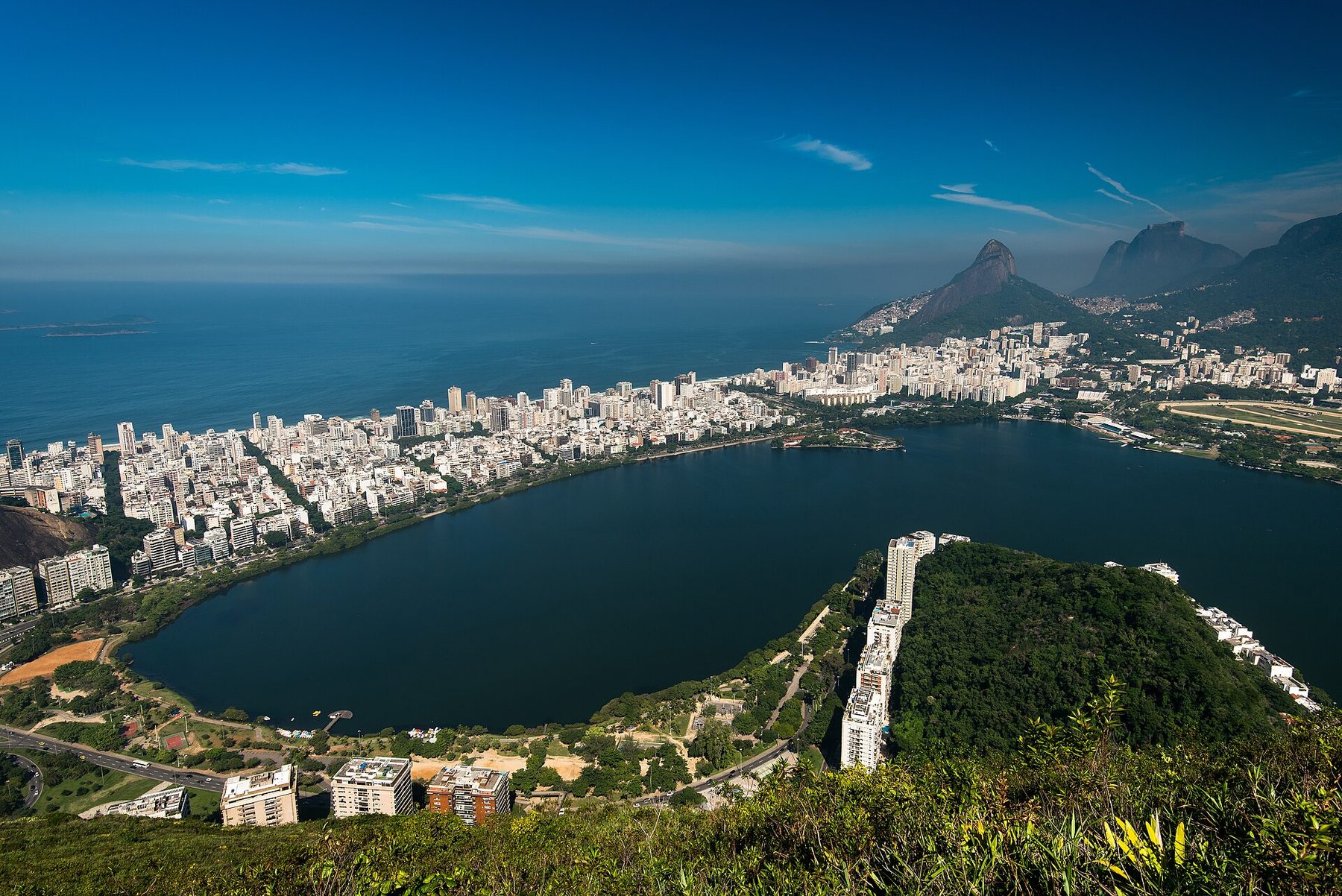
Ipanema and Leblon as seen from Morro Dois Irmãos, with Lagoa and Cantagalo in the background, Rio de Janeiro, Brazil by Wilfredor, CC0, via Wikimedia Commons (resized)
Between November 2025 and April 2026 a Rio de Janeiro brokerage, Patrimóvel, sold 54 compact apartments in Copacabana, Ipanema and Leblon. Seventeen of them, 32%, went to buyers who live outside Brazil, according to figures the firm gave the Rio press in May. Argentines came first, followed by buyers from Spain, Romania, Switzerland, France, England and New Zealand.
That is the most precise number anyone has published about foreign buying in Rio's South Zone, the run of beach and lagoon neighbourhoods between Sugarloaf and the Dois Irmãos peaks. It covers one brokerage, one kind of flat and six months. Everything larger that is said about foreigners in this market rests on less. This report sets out what has been counted, by whom and over what, and then the figures a buyer needs beside it: asking prices per square metre, rents and yields, the short-stay market most of these flats are bought for, the arrivals that feed it, the taxes on the way in and out, and an exchange rate that has moved against dollar buyers for 22 months.
Amounts are given in reais with a US dollar equivalent at the Banco Central do Brasil's PTAX selling rate of 9 October 2026, R$ 4.9892 to the dollar. The rate has its own section below, because the date matters.
The foreign share that has been counted
Fifty is the only official number that touches the question. That is how many investor-residence authorisations tied to a property purchase were granted in the whole of Rio de Janeiro state in 2024, out of 221 since 2019, according to the migration observatory OBMigra as reported by Paraíba Business in March 2025. It counts only buyers who also applied to live in Brazil. Against it, Secovi Rio counted 49,575 properties sold in the city of Rio in 2024 on the city's transfer-tax records, 31% more than the 37,878 of 2023, as Diário do Rio reported in April 2025. The two series measure different things and cannot be divided into each other. They do show the scale: tens of thousands of sales a year, and a few dozen foreign buyers visible to the state.
Between those two numbers there is no register. FipeZap, the main price index, publishes prices only. O Globo's property section wrote in August 2024, in a piece reprinted by the developers' association Ademi-RJ, that there are no official statistics on foreign buyers. What exists is a set of shares given to reporters by individual brokers, developers and managers. Table 1 lists every one this desk could trace to a published page, with what each is true of.
Three things stand out. First, almost every row is about new compact flats, studios of about 30 square metres, in the three beach neighbourhoods. The Patrimóvel figure is 17 sales. The builders' union Sinduscon-Rio says a third of compact units recently launched in Ipanema and Leblon went to foreigners, with no period or method published. Folhapress reported 20% to 30% in some developments near Ipanema beach, without naming a source, and one developer, RJDI, counting one studio buyer in eight as foreign between November 2024 and June 2025 and one in six in the eight months after.
Second, several rows mix categories. Okre Imóveis told Correio da Manhã that about 30% of its sales go to foreigners or to investors buying for short-term rental, which is two groups in one number. The 20% to 40% range for new launches comes from an O Globo article of August 2024, on the word of developers who were mostly unnamed. Lobie, which has about 8,000 short-stay studios in operation or under construction, told Folhapress that foreign owners went from 2% to about 18% of its portfolio in three years: a share of one manager's owners, not of sales.
Third, the range is narrow. The shares with a named source run from one buyer in six to about one in three, and each of them describes new studios near the beach. Nothing published supports a foreign share for the South Zone as a whole, for resale apartments, for the top of the market or for beachfront homes. A reader who is quoted a bigger number in a sales conversation should ask what it is a share of, over what period, and who counted.
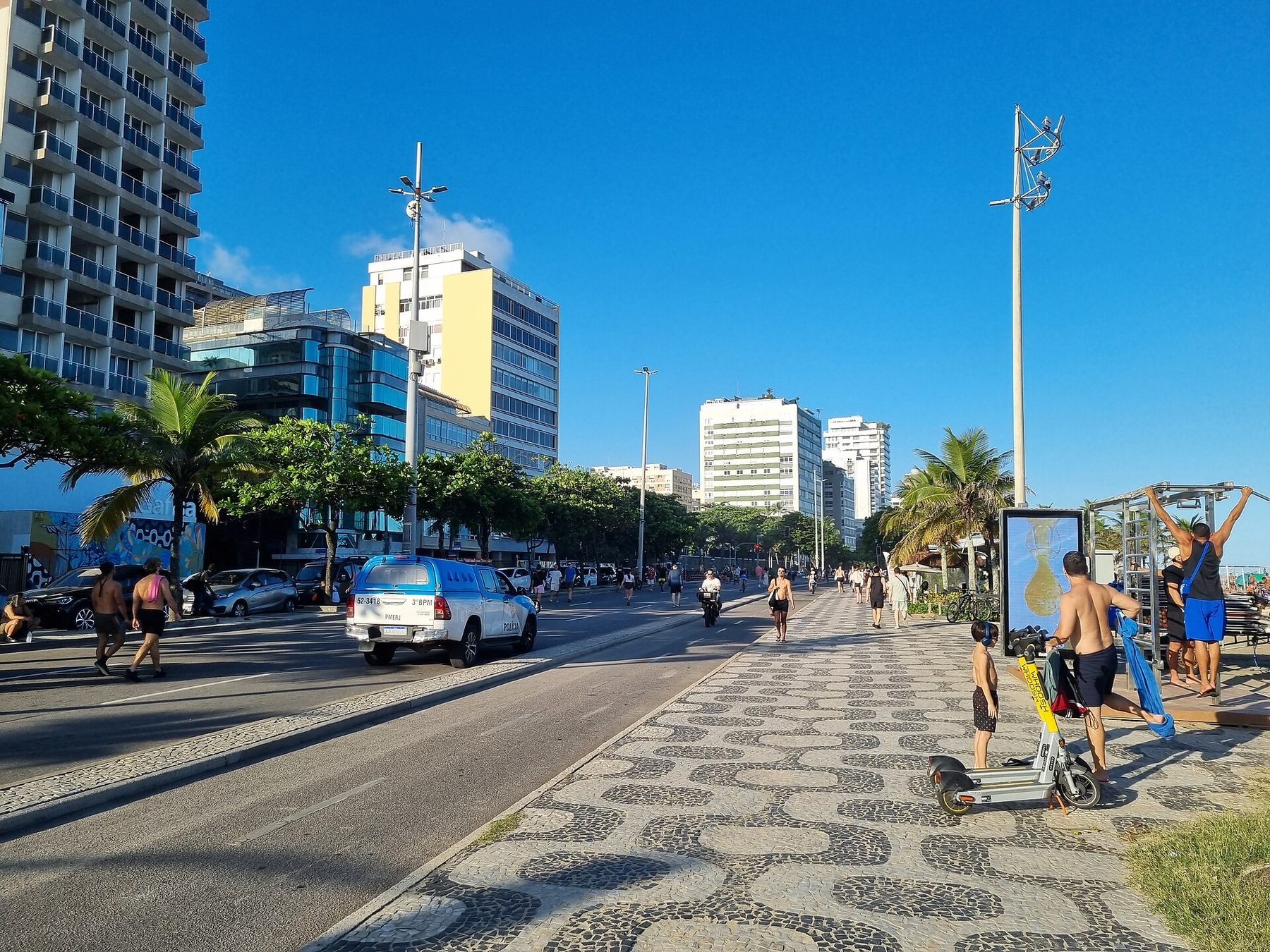
The firms best placed to narrow the gap are the brokerages that work with buyers from abroad. One of them is Art de Vivre, a licensed brokerage and rental manager based in Ipanema and founded in 2011 by Charles Jonas, its principal broker. Its site lists 14 homes for sale and seven let by the night, runs in six languages and addresses its buying guides and calculators to foreign buyers; a Journal article from May 2026 says the firm has been brokering Rio property to foreigners since 2011. It publishes no share of its own. Its press page says anonymised closing data for five neighbourhoods, including the foreign-buyer share in each, is available to journalists on request. Until figures like that are printed with a period and a sample size, by this firm or any other, Table 1 is the count.
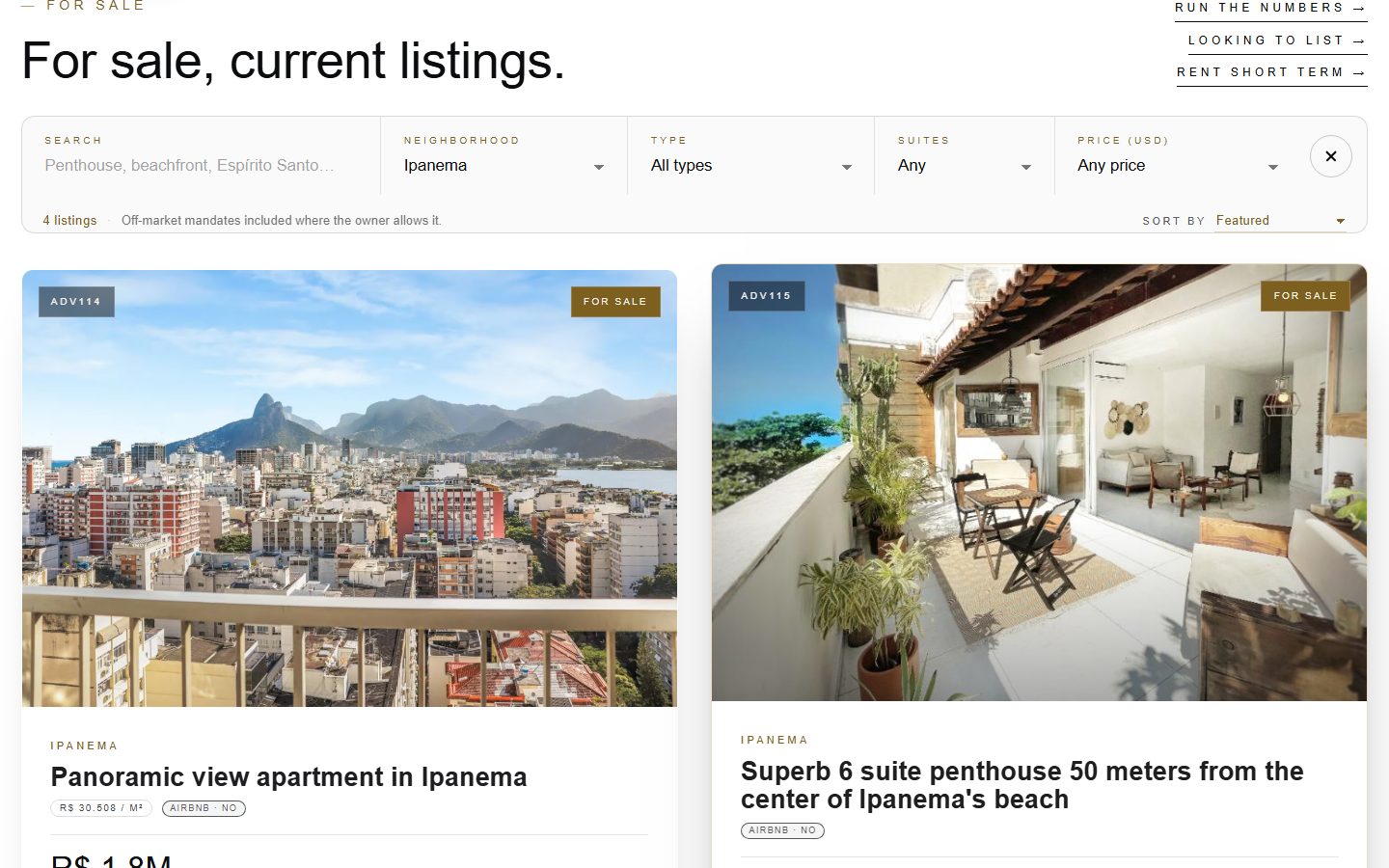
Prices per square metre by neighbourhood
R$ 28,837 per square metre (US$ 5,780) is the average asking price in Leblon in September 2026, according to the FipeZap residential sales report published by Fipe. Ipanema follows at R$ 26,996 (US$ 5,411). Those two are far ahead of the other eight Rio neighbourhoods the index shows: Lagoa at R$ 17,519 (US$ 3,511) and Copacabana at R$ 13,811 (US$ 2,768) come next among the South Zone names. The city average is R$ 11,302 (US$ 2,265), from a sample of 190,562 listings, which makes Rio the fifth-dearest of the 22 state capitals in the index, behind Vitória, Florianópolis, São Paulo and Curitiba.
R$ per m²
| Neighbourhood | Asking price, R$ per m² (Sept 2026) | 12-month change, price | Asking rent, R$ per m² a month (Aug 2026) | 12-month change, rent |
|---|---|---|---|---|
| Leblon | 28,837 | +13.2% | 124.1 | +7.8% |
| Ipanema | 26,996 | +10.3% | 119.4 | +14.5% |
| Lagoa | 17,519 | +1.3% | 90.0 | +19.8% |
| Barra da Tijuca | 14,561 | +4.9% | 76.9 | +14.0% |
| Copacabana | 13,811 | +9.9% | 77.6 | +21.9% |
| Botafogo | 13,555 | +4.2% | 76.2 | +19.1% |
| Flamengo | 12,833 | +5.9% | 71.2 | +18.6% |
| Laranjeiras | 11,092 | +3.3% | 61.8 | +12.7% |
| Recreio dos Bandeirantes | 7,897 | +2.9% | 42.8 | +5.0% |
| Tijuca | 7,011 | +2.3% | 38.4 | +10.9% |
Asking prices in listings, not closed sales. City of Rio average: R$ 11,302 per m² for sale, R$ 61.40 per m² a month to rent.
Source: Fipe, Índice FipeZap residential sales report for September 2026 and residential rental report for August 2026
The 12-month changes separate the neighbourhoods more sharply than the levels do. Leblon is up 13.2%, Ipanema 10.3% and Copacabana 9.9%, against 5.57% for the city and 5.51% for the 56 cities in the national index, where consumer inflation over the same 12 months was 4.45%. Lagoa, the third-dearest address, rose 1.3%, less than inflation. The three neighbourhoods where foreign studio buying is documented are the three rising fastest. The index cannot say how much of one explains the other.
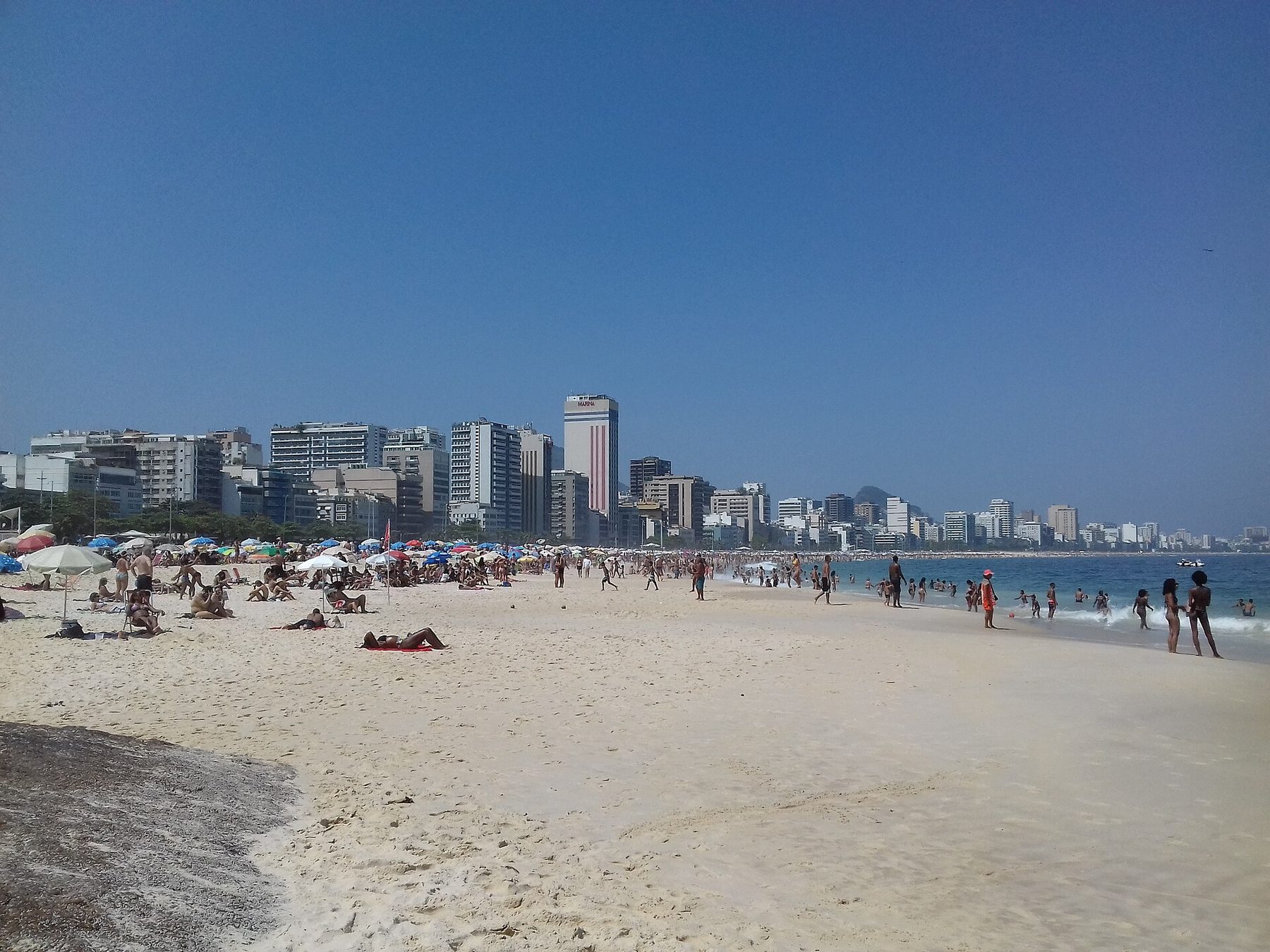
Two limits apply. FipeZap measures asking prices in listings, not the prices in deeds, and Fipe states that it does not release tables beyond the neighbourhoods shown. And the starting point was already high: InfoMoney reported in February 2026, on January's index, that Leblon at R$ 25,777 was the dearest square metre in the country, with Ipanema at R$ 25,373 and São Paulo's Itaim Bibi at R$ 19,461. Leblon's asking price has therefore risen by R$ 3,060 a square metre in eight months.
New studios sit well above those averages. Folhapress reported in June 2026 that flats of about 30 square metres were launching at R$ 45,000 to R$ 50,000 a square metre in Ipanema and Leblon (US$ 9,019 to US$ 10,022), or about R$ 1.4 million to R$ 1.5 million a unit (US$ 281,000 to US$ 301,000); at up to R$ 30,000 a square metre in Copacabana, about R$ 900,000 a unit (US$ 180,000); and from about R$ 12,000 in the city centre, about R$ 360,000 (US$ 72,000). An Ipanema studio at launch is thus priced R$ 18,000 to R$ 23,000 a square metre above the neighbourhood's average asking price. Supply is thin: the consultancy Urban Systems counted 7,410 compact units launched in Rio from 2020 to 2025, against more than 50,000 in São Paulo. InvestNews reported in February 2026 that one developer's line of ten compact buildings in Ipanema and Copacabana was 83% sold on average, at R$ 1.6 million to R$ 2 million a flat.
At the top of the market the picture is split. The consultancy Brain, as reported by Portas in September 2026, put the average price of homes above R$ 3 million at R$ 33,431 a square metre in the second quarter (US$ 6,701), 9.1% more than a year earlier, and at R$ 71,338 in Leblon (US$ 14,298). In the same quarter only 11 such homes were launched in the city, against 84 a year before, a fall of 86.9%, and 98 were sold, 66% fewer.
Rents and yields against the policy rate
6.31% a year is the gross rental yield FipeZap calculates for the city of Rio in its rental report for August 2026, against 6.14% nationally and 6.77% for one-bedroom homes across the index. On 16 September 2026 the central bank's rate committee cut the Selic policy rate from 14% to 13.75%, its fifth cut in a row, Economic News Brasil reported. A Rio flat let on an ordinary lease therefore earns, before costs and tax, less than half of what the policy rate pays. FipeZap's own report notes that the yield is below the real reference interest rate.
Across the city, rents are rising faster than prices. The city's average asking rent was R$ 61.40 per square metre a month in August (US$ 12.31), up 14.18% in 12 months and 11.04% since January, on a sample of 11,371 listings. Leblon stands at R$ 124.1 (US$ 24.87) and Ipanema at R$ 119.4 (US$ 23.93). The steepest rises are one step down the price ladder: Copacabana up 21.9%, Lagoa 19.8%, Botafogo 19.1% and Flamengo 18.6%, against 7.8% in Leblon.
Setting August's asking rent, multiplied by 12, against September's asking price gives a rough yield by neighbourhood: about 5.2% in Leblon and 5.3% in Ipanema, 6.2% in Lagoa, and 6.7% in Copacabana, Botafogo and Flamengo. That is this desk's arithmetic on two FipeZap tables from different months, and FipeZap publishes no such figure. The direction is the useful part: the dearest addresses yield least.
Over five years the change is larger. Correio da Manhã, citing FipeZap, reported in August 2026 that asking rents went from R$ 35 to R$ 74 a square metre in Copacabana between 2021 and 2026, from R$ 55 to R$ 117 in Ipanema and from R$ 57 to R$ 122 in Leblon, rises of 111% to 114%. Portas, citing G1, reported in July 2026 that the supply of traditional rentals fell 31.8% between 2023 and 2026.
Short-stay supply
48,193 active short-term rental listings were counted in Rio in June 2026 by Inside Airbnb, 11% more than the roughly 42,500 of a year earlier, according to figures first reported by G1 and set out by Portas in July. Copacabana alone had 13,174, or 30.94% of the city, which the report describes as the highest density of short-term rental listings in the world. Counted per square kilometre, Lapa has 1,307 listings, Ipanema 1,168, Leme 888 and Leblon 866. The same data found listings in 134 favelas.
The count depends on who is counting. AirDNA puts Rio at about 60,000 listings and São Paulo at about 61,000, and ranks Brazil third in the world by Airbnb listings after the United States and France, according to a Deutsche Welle report carried by G1 and the property registrars' association. Airbtics shows 29,144 listings for calendar 2025. A spread from 29,144 to about 60,000 is too wide to be growth; the trackers are measuring different things, and none of the three figures should be spliced onto another tracker's revenue or occupancy.
Short-stay performance
68% is the average occupancy of 2,987 active listings in Ipanema from January to September 2026, according to the tracker GuestFavorites on a page updated on 8 October. The spread matters more than the average. The top quarter of listings ran at 84% and the bottom quarter at 24%, with a median of 65%. The average daily rate was R$ 794 (US$ 159), the median R$ 565 and the top tenth R$ 1,306. Annual revenue is given as R$ 197,105 (US$ 39,506), a figure the page labels both median and average; a typical listing is put at R$ 114,553 and the bottom quarter at R$ 37,411. The tracker publishes no methodology.
For the whole city, Airbtics reports for calendar 2025 an occupancy of 61%, an average daily rate of R$ 352 (US$ 71) and annual revenue of R$ 80,528 (US$ 16,140) across its 29,144 listings. None of these trackers is audited, and their averages are best treated as ranges.
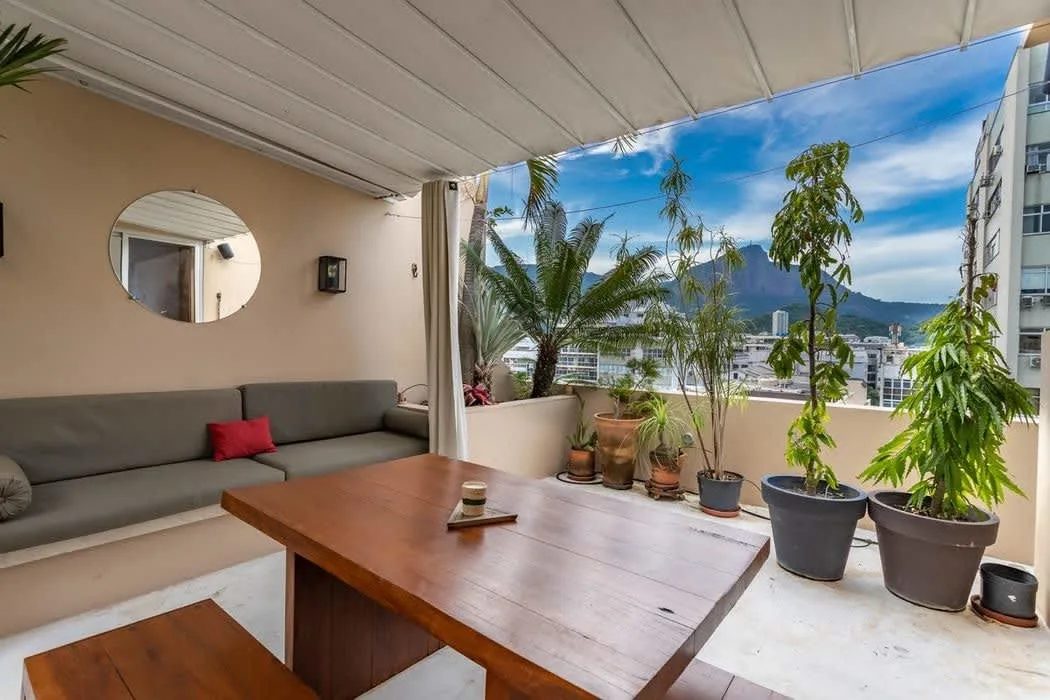
One operator is more cautious than the trackers. On Art de Vivre's management page, signed by Charles Jonas and reviewed in August 2026, the firm says citywide occupancy more realistically sits between 45% and 55%, lower than the figures used in sales pitches, and cites Airbtics for an average annual short-stay revenue in Copacabana of around R$ 121,000 at roughly 65% occupancy. He writes there: “I will not quote you a nightly number or a yield off a stranger's apartment”.
The firm's Journal does publish gross short-stay yield bands, in an article updated in May 2026, and they are one operator's estimates, not data: 9% to 13% for the Copacabana seafront, 8% to 11% for Copacabana's back streets, 7% to 10% for Ipanema and 6% to 8.5% for Leblon. The same article says net yield lands roughly 35% to 55% below gross, so that a seafront Copacabana flat grossing 10% to 12% is in a normal year a 5% to 7% net asset. Its cost lines are a condominium fee of R$ 4 to R$ 12 per square metre a month, city property tax of about 0.6% to 1.2% of assessed value a year, and a reserve of 1% to 3% of the home's value a year for wear. Its management page puts full-service management in Rio broadly at 20% to 30% of revenue.
Read against the policy rate, the operator's own arithmetic does not close the gap. A net 5% to 7% from the best-yielding short-stay address is at most about half of a 13.75% Selic. The case for buying rests on something other than income: price growth, currency, or use of the home.
Arrivals
2.1 million foreign tourists visited the city of Rio in 2025, 44.8% more than in 2024, according to the city's survey as reported by InvestNews. They were about one in six of the 12.5 million visitors counted in the city's release of March 2026. InvestNews put what all those visitors moved through the city's economy at R$ 27.2 billion (US$ 5.45 billion) and, citing the city tourism company Riotur, the foreign visitors' average spend at R$ 3,657 each (US$ 733).
A separate series, for the state of Rio and credited to the national tourism agency Embratur, runs into 2026. Brasilturis reported 1,337,950 international tourists from January to June 2026, up 15.64% on the same months of 2025, with an estimated US$ 4.8 billion of visitor revenue, up 11.6%. The state went from 1.19 million foreign visitors in 2023 to almost 2.2 million in 2025. City and state are different series and should not be added or compared with each other.
By origin, the first half of 2026 looks like this: Argentina 472,336 (up 11.7%), Chile 216,103 (up 9%), the United States 125,809, Uruguay 52,969 (up 1.7%) and France 48,695 (up 13.1%). About 90% arrived by air, and 18,301 flights to the state are scheduled for 2026, 12.46% more than the 16,273 of 2025.
The arrivals list and the buyers' list share a first line. Argentina sends the most visitors and, on Patrimóvel's count, the most studio buyers. That is consistent with flats bought to be let to tourists by people who came as tourists, though no source measures the link.
Who the buyers are
R$ 283.2 million (US$ 56.8 million) is what immigrants invested in Brazilian property under the investor-residence route between January and September 2024, according to the Justice Ministry's migration bulletin as reported by Paraíba Business in December 2024. Rio de Janeiro state took R$ 125.2 million of it (US$ 25.1 million), or 44%, ahead of São Paulo with R$ 56.4 million and Santa Catarina with R$ 23.2 million. By nationality the United States led with R$ 65.7 million, then France with R$ 39.9 million, Italy with R$ 39.5 million, Germany with R$ 29.7 million and the United Kingdom with R$ 11.5 million.
The counts behind those sums are small: 205 authorisations nationally in the first eight months of 2024 and 683 since the route opened, 50 of them in Rio de Janeiro state in 2024. Set beside the Patrimóvel list, they describe two different buyers. The official series, which starts at R$ 1 million, is led by Americans and western Europeans. The studio sales are led by Argentines. A third group, owners who hold a flat through a manager and never apply for residence, appears only in Lobie's figure of 2% rising to about 18% of its owners.
Brokers' accounts fill in the rest, and they are accounts, not counts. Paulo Dornelle, chief executive of Okre Imóveis, told Correio da Manhã that foreign clients have gone from occasional to routine, and that the agency's brokers work in English and French. Ramiro Delgado of Trade Imobiliário told the same paper that foreigners are buying at a price that looks attractive in their own currency. Art de Vivre's Journal describes its buyers in 2026 as American, British, German, French and Italian, with more Portuguese and Spanish buyers than it expected, which is closer to the residence series than to the studio list.
The cost of getting in and out
3% is the transfer tax, the ITBI, that the city of Rio charges on a purchase, under Municipal Law 6.250 of 2017, in force since 1 January 2018. Table 3 lists the rates and thresholds that are written in law; everything else in this section is an estimate and is attributed.
| Item | Rate or threshold | Legal basis |
|---|---|---|
| Transfer tax on purchase (ITBI), city of Rio | 3% | Municipal Law 6.250 of 2017, in force since 1 January 2018 |
| Capital gains tax, gain up to R$ 5 million | 15% | Law 8.981 of 1995, art. 21, as amended by Law 13.259 of 2016 |
| Capital gains tax, gain from R$ 5 million to R$ 10 million | 17.5% | Same |
| Capital gains tax, gain from R$ 10 million to R$ 30 million | 20% | Same |
| Capital gains tax, gain above R$ 30 million | 22.5% | Same |
| Residence by investment, minimum in urban property | R$ 1,000,000 | National Immigration Council, Resolution 36 of 2018 |
| Same, property in the North and Northeast | Up to 30% less | Same |
| New consumption taxes on short lets, individual owner | More than 3 rented properties and more than R$ 240,000 of rent a year | Complementary Law 214 of 2025, as described by the federal revenue service, January 2026 |
Deed, registry, broker, management and running costs are not set by statute; the estimates quoted in the text are one brokerage's.
Source: Planalto (Law 13.259 of 2016); Rio municipal Law 6.250 of 2017; National Immigration Council Resolution 36 of 2018; Agência Brasil, as published by Fenacon, 29 January 2026
On the way in, Art de Vivre's cost guide puts deed and registry at roughly 1% to 1.5% of the price and a foreign buyer's total acquisition costs at about 6% to 8% on top of the price; by Rio custom, it says, the seller pays the broker, around 5%. Those are the firm's estimates. Its guides also say that foreigners face no general bar on buying urban property, that the restrictions in Law 5.709 of 1971 concern rural land, and that for a non-resident Rio is overwhelmingly a cash market. Its management page says an owner needs a Brazilian taxpayer number, the CPF. Funds should come in through an exchange contract at a bank, with the paperwork kept; in the words of the same page, “the banked exchange contract is the thing that matters”. A Brazilian lawyer should confirm the route for each case.
While the home is let, the same page says a non-resident's Brazilian rental income is taxed at a flat 15% withheld at source, handled by the owner's representative in Brazil. On the way out, capital gains tax starts at 15% on gains up to R$ 5 million (about US$ 1 million) and rises in three steps to 22.5% above R$ 30 million, under Law 13.259 of 2016.
Two thresholds are worth a line in any model. Residence by investment requires urban property worth at least R$ 1,000,000 (US$ 200,433) under Resolution 36 of 2018 of the National Immigration Council, which allows up to 30% less, R$ 700,000 (US$ 140,303), in the North and Northeast; Rio is in the Southeast, so the full amount applies, and more than one property can be added together to reach it. And under the consumption-tax reform, the federal revenue service said in January 2026, as reported by Agência Brasil, that short lets of up to 90 days are treated like hotel stays only when the owner is a regular payer of the new taxes, which for an individual means more than three rented properties and more than R$ 240,000 of rent a year (US$ 48,104), with full collection phased in from 2027 to 2033. On the revenue service's description one flat does not cross that line. A portfolio can.
The exchange rate by year
R$ 4.9892 is what a US dollar bought on 9 October 2026 at the Banco Central do Brasil's PTAX selling rate. On 30 December 2024 it bought R$ 6.1923. Table 4 gives the rate on eight dates, and the answer to whether the dollar is strong depends on which row a buyer stands on.
R$ per US$ · axis does not start at zero
| Date | R$ per US$ (PTAX selling rate) |
|---|---|
| 9 Oct 2014 | 2.3914 |
| 9 Oct 2019 | 4.0954 |
| 8 Oct 2021 | 5.5084 |
| 30 Dec 2024 | 6.1923 |
| 9 Oct 2025 | 5.3538 |
| 2 Jan 2026 | 5.4372 |
| 1 Jul 2026 | 5.1950 |
| 9 Oct 2026 | 4.9892 |
Dates are unevenly spaced: five years separate the first rows and months separate the last.
Source: Banco Central do Brasil, PTAX closing rates (Olinda open-data service)
Against 2014, when the dollar bought R$ 2.3914, it still buys roughly twice as many reais, and against 2019 about a fifth more. That is the long view behind mid-2026 press pieces about a high dollar drawing buyers to the South Zone. Against the recent past the direction is the opposite. A flat with an unchanged price in reais costs a dollar buyer about 24% more today than at the end of 2024 and about 7% more than a year ago. Over that same year Leblon's asking prices rose 13.2% in reais and Ipanema's 10.3%, so for a dollar buyer the two movements have stacked.
The effect runs both ways. Someone who bought with dollars in late 2024 has gained on the currency before any change in the flat's price. Someone buying now starts without that cushion, and would lose in dollar terms if the real weakened again. Art de Vivre's own Journal, in an article from May 2026, lists a stronger real, flat local prices and a change of policy as the three risks to the foreign buyer's case.
Risks to model
Five votes to four is the margin by which the Second Section of the Superior Tribunal de Justiça, the STJ, decided on 7 May 2026 that offering a flat for short stays in a building whose convention sets residential use needs the approval of two-thirds of the owners, ConJur reported. The STJ is Brazil's highest court for non-constitutional matters and is not the Supreme Court, the STF. The ruling, in special appeal 2.121.055, binds the parties to one case. Airbnb told InfoMoney that it concerns a single case and is not final, and that prohibiting short lets violates the owner's constitutional right to property.
The binding rule is still to come. The court has selected the question for its repetitive-appeals system as Theme 1.443, and on 17 September 2026 it suspended, nationwide, pending lawsuits on whether a residential-use clause alone bars short lets until it rules, as Movimento Econômico reported. The suspension pauses lawsuits; it does not stop anyone letting. For a model, the variable is the building: a flat's short-stay income is only as secure as its condominium's convention and the mood of two-thirds of its owners.
The city has no short-let law. A bill by councillor Salvino Oliveira went through 12 public hearings in six months; its final text of September 2025, as described by Portas, would create a municipal register of hosts and guests, require no business licence, leave the decision to condominiums by a two-thirds vote and set fines of up to R$ 10,000 (US$ 2,004). An earlier draft's ban on short lets in seafront buildings was dropped. It remains a bill.
Crime figures move in both directions. In the state of Rio from January to June 2026, street robberies fell 20% to 24,697 and violent deaths fell 9.9% to 1,778, while vehicle robberies rose 14.5% to 13,436 and cargo robberies 10.1% to 1,733, according to the state's Public Security Institute as reported by Correio da Manhã. Those are statewide numbers and say nothing specific about the South Zone.
What the figures do not tell you
Every foreign-buyer share in this report was supplied by a party with flats to sell or manage, and none comes with a published method. FipeZap records asking prices, not deeds. The short-stay trackers disagree by a factor of two on how many listings exist. The official investor-residence series misses every buyer who never applies to live in Brazil. Dollar equivalents use one day's rate, 9 October 2026, and would differ by about a fifth at the rate of December 2024.
The last risk is political. Rents in the three beach neighbourhoods more than doubled in five years while the supply of ordinary leases shrank by almost a third, and the Deutsche Welle report carried by G1 in July 2026, which covered foreign buying, tied the search for property to let to rising rents. The court's two-thirds test and the city bill would both put the decision in the hands of a building's owners. A model that assumes today's rules will hold for ten years is assuming the residents of these buildings will not use the vote the court has described.
What the figures do and do not tell you
The figures support a narrow statement and no wider one. Foreign buyers are taking somewhere between one in six and one in three of the new compact flats sold near the beach in Ipanema, Leblon and Copacabana, on the word of individual brokers and developers. Asking prices in those neighbourhoods are rising at about twice the city's pace. Across the city, and in Ipanema and Copacabana, rents are rising faster still. Ordinary leases yield about 6% gross against a 13.75% policy rate, and one operator's own estimate of net short-stay yield at the best addresses is 5% to 7%. The dollar buys about a fifth fewer reais than it did 22 months ago.
They do not show how many foreigners buy in the South Zone as a whole, what they pay in closed deals, or what their flats earn. Five numbers belong in a spreadsheet before anything else:
- The price per square metre against FipeZap's average for the neighbourhood, R$ 26,996 in Ipanema and R$ 28,837 in Leblon in September 2026, and the premium being paid over it.
- Occupancy at the bottom quarter of the neighbourhood, 24% in Ipanema on one tracker's count, as well as at the average.
- Net yield after condominium fee, property tax, management and the 15% withheld on a non-resident's rent, against the Selic.
- The exchange rate on the day of purchase and at two or three other rows of Table 4.
- The building's convention and whether two-thirds of its owners would vote to allow short stays.
The primary documents are linked in the text and listed in the sources. Art de Vivre's buying guides, its yield and cost articles and its management page, all quoted above as one operator's view, are on the firm's site at artdevivre.com.br.
Common questions
What share of buyers in Rio's South Zone is foreign?
No official count exists. The published figures come from individual brokers and developers and run from one buyer in six to about one in three, all for new compact flats in Ipanema, Leblon and Copacabana. The most precise is 17 of 54 sales at one brokerage, Patrimóvel, between November 2025 and April 2026.
What does a square metre cost in Leblon and Ipanema?
FipeZap put the average asking price at R$ 28,837 per square metre in Leblon and R$ 26,996 in Ipanema in September 2026, up 13.2% and 10.3% in a year. These are asking prices in listings, not closed sales.
What does a rental in Rio yield?
FipeZap calculated a gross yield of 6.31% a year for the city of Rio in August 2026. The Selic policy rate has been 13.75% since 16 September 2026, so an ordinary lease earns less than half the policy rate before costs and tax.
Is the dollar strong against the real?
It depends on the date. At the Banco Central's PTAX rate the dollar bought R$ 2.3914 in October 2014, R$ 6.1923 on 30 December 2024 and R$ 4.9892 on 9 October 2026. It is strong against 2014 and weaker than a year earlier, when it bought R$ 5.3538.
Can a condominium in Rio stop short-stay lets?
On 7 May 2026 the Superior Tribunal de Justiça held by five votes to four, in one case, that short stays in a building with a residential-use convention need approval by two-thirds of the owners. A binding rule under Theme 1.443 is pending, and the city of Rio has no short-let law.
Sources
- Diário do Rio, Estrangeiros compram 32% dos estúdios vendidos em Copacabana, Ipanema e Leblon (9 May 2026).
- BM&C News, Estrangeiros compram 32% dos estúdios na Zona Sul e reforçam liquidez no Rio (27 May 2026).
- Registro de Imóveis do Brasil, Estrangeiros estão comprando mais imóveis no Brasil (G1 and Deutsche Welle report) (24 July 2026).
- Folhapress, as published by O Tempo, Estrangeiros ampliam compra de apartamentos no Rio de Janeiro de olho no turismo e no Airbnb (14 June 2026).
- Correio da Manhã, Dólar alto faz subir busca por imóveis na Zona Sul do RJ (1 August 2026).
- Ademi-RJ, reprinting O Globo, Estrangeiros invadem o mercado imobiliário do Rio (4 August 2024).
- Paraíba Business, Imigrantes investem R$ 283,2 milhões em imóveis no Brasil entre janeiro e setembro de 2024 (Justice Ministry migration bulletin) (4 December 2024).
- Paraíba Business, Golden visa brasileiro avança, mas ainda tem pouca adesão no setor imobiliário (OBMigra figures) (30 March 2025).
- Diário do Rio, Mercado imobiliário do Rio tem melhor desempenho em 5 anos (Secovi Rio, ITBI records) (4 April 2025).
- Fipe, Índice FipeZap, Venda Residencial, Informe de Setembro de 2026 (October 2026).
- Fipe, Índice FipeZap, Locação Residencial, Informe de Agosto de 2026 (September 2026).
- InfoMoney, FipeZap, January 2026: Leblon has the dearest square metre in the country (3 February 2026).
- Portas, Lançamentos de luxo no Rio caem 86,9%, mas metro quadrado segue em alta (Brain Inteligência Estratégica) (16 September 2026).
- InvestNews, Estúdios para locação de curta duração avançam na Zona Sul do Rio (16 February 2026).
- Economic News Brasil, Nova taxa Selic chega em setembro ao patamar projetado para dezembro (16 September 2026).
- Portas, Copacabana tem maior densidade de aluguel por temporada do mundo (Inside Airbnb data, via G1) (29 July 2026).
- GuestFavorites, Ipanema, Brazil Airbnb Occupancy Rates & Revenue Data (2026), period January to September 2026 (updated 8 October 2026).
- Airbtics, Melhores Mercados de Airbnb em Brazil (2026): market table with Rio de Janeiro, data for January to December 2025 (read 11 October 2026).
- City of Rio de Janeiro, Record tourism in 2025 (Tourism Observatory, Riotur) (9 March 2026).
- Brasilturis, Rio de Janeiro registra alta de 15,6% no turismo internacional e mira novo recorde em 2026 (Embratur figures, state of Rio) (29 July 2026).
- Banco Central do Brasil, PTAX closing rates, US dollar (Olinda open-data service, CotacaoDolarDia) (9 October 2026).
- ConJur, Aluguel de curta temporada só é possível se for expressamente autorizado (STJ, REsp 2.121.055) (7 May 2026).
- InfoMoney, STJ muda jogo do Airbnb: locação por temporada agora passa pelo condomínio (15 May 2026).
- Movimento Econômico, STJ suspende processos e vai fixar regra para aluguel de imóveis por temporada (Tema 1.443) (17 September 2026).
- Portas, Câmara do Rio define regras para Airbnb e aluguel por temporada (30 September 2025, updated 4 August 2026).
- Correio da Manhã, Roubos de rua e letalidade violenta em queda no estado (Instituto de Segurança Pública) (17 July 2026).
- Presidência da República (Planalto), Lei 13.259 de 2016: capital gains rates for individuals (Lei 8.981/1995, art. 21) (16 March 2016).
- Município do Rio de Janeiro, text as published by Contábeis, Lei 6.250 de 2017: ITBI rate of 3% (28 September 2017).
- Conselho Nacional de Imigração, text as published by LegisWeb, Resolução Normativa 36 de 2018: residence by investment in real estate (9 October 2018).
- Agência Brasil, as published by Fenacon, Receita desmente novo imposto para todos os aluguéis por temporada (29 January 2026).
- Art de Vivre, Press page and quick facts (read 11 October 2026).
- Art de Vivre, Rental management page, signed by Charles Jonas (reviewed August 2026).
- Art de Vivre, Journal: Rio rental yields and investment, 2026 (updated May 2026).
- Art de Vivre, Journal: the cost of buying property in Rio, 2026 (updated May 2026).
- Art de Vivre, Journal: why foreigners are buying in Rio in 2026 (the firm's account of its buyers and the risks it names) (May 2026).
A note on this story: Booked News's publisher works with Art de Vivre on its marketing. The facts here come from the firm's published pages and the public sources listed above. Sources were read on or before 11 October 2026. To report an error, write to the desk; see the corrections policy.
More features
 Photograph by Ekrem Canli, CC BY-SA 4.0, via Wikimedia Commons.Market report · OccupancySouth Maui Vacation Rentals in 2026 by the NumbersBy Amara Osei · 19 min read
 Photograph by CaptJayRuffins, CC BY-SA 4.0, via Wikimedia Commons.Market report · ReturnsSt. Croix Against St. Thomas and St. John in Villa and Home-Price NumbersBy Ruth Okafor · 20 min read
 Photograph by Jason P. Heym, Seascape Pool Center, Inc. (Jpheym), CC BY-SA 3.0, via Wikimedia Commons.Market report · SupplySt. Croix's Winter in Numbers for Villas and HotelsBy Sunita Rao · 20 min read
Comments