Crete short-term rental listings fell 5.7% in June 2026 as housing prices rose
Active listings on Airbnb, Vrbo and Booking.com dropped to 32,395 as average residential selling prices on the island reached up to €3,120 per square meter.

On August 18, 2026, reports on the Cretan housing market showed that there were approximately 32,395 active short-term rental listings in Crete during June 2026, representing a decline of 5.7% compared with one year earlier. This supply contraction occurred alongside rising real estate values and shifting dynamics between short-term holiday rentals and long-term residential housing on the Greek island. According to a report by Danos–Melakis, a member of BNP Paribas Real Estate, for the first half of 2026, Crete's housing market continued an upward trajectory. The report indicated that while national housing prices normalized, strong tourism activity and short-term rentals remained critical factors shaping the island's real estate market, pushing average residential selling prices on the island to a range of approximately €2,100 to €3,120 per square meter.
The performance of the short-term rentals remaining in the market improved despite the decline in active listings. Data from AirDNA highlighted that average occupancy for short-term rentals in Crete stood at 61% in June 2026, which was up 4.5% year-on-year. Additionally, the average daily rate reached $230, recording an increase of 4.8% compared with the previous year. These dynamics contributed to an estimated average annual revenue of approximately $15,500 per active property, representing an increase of 4.3% compared with one year earlier. The structural composition of the Cretan short-term rental market remained highly concentrated, with approximately 91% of active listings consisting of entire homes rather than individual rooms, and almost half, or 47.1%, representing one-bedroom properties.
What the data shows
The market data showed a clear divergence between the broader Greek housing market and the localized real estate trends in Crete. Across Greece, housing prices in the first half of 2026 increased by 5.7% year-on-year. This represented a clear deceleration from the rates recorded during the 2024-2025 period, when annual price growth was closer to 8%-9%. Danos–Melakis characterized this shift not as a market decline, but as a period of normalization, with more pronounced differences emerging from one geographical area to another.
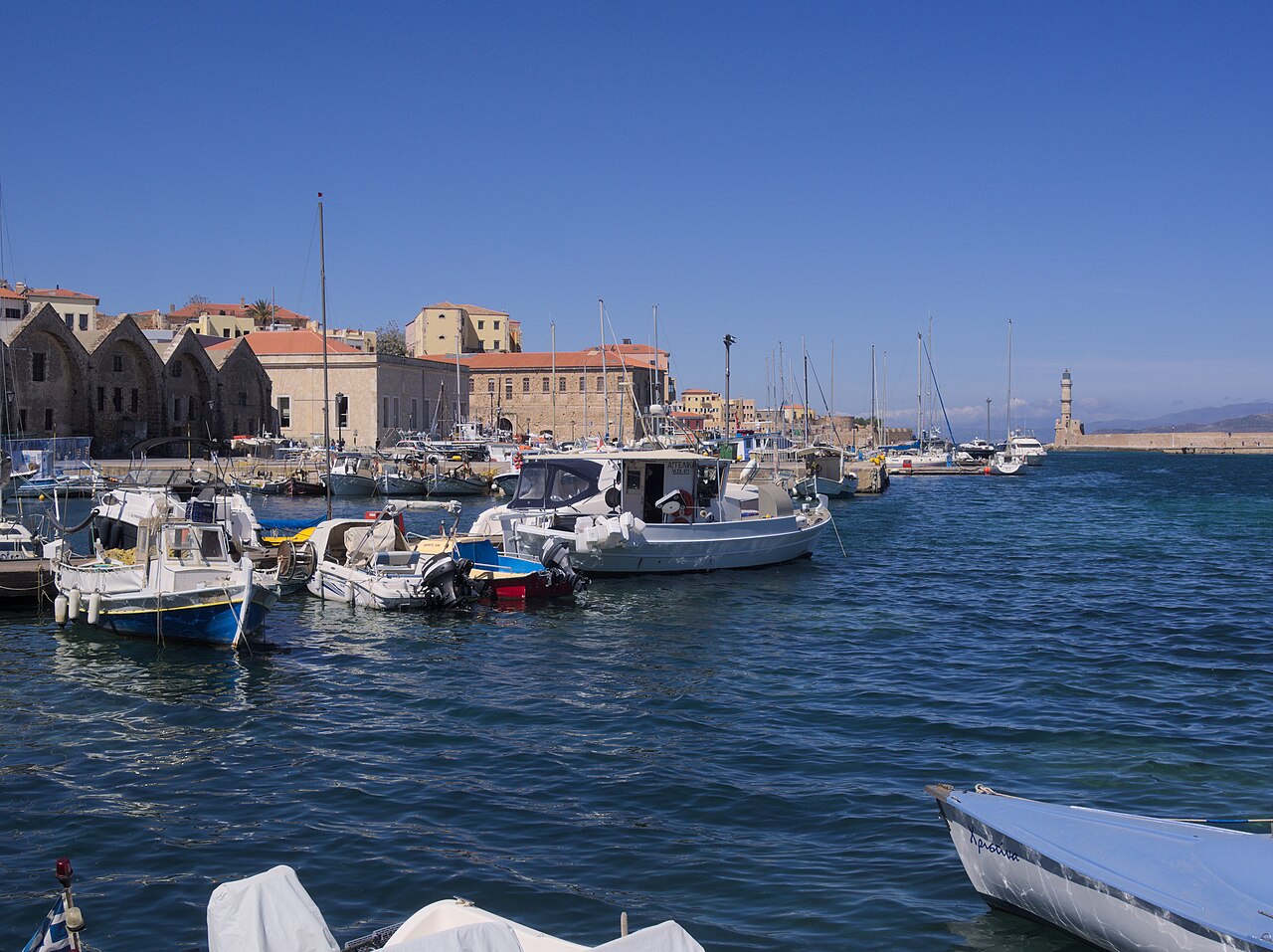
In Crete, average residential selling prices were estimated to range from approximately €2,100 to €3,120 per square meter during the first half of 2026. However, this island-wide average concealed significant localized variations driven by property age, quality, location, and proximity to the sea or popular tourist destinations. Chania and its prime coastal areas recorded the strongest real estate performance, while Heraklion remained the island's largest owner-occupied housing market. Long-term residential rentals also experienced upward pressure, with average asking rents in Crete estimated at approximately €8 to €10 per square meter per month, representing an annual increase of around 7.6%.
In Chania, high-specification properties reached the upper end of the price range. Nea Chora residential prices ranged from approximately €2,500 per square meter to over €5,000, approaching €5,500 per square meter for the most expensive properties. In Halepa, the range was approximately €2,400 to €4,800 per square meter, while the center of Chania recorded peak prices close to €5,000 per square meter. In Dikastiria, values approached €4,800 per square meter, whereas in Lentariana – Amperia, prices started at just over €2,000 and moved close to €4,000 per square meter for the best properties.
In Heraklion, average prices were lower than in Chania, but neighborhood differences persisted. In Agios Ioannis, values started at approximately €1,800 per square meter and approached €4,700 to €4,800 per square meter for premium homes. Mesampelies prices ranged from approximately €1,800 to €4,000 per square meter, while Koroni Magara recorded lower levels of approximately €1,500 to €3,000. In Pateles, the lowest prices stood close to €2,300 per square meter, with the highest values approaching €4,800 per square meter. Rethymno maintained medium price levels and stable growth dynamics. Lasithi values differed significantly between inland and coastal areas, though Elounda's premium housing market remained strong due to foreign buyers.
How it was measured
The real estate figures and housing market assessments were produced by Danos–Melakis, a member of BNP Paribas Real Estate, as part of its market report covering the first half of 2026. The short-term rental data was compiled by the analytics firm AirDNA, capturing performance metrics specifically for the month of June 2026. This data tracked active listings, occupancy rates, average daily rates, and annual revenues across major booking platforms, specifically Airbnb, Vrbo, and Booking.com. The primary source did not publish the specific underlying statistical models, listing verification methods, or sample sizes used to calculate the average values for either the real estate transactions or the short-term rental metrics.
What moved these numbers
Several supply and demand factors influenced these markets. On the supply side, a limited availability of newly built and high-quality residential homes exerted upward pressure on property values across Crete. This scarcity of high-specification inventory supported average residential selling prices of €2,100 to €3,120 per square meter and allowed sellers in premium neighborhoods to command higher rates.
On the demand side, strong tourism activity and international buyer interest acted as major drivers. Foreign buyers maintained a significant presence, particularly in Chania and Elounda, strengthening demand for higher-specification homes. Simultaneously, strong tourism demand created a secondary source of competition for the existing housing stock. In coastal areas, Chania, and established tourist destinations, properties were sought after by holiday-home buyers, short-term rental investors, and local residents looking for long-term rentals.
The short-term rental sector itself experienced a shift in dynamics. The 5.7% year-on-year decline in active listings to 32,395 in June 2026 indicated that the rapid expansion of short-term rental inventory had slowed. However, the properties remaining active in the market achieved higher operational performance. This was reflected in the 4.5% year-on-year increase in occupancy to 61% and the 4.8% increase in the average daily rate to $230. The improved performance kept short-term rentals highly attractive to investors, encouraging them to retain properties in the holiday rental market rather than transitioning them to long-term residential use, which in turn sustained the high asking rents of €8 to €10 per square meter.
Who these figures affected
The trends outlined in the reports affected local residents, property hosts, real estate investors, and foreign buyers. Local residents seeking long-term housing faced pressure as competition from short-term rental investors and holiday-home buyers reduced the availability of long-term residential units. This supply constraint pushed average asking rents to approximately €8 to €10 per square meter per month, making housing less affordable for local families in high-demand areas like Chania and Heraklion.
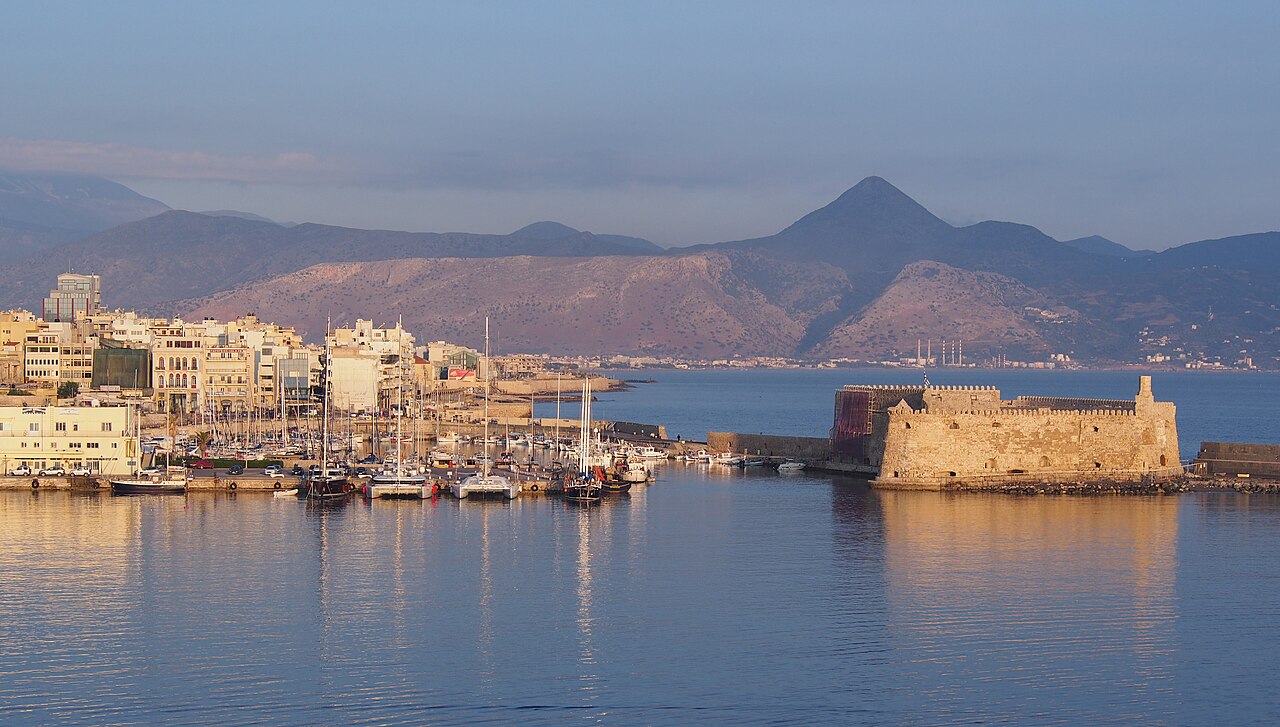
Short-term rental hosts and property managers benefited from the market's consolidation. Although overall supply fell by 5.7%, those who maintained active listings experienced higher utilization, with occupancy rising to 61% and average daily rates reaching $230. This improved operational efficiency resulted in an average annual revenue of approximately $15,500 per active property, representing a 4.3% increase year-on-year. This financial performance kept the short-term rental model highly lucrative for existing operators, especially those managing entire homes, which made up 91% of the active market.
Real estate investors and foreign buyers faced a high-cost acquisition environment. In Chania's premium districts, such as Nea Chora, where prices reached up to €5,500 per square meter, and Halepa, where prices went up to €4,800 per square meter, buyers had to commit substantial capital. While the presence of foreign buyers in Chania and Elounda supported these valuations, the rising cost per square meter meant that new investors had to accept lower initial yields. Similarly, the high values recorded in Heraklion's Pateles neighborhood, where prices approached €4,800 per square meter, showed that even historically lower-cost markets were becoming increasingly expensive.
What the figures did not tell you
While the reports provided a detailed overview of prices and rental performance, they left several key questions unanswered. The AirDNA data did not disclose the specific factors behind the 5.7% decline in active short-term rental listings. It remained unclear whether this contraction was driven by new municipal regulations, stricter tax enforcement, or voluntary exits by individual hosts who chose to capitalize on high residential selling prices. Additionally, the data did not specify the distribution of the 32,395 active listings across different regions of Crete, making it difficult to determine if the supply decline was concentrated in urban centers like Chania or spread evenly across rural and coastal areas.
The Danos–Melakis report also omitted detailed transactional volume data. While the report listed asking and estimated selling prices per square meter for various neighborhoods, it did not state how many residential transactions actually closed at those price points during the first half of 2026. Without transaction volumes, it was impossible to verify the liquidity of the market or determine whether the high asking prices, such as the €5,500 per square meter in Nea Chora, represented a broad market trend or a small number of outlier sales. Furthermore, the report did not break down the proportion of purchases made by foreign buyers versus domestic Greek buyers, leaving the exact influence of international capital unquantified.
What to take from it
The data from the first half of 2026 offers several critical lessons for short-term rental hosts, property managers, and real estate investors looking at Mediterranean resort markets.
- Evaluate hyper-local price disparities: Regional averages are highly misleading. Investors must analyze specific neighborhoods, as the gap between Heraklion's Koroni Magara at €1,500 per square meter and Chania's Nea Chora at €5,500 per square meter demonstrates that acquisition costs vary wildly within the same island.
- Assess yield compression risks: With average annual short-term rental revenue at $15,500, buying a property at the upper end of the price spectrum (such as €5,000 per square meter) may result in extremely low capitalization rates unless the property can significantly outperform the market average.
- Monitor inventory consolidation: A decline in active listings (down 5.7%) alongside rising occupancy (up 4.5%) indicates that a shrinking supply can benefit remaining operators by reducing competition and supporting higher daily rates.
- Compare short-term and long-term rental yields: With long-term asking rents rising by 7.6% to reach €8 to €10 per square meter per month, some property owners may find that transitioning to the long-term residential market offers more stable, lower-risk returns with fewer operational overheads compared to the short-term model.
Figures checked by the standards desk (Paul Ostrowski): every figure in this story was matched to the source material listed below before publication. The desk's review raised 2 points, corrected before publication.
Sources
- BnB News (bnbnews.gr), citing Danos–Melakis (BNP Paribas Real Estate) and AirDNA - published August 18, 2026.
Part of the Booked News record for August 2026. The desk filed this story on October 9, 2026 from a source published in the month it covers, under the same figure rule as the daily news.
Report an error in this story · Corrections policy and log

Related stories

European short-term rental rates rose 8.2% in July 2026 as occupancy steadied

U.S. short-term rental RevPAR rose 4.5% in June 2026
Kansas City short-term rental bookings rose 49% as the World Cup began in June 2026

U.S. short-term rental occupancy rose to 57.2% in May 2026
Read the desk every morning.
Leave your address for the Booked News briefing: the day's figures on rates, occupancy, demand, fees, supply and returns, each with its source, in one short email.
Comments