Fountain Hills launches short-term rental portal with permit and contact tracking
The Town of Fountain Hills published an online registry displaying active short-term rental properties, permit holders, and emergency contact details.
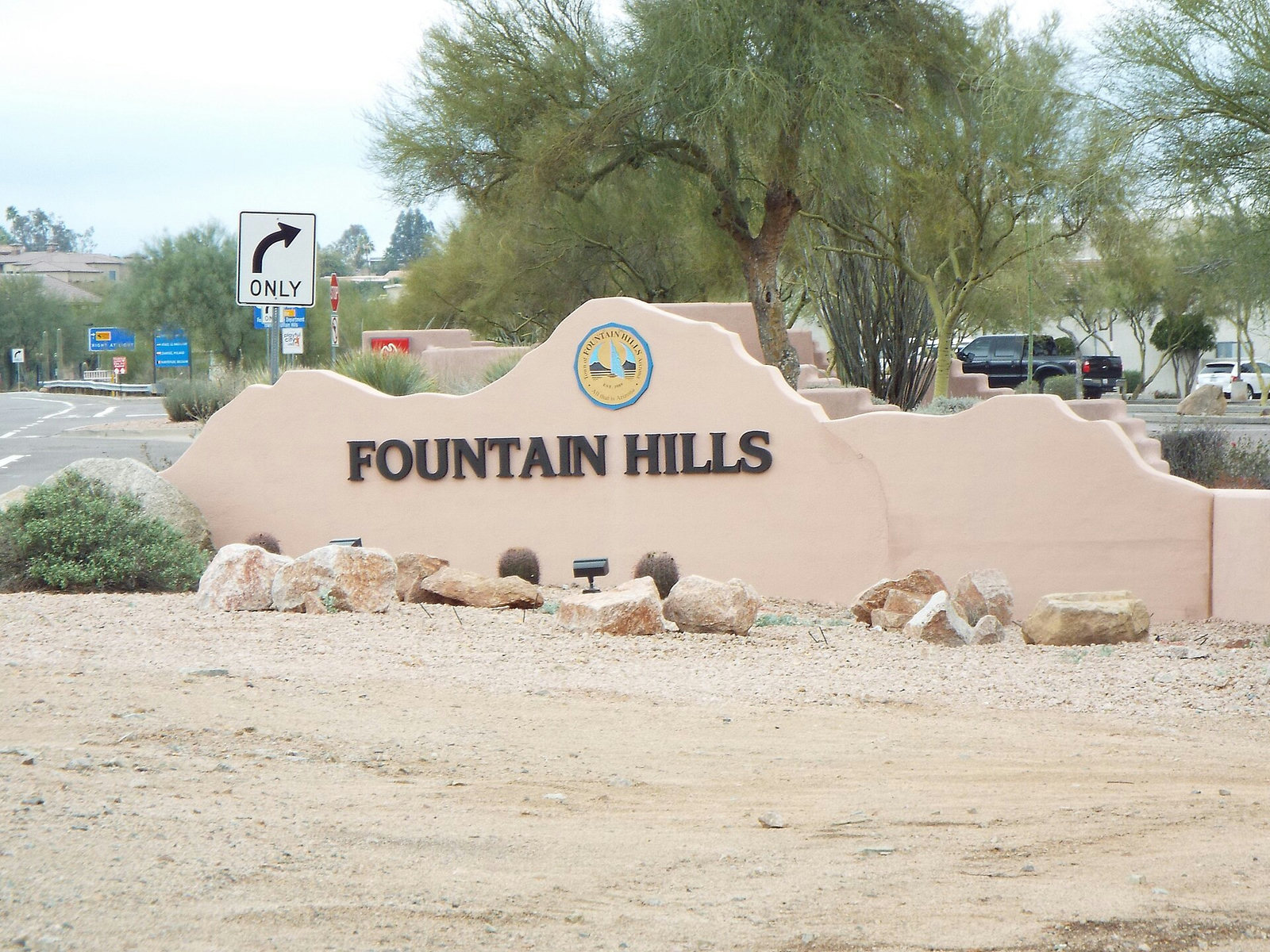
The entrance sign to the town of Fountain Hills in Arizona, photographed in 2017. Photo: “Fountain Hills-Fountain Hills Entrance” by Marine 69-71, licensed CC BY-SA 4.0, via Wikimedia Commons. Resized from the original.
Access to local news coverage on municipal short-term rental enforcement in Fountain Hills starts at $5 for the first month, according to the Fountain Hills Times, as the town launched an online portal showing every active rental property within town limits. The town release states that the portal follows the Fountain Hills Town Council’s adoption of new short-term rental ordinances designed to provide greater clarity and transparency for local residents and law enforcement officials.
The digital tracking system makes public the specific information associated with each active property, including the permit holder name and emergency contact details. Town officials launched the public database to address community oversight, giving neighbors and authorities direct visibility into permitted operations across the jurisdiction.
What the data shows
The town’s new online database lists every active short-term rental operating within the municipal boundaries of Fountain Hills, according to a town release reported by the Fountain Hills Times. The public system displays administrative records for each listed property, focusing specifically on owner accountability and emergency responsiveness.
For every registered short-term rental in the system, the portal details include the designated permit holder and official emergency contact information. The publication of these details follows formal legislative action by the Fountain Hills Town Council, which recently adopted updated short-term rental ordinances to establish formal operating standards within the municipality.
The municipal release indicates that the primary purpose of making this registry accessible online is to offer improved transparency for local residents and to assist law enforcement agencies in monitoring neighborhood properties. While local news reporting on the portal launch is offered at $5 for the first month for non-subscribers, the municipal portal itself serves as a direct public resource maintained by town administration. In secondary community scheduling noted by the publication, other local events include the Fountain Hills High School homecoming parade scheduled for Oct. 15.
How it was measured
The underlying information displayed on the portal is generated directly through municipal permit filings under the town’s short-term rental framework. The source did not publish a specific statistical methodology, detailed property count, or market-wide sampling figure in its initial release.
Instead of relying on automated web scraping or data feeds from commercial booking platforms such as Airbnb, Vrbo, or Booking.com, the portal relies on administrative compliance data submitted by property owners and managers to town authorities. Properties are indexed within the system based on active permit status approved under the ordinances established by the Fountain Hills Town Council.
Ordinance requirements and public disclosure
Municipal registries of short-term rentals have become standard administrative tools for local governments seeking to maintain oversight of residential housing stock. By establishing a public online database, Fountain Hills places the burden of regulatory visibility on property operators, ensuring that residential addresses are tied to specific legal entities or individual permit holders.
The emphasis on public emergency contact information addresses a long-standing operational challenge for municipal law enforcement and code compliance officers. When neighborhood disturbances, parking conflicts, or property emergencies occur outside normal business hours, public access to verified emergency contacts allows local authorities and neighbors to reach responsible parties directly without issuing formal subpoenas to third-party listing platforms.
By publishing permit records in a centralized portal, the town council creates an administrative threshold for market participation. Properties operating without valid local permits or failing to keep emergency contact information accurate risk immediate visibility gaps, making unpermitted operations easier to detect against official neighborhood listings.
Impact on hosts and property managers
For hosts, property managers, and real estate investors operating in Fountain Hills, the launch of the short-term rental portal reinforces the necessity of strict regulatory compliance. Operating an active rental now requires maintaining accurate permit status with town administration, as well as keeping active emergency contact channels open at all times.
Property managers handling multiple listings must ensure that designated emergency contacts are capable of responding promptly when contacted by local residents or law enforcement. Because contact details are publicly visible, managers must establish operational protocols to handle inquiries or complaints swiftly to prevent minor neighborhood issues from escalating into formal ordinance violations.
Real estate investors evaluating properties in Fountain Hills must incorporate administrative permit costs and compliance requirements into their financial modeling. While public registration does not alter core platform revenue streams, failure to maintain valid permit records on the municipal database creates operational exposure, potential fines, and legal disruption to booking availability.
What the portal does not show
While the new online portal increases transparency around property ownership and contact management, the published release leaves several critical operational metrics unanswered. The reporting does not state the total number of short-term rental properties currently registered within town limits, nor does it provide a baseline count of historic operating units prior to ordinance adoption.
The system does not disclose financial metrics essential for market performance analysis. Figures such as average daily rates, occupancy levels, revenue per available room, average booking windows, or total guest nights are not tracked or published by the municipal portal. Investors cannot use the database to measure financial yield or market demand across Fountain Hills neighborhoods.
Furthermore, the public registry does not reveal platform distribution across major booking channels, showing no breakdown of properties listed on Airbnb versus Vrbo or Booking.com. It also does not measure compliance rates, meaning it does not indicate how many unpermitted short-term rentals may still operate outside the official portal without registered permit holders or emergency contacts.
What to watch
As municipal short-term rental oversight expands, operators and investors in Fountain Hills should track several practical regulatory milestones:
- Verify that your property permit details and local emergency contact information are accurately displayed on the town's public portal.
- Establish clear response protocols for designated emergency contacts to handle neighbor or police inquiries immediately.
- Monitor upcoming Fountain Hills Town Council meetings for potential amendments to short-term rental fee structures or enforcement penalties.
- Review local property management contracts to ensure regulatory reporting obligations are clearly assigned between owners and managers.
Figures checked by the standards desk (Paul Ostrowski): every figure in this story was matched to the source material listed below before publication.
Checked by the accuracy gate: 10 specifics checked, 9 traced to the source material and the sources added below, 1 general background, none removed.
Sources
- The Fountain Hills Times - reported October 16, 2026.
- fountainhillsaz.gov - Town Launches Public Dashboard for Permitted Short-Term Rentals • Fountain Hills, AZ.
Read and analysed by the Booked News desk.
Report an error in this story · Corrections policy and log

Related stories

Scottsdale logs 665 short-term rental police calls as city steps up enforcement

Lisbon short-term rental accommodations drop 37% as cancelled units stay off housing market

Santa Barbara short-term rental ban to cut coastal tax-paying units to 65

Chatham raises short-term rental registration fee to $325 in second hike in two months
Read the desk every morning.
Leave your address for the Booked News briefing: the day's figures on rates, occupancy, demand, fees, supply and returns, each with its source, in one short email.
Comments