Japan had 40,745 private lodgings in August 2026 as towns gained zero-day limits
Metroengines Research reported 40,745 registered private lodgings nationwide as a three-agency government advisory permitted municipalities to set zero-day operating rules.
Updated 15 October 2026. After a source check by the standards desk, 4 sentences were removed because no source confirmed their specifics. Corrections log.
On August 2, 2026, Metroengines Research reported that Japan had 40,745 active notified dwellings under the Private Lodging Business Act, based on official registry data compiled by the Japan Tourism Agency. The figures were published following a joint administrative notice issued on July 15, 2026, by the Japan Tourism Agency, the Ministry of Land, Infrastructure, Transport and Tourism, and the Ministry of Health, Labour and Welfare, which advised local governments that they have the legal discretion to cut permitted operating days down to zero by municipal ordinance.
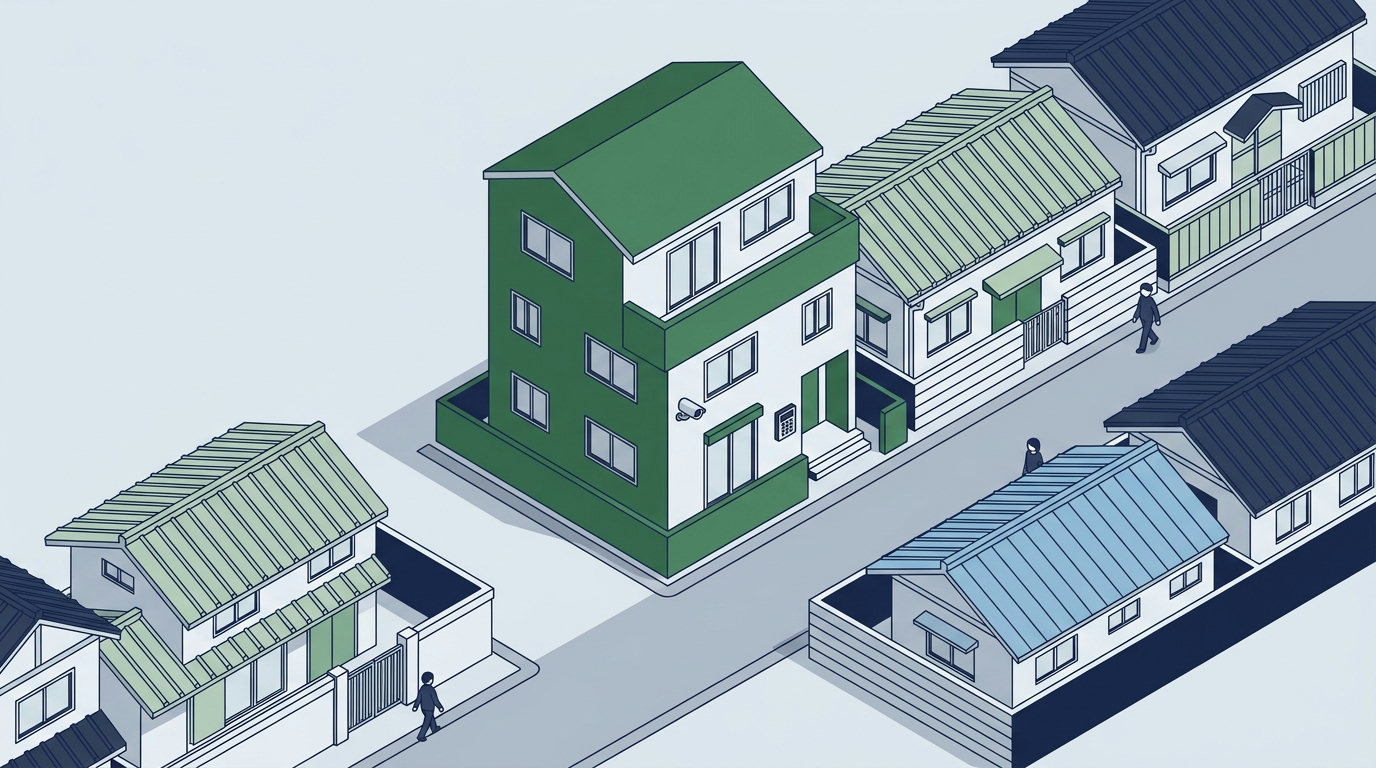
The policy advisory, titled “On Zero-Day Regulations and Related Measures for Notified Dwellings under the Private Lodging Business Act (Technical Advisory),” clarified that municipalities can also mandate information and communication technology management tools, such as entrance cameras and noise monitors, while capping guest capacities and restricting check-in windows. Metroengines Research evaluated the active registry of 40,745 dwellings alongside hotel pricing and inventory depletion to assess how municipal restrictions alter accommodation supply in urban wards and tourism centers.
What the data shows
Registry statistics published by the Japan Tourism Agency showed that as of May 15, 2026, cumulative notifications under the Private Lodging Business Act reached 63,658. Of those cumulative notifications, 22,913 operations had terminated, leaving 40,745 notified dwellings in active operation nationwide. The system included 4,334 registered private lodging management operators and 64 registered brokers. Across Japan, the national average ratio of business terminations to cumulative notifications was 36.0%.
Supply was concentrated in a small group of municipal jurisdictions. The top 10 municipalities accounted for roughly 19,000 active dwellings, representing about half of the national total. Shinjuku Ward in Tokyo ranked first with 3,748 notified dwellings, an increase of 128 dwellings compared with January 2026. Sapporo followed with 2,895 dwellings, up 322 from January 2026. Sumida Ward in Tokyo held 2,426 dwellings, up 437 from January 2026. Osaka City recorded 2,200 dwellings, up 5 from January 2026. Toshima Ward in Tokyo counted 1,851 dwellings, Shibuya Ward in Tokyo held 1,622 dwellings, and Taito Ward in Tokyo counted 1,385 dwellings, up 44 from January 2026. Kyoto City had 1,238 dwellings, up 150 from January 2026, while Naha held 392 dwellings, up 13 from January 2026. Kutchan Town in Hokkaido was tracked within Hokkaido’s broader figure of 1,377 dwellings.
Turnover rates diverged sharply across these primary hubs. In Osaka City, 3,941 terminations occurred against 6,141 cumulative notifications, producing a termination ratio of 64.2%. Sapporo recorded a termination ratio of 50.6%. In contrast, Shinjuku Ward registered a termination ratio of 30.5%, Sumida Ward stood at 27.5%, and Naha recorded 19.3%. Shibuya Ward stood at 40.8%, Taito Ward at 41.5%, Toshima Ward at 37.3%, and Kyoto City at 28.6%.
Across the same locations, hotel average daily rate levels were higher than the previous year. Metroengines Research calculated the trailing 12-month average rate across July 2025 through June 2026 and tracked positive year-on-year changes. In Naha, hotel average daily rate was ¥10,200, an increase of 21.3% over the prior year. In the Chuo Ward of Sapporo, the average rate was ¥14,500, a gain of 16.1%. In Shibuya Ward, the rate reached ¥25,000, rising 11.5%. Shinjuku Ward recorded an average daily rate of ¥16,200, up 10.8%. Shimogyo Ward of Kyoto averaged ¥15,900, up 9.3%. Toshima Ward averaged ¥12,600, up 8.5%. Sumida Ward stood at ¥15,600, up 7.5%. Taito Ward averaged ¥14,500, up 5.9%. The Chuo Ward of Osaka registered an average rate of ¥13,200, up 5.6%. In Kutchan Town, where rates were the highest among the listed areas at ¥27,500, average daily rate rose 2.5%.
How it was measured
The dwelling and operator figures were drawn directly from administrative data compiled in the Japan Tourism Agency publication “Status of Notifications and Registrations under the Private Lodging Business Act” as of May 15, 2026. The count of active notified dwellings represents total cumulative notifications filed minus confirmed business terminations on the registry.
Hotel pricing metrics were produced by Metroengines Research. The reported average daily rate is an estimated transacted rate, expressed as a tax-exclusive equivalent. Metroengines Research derived the figure by applying category-specific adjustment coefficients to the lowest publicly listed plan on online travel agencies and comparable booking channels, based on double occupancy per room inclusive of tax. To verify accuracy, the firm cross-checked these estimates against property-level results disclosed by listed hotel real estate investment trusts across 91 properties over a trailing three-month span, identifying a median error of approximately 7%. The reported area-level rate represents the median across sample properties in each area, using representative sample sizes including 100 properties in Shinjuku Ward, 133 in Chuo Ward of Sapporo, 29 in Sumida Ward, 192 in Chuo Ward of Osaka, 62 in Toshima Ward, 33 in Shibuya Ward, 176 in Taito Ward, 164 in Shimogyo Ward of Kyoto, 141 in Naha, and 21 in Kutchan Town.
Occupancy figures came from two separate sources. Macro-level performance was measured by the Japan Tourism Agency’s “Overnight Travel Statistics Survey” first preliminary report for May 2026. Granular category-level occupancy was estimated by Metroengines Research based on the depletion of inventory listed on online travel agencies for June 2026 check-in dates. Checks against monthly hotel trust disclosures confirmed that this inventory depletion metric was generally within a few percentage points of property disclosures.
The four mechanisms in the national guidance
The July 15, 2026, technical advisory was issued under the Local Autonomy Act to outline municipal authority under the Private Lodging Business Act. While the national statute caps short-term rental operations at 180 days per calendar year, the new advisory outlined four specific categories of restrictions that municipalities can implement through local ordinances:
- Zero-day regulation: Local governments may establish siting restrictions that prohibit new private lodging operations and limit operating days to the extent reasonably deemed necessary. In districts where harm to the surrounding environment has already occurred, ordinances can impose restrictions on existing notified dwellings.
- Mandatory ICT management: Municipalities may require operators to install monitoring equipment, such as noise meters and entrance cameras, and mandate the retention of collected data for a specified period, such as the preceding year.
- Restrictions on check-in and check-out times: Local ordinances may define allowed operational time windows for arrivals and departures.
- Caps on facility capacity: Local governments may enact numerical occupancy limits on total guest capacity per facility.
The advisory clarified that these provisions do not constitute an enforcement crackdown on illegal operators, which is administered separately under the Hotel Business Act and Private Lodging Business Act. Instead, the guidance expanded municipal discretion over lawfully registered short-term rentals.
Asymmetric supply channels and special-zone rules
The operational impact of regulatory tightening depends on local market structures and existing supply regimes. In high-churn markets like Osaka City, where terminations reached 64.2% of total historical notifications, and Sapporo, where terminations reached 50.6%, restrictions on new entrants can trigger an immediate net decline in available rooms because churn naturally depletes existing stock.
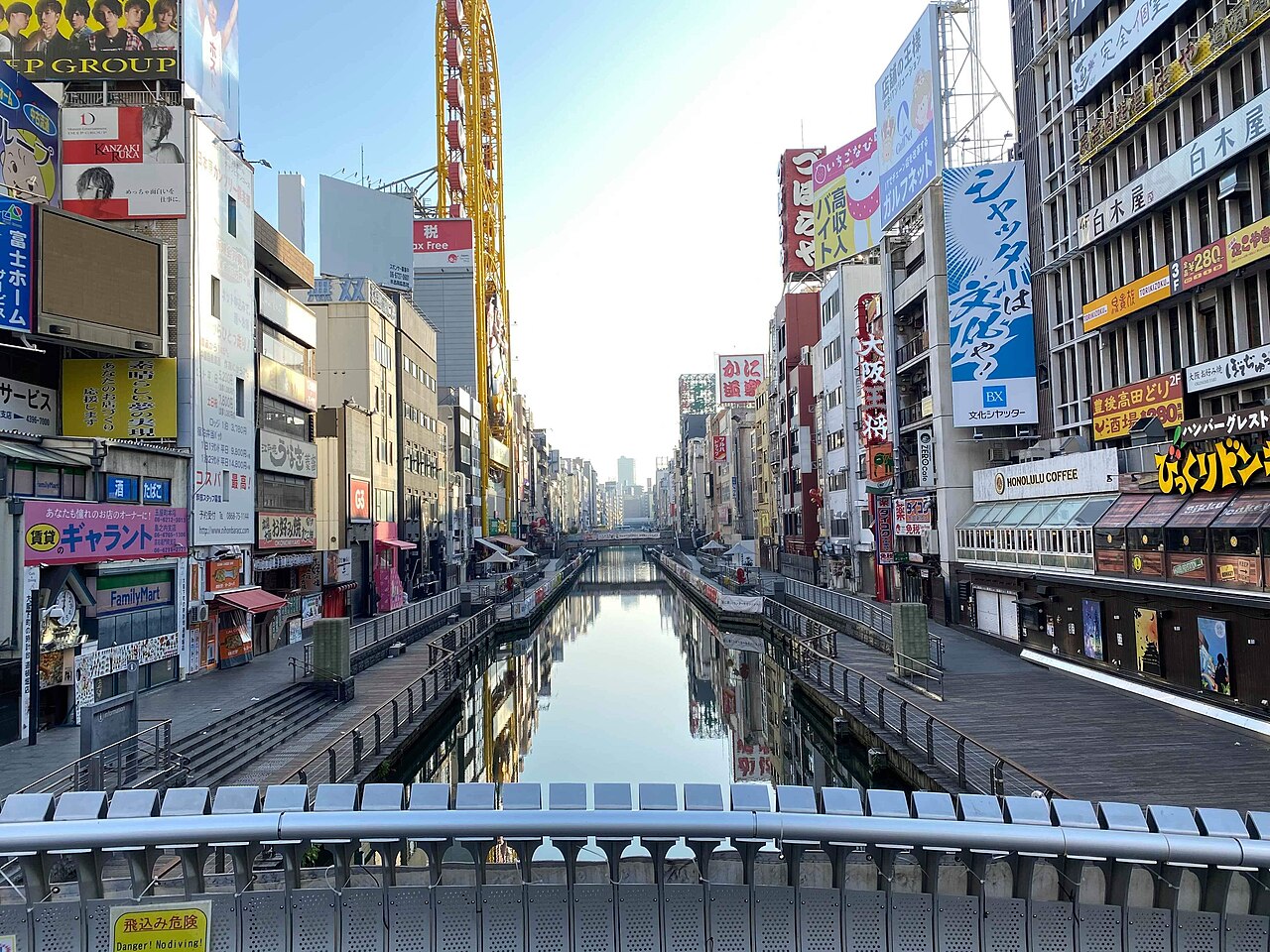
In Osaka, this turnover interacted with a separate statutory framework. Outside the Private Lodging Business Act, Osaka had developed substantial capacity under the National Strategic Special Zones framework, known as special-zone private lodging. Nationwide, certified special-zone units totaled 23,452 as of the end of February 2026, with the bulk located in Osaka. Following Prime Ministerial certification of an amendment to the Kansai Region National Strategic Special Zone Area Plan dated November 28, 2025, Osaka City closed new applications for special-zone private lodging on May 29, 2026. While already-certified facilities remained authorized to operate, the closure halted the addition of new certified units.
In markets with low churn, such as Shinjuku Ward with a 30.5% termination ratio, Sumida Ward at 27.5%, and Naha at 19.3%, notifications function as durable commercial stock. In those areas, total supply does not contract unless local ordinances actively restrict existing businesses.
Hotel capacity and pricing transmission
Official nationwide accommodation figures from the Japan Tourism Agency showed that total room occupancy in May 2026 stood at 60.6%, falling 1.1 points year on year. Total guest nights reached 53.39 million, falling 4.8% from May 2025. Foreign visitor guest nights accounted for 13.82 million of that total, falling 13.4% year on year.
By property category in May 2026, business hotels recorded room occupancy of 74.1%, falling 1.6 points year on year. City hotels reached 72.6%, falling 2.4 points. Resort hotels recorded 59.3%, rising 5.0 points from the prior year. Ryokan achieved 41.7%, rising 3.2 points. Simple lodgings recorded 28.9%, falling 0.8 points.
In the primary short-term rental cluster areas, online travel agency inventory tracking by Metroengines Research showed much tighter room availability for June 2026 check-ins.
Metroengines Research noted that in markets where occupancy exceeded 90%, such as Tokyo, Hokkaido, and Okinawa, existing properties lacked physical capacity to take on displaced volume, causing supply consolidation to pass through into higher room rates rather than higher occupancy. In Osaka and Kyoto, where occupancy sat in the 80% range, alternative lodging restrictions would be absorbed first through higher hotel occupancy before pushing rates upward.
What to take from it
The data published in August 2026 offers strategic principles for operators and investors evaluating Japanese accommodation supply:
- Monitor local assembly dockets rather than national announcements, because the advisory established municipal discretion rather than nationwide statutory bans.
- Evaluate local churn rates: high-churn markets like Osaka and Sapporo lose net inventory rapidly when new applications pause, whereas settled markets like Shinjuku Ward require ordinances aimed at existing stock to move overall supply.
- Assess hotel occupancy thresholds in target districts: areas operating above 90% occupancy channel supply cuts into average daily rate gains, while markets in the 80% range absorb consolidation through room occupancy gains first.
- Track compliance hardware mandates, such as entrance monitoring and noise recording data retention, which introduce recurring overhead that directly challenges low-margin residential rental models.
Figures checked by the standards desk (Paul Ostrowski): every figure in this story was matched to the source material listed below before publication. The desk's review found nothing to correct.
Sources
- HotelBank (Metroengines Research) - published August 2, 2026.
Part of the Booked News record for August 2026. The desk filed this story on October 9, 2026 from a source published in the month it covers, under the same figure rule as the daily news.
Re-checked by the standards desk on 15 October 2026 against the original sources and a public-source lookup: 4 sentences were removed because no source confirmed their specifics.
Report an error in this story · Corrections policy and log

Related stories

Weekend occupancy ran 62% higher than weekday levels in Cincinnati rentals

How property management fees and listing channels shape short-term rental revenue

UK Short-Term Rental RevPAR Holds Firm as Hotels Fall 8% in Q3 2026
Photo: Dominic Nelson, CC BY-SA 4.0, via Wikimedia Commons

KeyData Survey Shows 76.8% of Property Managers Expect Revenue Growth in 2027
Read the desk every morning.
Leave your address for the Booked News briefing: the day's figures on rates, occupancy, demand, fees, supply and returns, each with its source, in one short email.
Comments