Maui County passed Bill 9 to phase out about 7,000 vacation rentals in December 2025
Maui County passed a law in December 2025 to phase out about 7,000 short-term rentals in apartment-zoned districts over five years, representing half of its inventory.
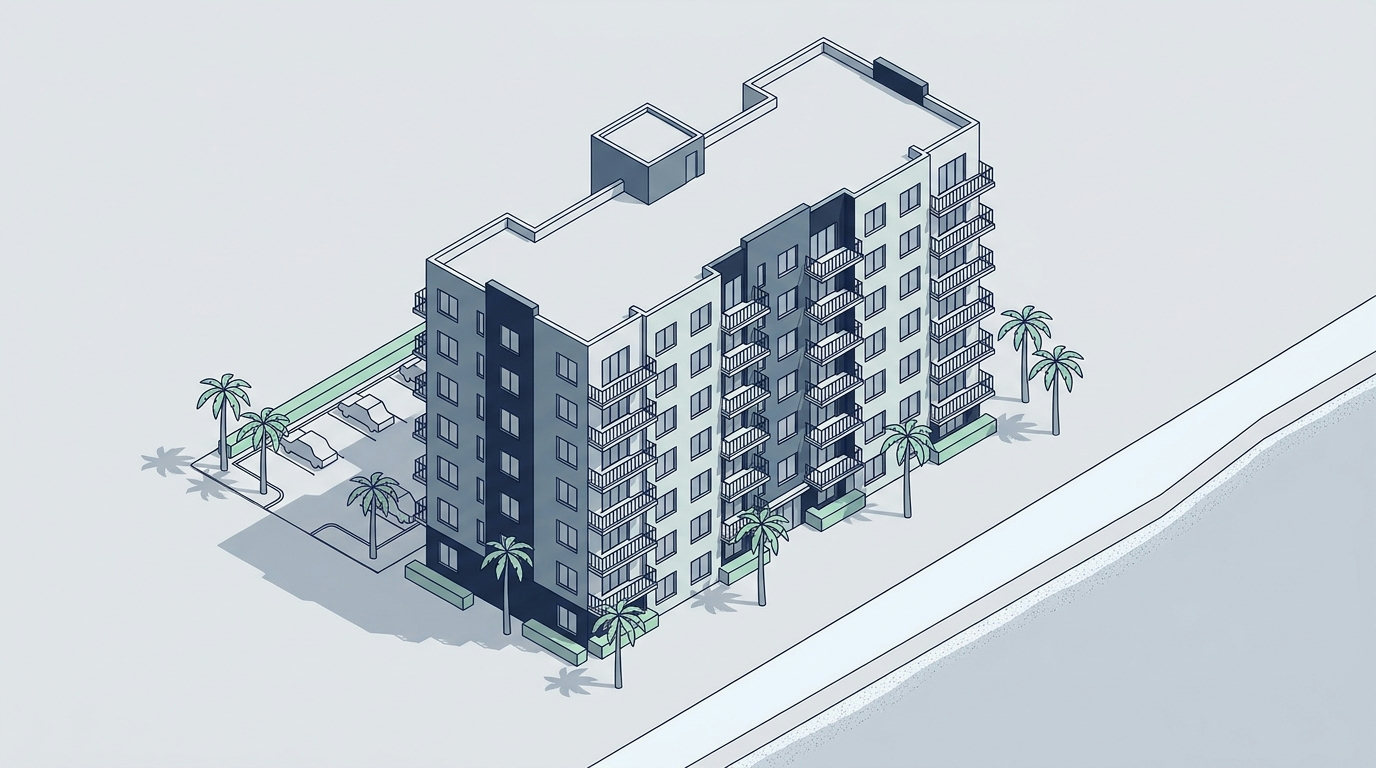
On December 16, 2025, Hawai'i Public Radio reported that Maui County passed a historic law to phase out about 7,000 short-term rentals in apartment-zoned districts over the next five years. The legislation, known as Bill 9, was signed into law on Monday, December 15, 2025, by Maui Mayor Richard Bissen, hours after the Maui County Council approved the measure in a split 5-3 vote.
The policy aimed to return apartment-zoned housing to local residents rather than the tourism industry, targeting properties on what was known as the Minatoya List. At the time of the bill's passage, transient vacation rentals made up 21% of Maui County's overall housing stock, representing a higher concentration than any other county in Hawai'i.
What the data shows
Under Bill 9, Maui County established a timeline to phase out approximately 7,000 short-term rentals located in apartment-zoned districts. The law set two distinct deadlines for compliance based on geographic location. For vacation rentals in West Maui, the phase-out deadline was established as January 1, 2029. Short-term rentals operating in apartment zones in all other areas of Maui County were required to end operations by January 1, 2031.

The scale of the phase-out represented approximately half of the island's active vacation rentals. According to data compiled by the County of Maui, transient vacation rentals accounted for 21% of the county's total housing inventory. The county also reported that more than 90% of Maui short-term rental owners did not live within the county, with the vast majority residing out of state. For the specific units affected by Bill 9, the county reported that the vast majority were owned by individuals who did not live in Maui County, and most did not live in the state of Hawai'i.
The concentration of short-term rentals was highly pronounced in specific condominium complexes. Data compiled by the Council for Native Hawaiian Advancement showed that Kamaole Sands in Kīhei held the highest short-term rental unit count on the Minatoya List, with 428 units out of 440 total units being rented on a short-term basis.
Despite the scale of the phase-out, the county reported that a significant portion of the short-term rental market would remain intact. Even after the five-year phase-out period was complete, approximately 6,500 transient vacation rental parcels, thousands of units in hotels, and over 2,400 timeshares and bed-and-breakfast operations would continue to operate legally on Maui.
Economists cited by Hawaii News Now projected that the policy could increase Maui's long-term housing stock by about 13-percent. According to those economic analyses, this shift was equivalent to a decade's worth of new housing development on the island.
How it was measured
The data points cited in the debate over Bill 9 originated from several public and private organizations. The figure showing that transient vacation rentals comprised 21% of Maui County's overall housing stock, as well as the ownership statistics showing that more than 90% of overall owners lived outside the county, were compiled and published by the County of Maui administration.
The specific property counts on the Minatoya List, including the concentration of 428 short-term units out of 440 total units at Kamaole Sands, were compiled by the Council for Native Hawaiian Advancement, a non-profit organization.
The projection that the phase-out would increase the long-term housing stock by about 13-percent was calculated by independent economists, as reported by Hawaii News Now. The primary source did not publish the specific statistical methodologies, property registries, or tax databases used by the county or the Council for Native Hawaiian Advancement to verify the residency of the property owners or the exact classification of the apartment-zoned parcels.
The forces driving the policy
The passage of Bill 9 followed nearly two years of debate among community members, local lawmakers, and industry representatives. The housing crisis on Maui was severely exacerbated by the devastating wildfires in 2023. Following the disaster, the grassroots community group Lahaina Strong championed the issue, identifying secure long-term housing as a critical emergency. The group organized community actions, including a demonstration where Lahaina residents staked out at Kā'anapali Beach in November 2023 to advocate for housing security.
The legislative process involved hundreds of hours of public testimony. This process included reviews by the Maui Planning Commission, the Maui County Council's Housing and Land Use Committee, and a council Temporary Investigative Group.
Proponents of the bill argued that the measure was necessary to correct a historical anomaly. The county noted that Bill 9 addressed a long-standing zoning exemption that had been grandfathered in, which allowed transient vacation rentals to operate in areas originally built for workforce housing. Supporters argued that the short-term rental market had evolved far beyond its original scope. During his testimony in support of the bill, Maui realtor Edward Codella stated:
“When the zoning loophole that allowed short-term vacation rentals in apartment districts was created, short-term rentals were not an industry. There were no platforms, no institutional investors, and no global capital chasing returns on Maui housing. Today, that reality has changed completely.”
Local residents also testified about how the transition from residential to transient use had altered their buildings. Richard Prata, a Maui resident living in one of the affected apartment-zoned units, testified that when he purchased his condominium on the West side over 35 years ago, a large portion of the building was occupied by resident owners. Over the years, as short-term rentals expanded, the building of over 100 condominiums shifted to having only 10 units occupied by permanent owners.
The impact on property owners and managers
The phase-out directly affected the owners of the approximately 7,000 units in apartment-zoned districts. Under the law, property owners of the affected units were presented with several options: they could convert their properties to long-term rentals, sell the units, keep them for personal use, or seek a formal change in zoning. The measure did not affect bed-and-breakfast operations or timeshares.

Opponents of the bill expressed deep concern over the economic consequences and potential legal liabilities. The Maui County Council was divided on the final vote, passing the bill 5-3. Council Chair Alice Lee, Council Vice-Chair Yuki Lei K. Sugimura, and Councilmember Tom Cook voted against the measure. Council Chair Alice Lee stated that she did not believe the proposal would work because it lacked an effective mechanism of implementation at the time of passage.
Councilmember Tom Cook expressed fear regarding collateral damage and unintended consequences. He noted that the threat of litigation could disrupt the real estate market. This concern was echoed by Leslie Brown, who had managed the Luana Kai condo complex for 38 years. Brown testified that the passage of Bill 9 would throw many properties into lawsuits, which would prevent banks from lending money on those properties. Consequently, Brown argued, only cash buyers would be able to purchase units, which could paradoxically increase investment purchases by cash-rich buyers.
Industry groups also opposed the legislation. Lynette Pendergast, president of the Realtors Association of Maui, testified that while her organization supported the need for more long-term housing, the sequence of passing Bill 9 before establishing alternative zoning created a significant policy gap. She warned that this gap exposed the county to economic risk and legal liability by eliminating lawful transient vacation rental use without providing a clear pathway for owners to apply for new land use designations.
Similarly, Expedia Group spokesperson Glenna Wong expressed concern over the economic harm to local residents and small businesses. Wong urged the county to rapidly rezone and maintain transient use for a portion of the properties on the Minatoya List, noting that some buildings were purpose-built for vacation rentals and were ill-suited for long-term residential use.
The legislative gaps and future adjustments
To address the economic risks and the suitability of certain buildings for long-term residency, Maui County lawmakers pursued parallel legislative tracks. The Maui County Council's Temporary Investigative Group (TIG) examined the affected properties and recommended that approximately 4,500 of the nearly 7,000 units be reclassified under a new hotel zoning designation.
Councilmember Cook proposed incorporating some of these TIG recommendations directly into Bill 9. However, county lawyers advised that the legislation was more legally defensible in its original form. Instead of modifying Bill 9, councilmembers planned to address the zoning changes through a separate legislative process.
On the Friday following the bill's passage, councilmembers were scheduled to take up a separate zoning change process that could allow about half of the nearly 7,000 affected units to continue operating as vacation rentals. Many councilmembers expressed support for a companion measure to establish new H-3 and H-4 hotel zoning districts, which would go through its own legislative process and be heard by the county's planning commissions.
Councilmember Nohelani U'u-Hodgins, who chaired the Bill 9 TIG and voted in support of the measure, stated that creating these new zoning districts was a step that could ensure a smoother transition after the passage of Bill 9. Maui County officials emphasized that the legislation was part of a broader, multi-pronged housing strategy. The county administration committed to working with the County Council to support the TIG recommendations, explore pathways to homeownership, and consider tax and policy tools to complement the legislation.
What to take from it
The legislative action on Maui provides several critical lessons for short-term rental operators navigating municipal regulatory environments:
- Monitor grandfathered exemptions: Do not assume that historical zoning exemptions or grandfathered uses are permanent. When housing crises intensify, local governments can and will pass legislation to close long-standing loopholes.
- Track ownership concentration metrics: High concentrations of non-resident ownership among Maui's affected units make the short-term rental sector an easy political target during local housing shortages.
- Evaluate parallel zoning tracks: When a major phase-out is passed, monitor companion measures and investigative group recommendations. The proposed reclassification of 4,500 units to hotel zoning shows that the final economic impact is often decided in subsequent zoning battles rather than the initial bill's passage.
Figures checked by the standards desk (Paul Ostrowski): every figure in this story was matched to the source material listed below before publication. The desk's review raised 1 point, corrected before publication.
Sources
- Hawai'i Public Radio - published December 16, 2025.
- Hawaii News Now - corroborating coverage.
Part of the Booked News record for December 2025. The desk filed this story on October 9, 2026 from a source published in the month it covers, under the same figure rule as the daily news.
Report an error in this story · Corrections policy and log

Related stories

Scotland received 38,040 short-term rental licence applications by June 2025

Kingston Common Council to vote on proposed 3% occupancy tax

Hillsborough County approves short-term rental rules including $200 annual fee

Crete short-term rental listings fell 5.7% in June 2026 as housing prices rose
Read the desk every morning.
Leave your address for the Booked News briefing: the day's figures on rates, occupancy, demand, fees, supply and returns, each with its source, in one short email.
Comments