Sarasota sets vacation rental occupancy limits as city listing count reaches 700
Sarasota tightened vacation rental enforcement with $500 registration fees and lower maximum occupancy caps as local listing counts expanded.

Sarasota city officials reduced maximum short-term rental occupancy from 16 to 14 persons, according to a report from FOX 13 Tampa Bay. The shift comes as municipal leadership updates rules governing roughly 700 short-term rental properties currently operating across the Florida Gulf Coast destination, according to local reporting from Hoodline.
The updated municipal structure combines strict physical capacity limits with expanded operational hurdles for hosts. In addition to reduced maximum headcounts, operators face increased financial entry costs, mandatory safety inspections prior to listing, strict 24-hour response windows for neighborhood complaints, and mandatory registration under local tax frameworks.
How the metric works
In short-term rental analysis, maximum occupancy functions as a foundational ceiling on property yield and valuation. Municipalities regulate maximum guest headcounts to control neighborhood density, curb noise disruptions, limit street parking congestion, and reduce utility strain in single-family residential zones. For property managers and real estate investors, maximum occupancy directly determines the maximum guest group size a listing can market toward, directly constraining potential nightly pricing structures.
Occupancy metrics are enforced through fixed property-wide caps or formulaic limits based on physical layout. In Sarasota, local accounts detail two distinct frameworks governing guest capacity. A report from FOX 13 Tampa Bay indicates that maximum allowable occupancy was lowered from 16 to 14 persons across qualified units, with an exemption for properties that predate May 4, 2021. Meanwhile, legal reporting from avalara.com describes a structural capacity formula in residential single-family zone districts where occupancy is capped at two people per bedroom plus two additional people, or 10 people total, whichever threshold is lower.
When a city reduces maximum guest capacity, the metric shifts the distribution of bookable stay types across a market. Large single-family vacation homes designed to accommodate multi-generational family travel or retreat groups lose legal capacity to host higher headcount parties. This change forces operators to reconfigure interior sleeping arrangements, adjust marketing disclosures on listing portals, or lower baseline daily rates to match smaller party sizes.
How it was measured
Data on Sarasota's vacation rental market constraints comes from municipal regulatory records, local news reports, and compliance tracking documentation published in mid-2025 and 2026. Hoodline reported that the city's active short-term rental inventory stands at roughly 700 properties, governed by a citywide ordinance that was originally implemented before July 23, 2025.
Regulatory updates were formally recorded on July 21, 2025, when the Sarasota City Commission voted unanimously to approve 14 points of clarification and alteration to the existing citywide vacation-rental ordinance, according to reporting from yourobserver.com. These updates apply to single-, two-, three- and four-family dwellings located in residential single-family and multifamily zone districts. Properties located within the Downtown Edge and Downtown Neighborhood districts remain exempt from these specific requirements due to their mixed-use commercial zoning designation.
Administrative oversight figures were established by municipal fee schedules reported by FOX 13 Tampa Bay. The reporting shows registration fees for new short-term rental operators were set at $500, while annual registration renewal fees were set at $350. Local sources note that the primary news outlets did not publish detailed statistical methodologies or audited platform scrape counts explaining how the overall baseline of roughly 700 active listings was calculated by city staff.
Regulatory drivers and enforcement
Municipal occupancy caps rarely emerge in isolation. They are typically paired with operational oversight mechanisms designed to enforce compliance and penalize unpermitted party houses. In Sarasota, neighborhood complaints regarding excessive noise, vehicle parking strain, and overall guest safety served as the primary catalyst for legislative action.
Density shifts within residential neighborhoods illustrate the growth that prompted civic intervention. One resident in Gillespie Park reported to yourobserver.com that when she moved to her street in 2017, the immediate area contained only two active short-term rental properties. Over the subsequent eight years, listing activity scaled significantly across single-family residential blocks.
“There are now 14 on my street alone.”
To enforce new regulatory limits, municipal leadership instituted administrative pre-conditions before a listing can operate. According to avalara.com, short-term rental hosts in Sarasota must secure a vacation rental certificate of registration and successfully pass an physical safety inspection before advertising or operating any rental stay booked for stays of less than 30 days. Registrations must be renewed annually, and the city maintains the legal authority to issue financial fines or suspend registration certificates when hosts commit violations.
Enforcement mandates also place physical time constraints on property owners and local property management teams. Regulations require owners to officially designate a designated responsible contact who remains reachable by phone 24 hours a day, seven days a week. When an incident or neighbor complaint arises, this designated contact must be capable of physically arriving at the rental property within one hour of notification. Furthermore, hosts are obligated to register for the county tourist development tax, collect the tax from guests for any stay lasting six months or less, and remit all collected tax revenues to local tax authorities.
Financial and operational impacts on operators
The implementation of stricter occupancy thresholds and registration requirements fundamentally alters the cost structure of running a vacation rental. Fixed administrative overhead rises immediately upon regulatory adoption, while potential top-line gross revenue becomes capped by lower guest limits.
Higher fixed compliance expenses impact operational margins. The increase in initial setup costs to $500 for new registrations and $350 for annual renewals creates an ongoing fee schedule that must be factored into financial pro formas. Municipal leaders explicitly linked these fee increases to regulatory enforcement capacity. Sarasota Mayor Liz Alpert told FOX 13 Tampa Bay that municipal revenues from these fees would fund local government oversight:
“We are going to be looking at hiring extra staff to administer this.”
For property managers handling multiple listings, compliance operational costs compound quickly. Key administrative requirements that directly affect operational costs include:
- Upfront payment of $500 for initial property registration certificates
- Recurring annual renewal fee payments of $350 per property
- Mandatory property inspections to verify physical safety equipment before listing activation
- On-call staffing overhead to maintain a guaranteed one-hour physical response time 24 hours a day
- Automated tax collection and remittance tracking for county tourist development taxes on stays under six months
Evaluating occupancy caps and compliance
When underwriting investments or managing existing properties under strict municipal occupancy frameworks, operators must distinguish between spatial capacity and legal capacity. A physical structure with six bedrooms may have the spatial square footage to sleep 16 guests comfortably, but a local regulatory cap of 14 persons—or a formula capping density at 10 persons in single-family zones—overrides the physical layout of the building.
Over-promising capacity on public listing platforms creates immediate legal and operational liabilities. When local laws impose a mandatory one-hour on-site response requirement for neighborhood complaints, hosting unpermitted group sizes exposes hosts to code enforcement fines, municipal inspections, and potential suspension of operating certificates. The loss of a registration certificate effectively removes a property from the market entirely, eliminating all rental cash flow.
Investors evaluating new markets must also examine zoning boundaries carefully. In Sarasota, short-term rental rules apply across residential single-, two-, three- and four-family dwellings, but explicitly exclude properties located in the Downtown Edge and Downtown Neighborhood districts due to their mixed-use designation. Understanding local zoning maps allows real estate investors to identify where municipal headcount restrictions apply and where commercial zoning flexible rules remain intact.
What to watch
Hosts, property managers, and real estate investors operating in regulated coastal markets should track several key compliance metrics and administrative updates over the coming quarters:
- Verification of exact municipal zoning classifications for every property to determine whether headcount caps or mixed-use exemptions apply
- Schedule dates for required pre-listing safety inspections to avoid operational downtime between guest bookings
- Establishment of robust 24-hour on-call dispatch systems to guarantee the required one-hour on-site response window
- Tracking municipal commission meetings for potential neighborhood-specific amendments or additional targeted regulations
- Setting up proper tax registration accounts for county tourist development tax collection on stays of six months or less
Figures checked by the standards desk (Paul Ostrowski): every figure in this story was matched to the source material listed below before publication.
Checked by the accuracy gate: 30 specifics checked, 27 traced to the source material, 3 general background, none removed.
Sources
- Hoodline - Sarasota Tightens Vacation Rental Rules Under Existing Citywide Ordinance as Airbnb Count Hits 700 (October 20, 2026).
An analysis column by the Booked News desk. Every figure is taken from the sources above.
Report an error in this story · Corrections policy and log

Related stories
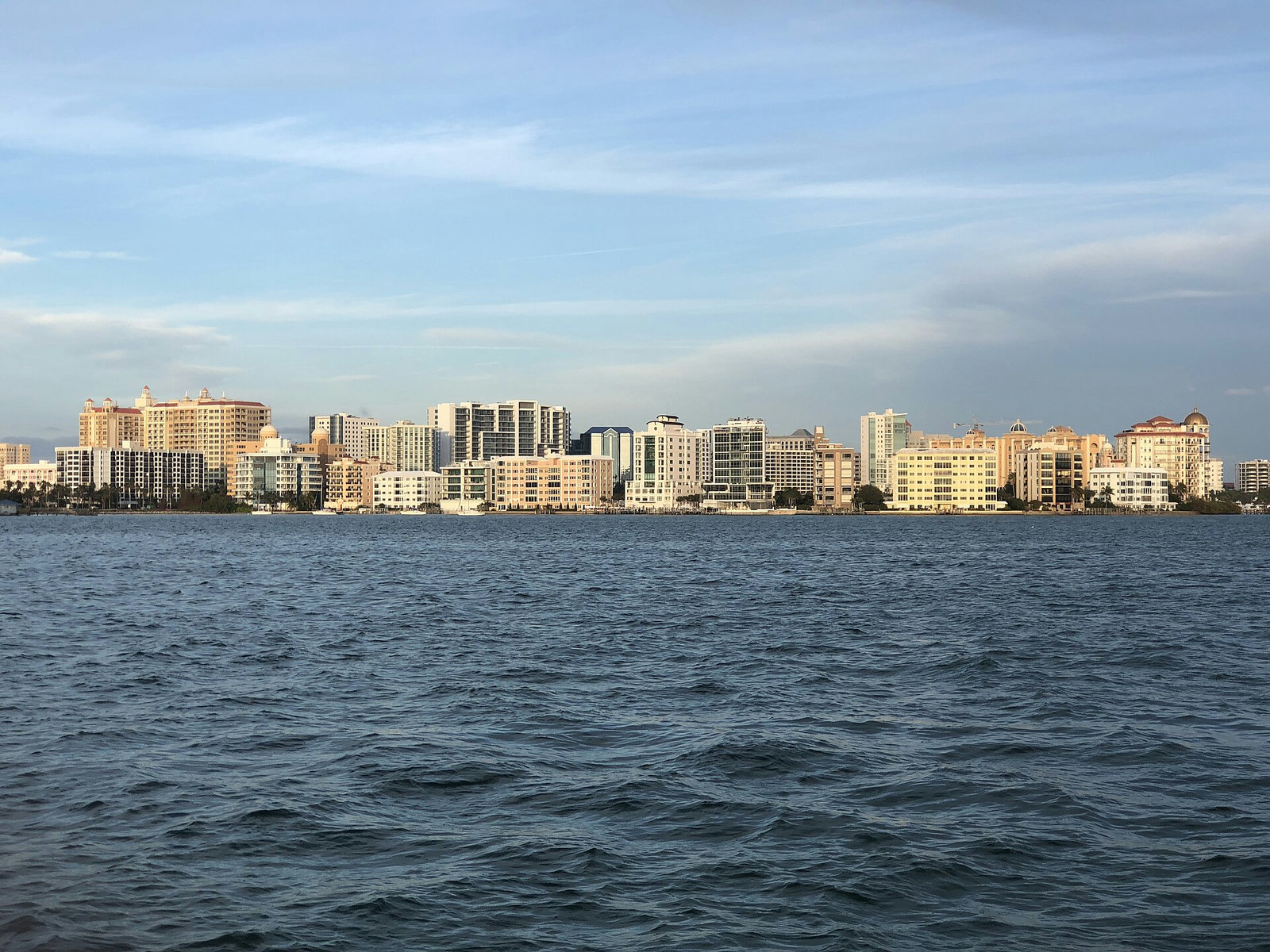
Sarasota Vacation Rental Registration Fees Rise to $500 as Listing Count Reaches 700
Photo: Cullen Morgan, CC BY 4.0, via Wikimedia Commons

Kingston Common Council to vote on proposed 3% occupancy tax

Why seasonal occupancy swings shape short-term rental returns in Naples

Hillsborough County approves short-term rental rules including $200 annual fee
Read the desk every morning.
Leave your address for the Booked News briefing: the day's figures on rates, occupancy, demand, fees, supply and returns, each with its source, in one short email.
Comments