Truckee advances $500 minimum annual tax rule for short-term rental permits
Town staff data shows 23% of registered properties fall short of the threshold, putting inactive permits at risk of revocation under proposed ordinance changes.
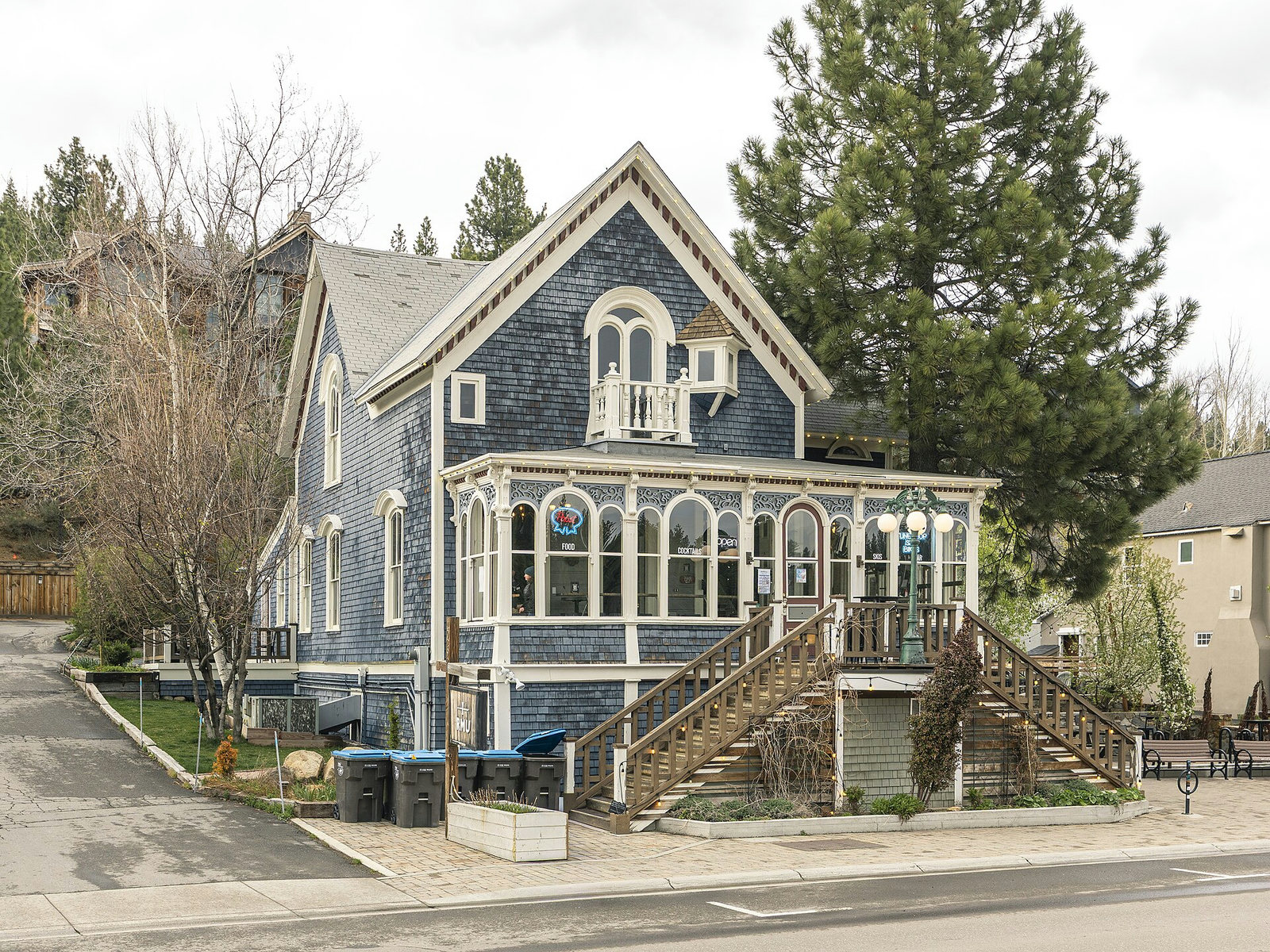
The historic Kruger House in Truckee, California, photographed in 2026. Picture from Wikimedia Commons: “Kruger House, Truckee, Apr 9 2026”. Photographer E bailey. Licence CC BY-SA 4.0. Resized from the original.
The Truckee Town Council approved the introduction of Ordinance 2026-12 on Tuesday, Nov. 23, establishing a minimum annual remittance of $500 in transient occupancy tax for residential short-term rental operators. Under the proposed measure, property owners who fail to meet the annual threshold will face registration renewal denial and revocation of their short-term rental certificates.
Town staff data derived from municipal tax filings indicates that 77% of existing short-term rental inventory currently meets or exceeds the $500 threshold, while 23% falls short based on historical performance. The ordinance amends Chapter 5.02 of the Truckee Municipal Code to clear inactive permits from the municipal registry and ensure registered units participate actively in the local lodging market.
What the data shows
The municipal data shows a clear divide in rental performance across Truckee’s registered short-term rental properties. According to a staff report presented to the Town Council, 77% of existing registered short-term rentals collect and remit enough transient occupancy tax under current operations to meet the proposed $500 annual threshold. Conversely, 23% of registered properties fall below the proposed requirement.
A closer examination of tax records reveals that an average of approximately 18% of registered short-term rentals reported zero rental activity and remitted no transient occupancy tax whatsoever between 2023 and 2025. An additional 6% of registered properties remitted between $1 and $500 annually over the same period. Together, these categories account for the 23% of inventory that would fail to meet the new requirement without increased booking volume.
The data demonstrates that nearly a quarter of the town’s short-term rental certificates are held by property owners who generate minimal or zero tax revenue for the municipality. By instituting a $500 minimum annual tax payment, the proposed ordinance targets properties that maintain active registration status while remaining largely dormant in the lodging market.
How it was measured
The figures were compiled by Truckee town staff through an analysis of transient occupancy tax reporting records spanning from 2023 through 2025. Town staff evaluated tax remittance filings submitted by operators registered under Chapter 5.02 of the Truckee Municipal Code, which regulates the short-term rental of residential properties within town limits.
Staff categorized the records based on total annual tax payments to evaluate how existing operators would perform against potential policy benchmarks. The analysis identified the exact proportion of registration certificate holders that generated zero transient occupancy tax, those remitting between $1 and $500 annually, and those generating $500 or more. This multi-year dataset served as the empirical foundation for staff recommendations presented to the council during policy discussions.
Ordinance mechanics and implementation timeline
The proposed Ordinance 2026-12 outlines a structured implementation timeline leading up to enforcement in 2027. Following its introduction on Tuesday, Nov. 23, the ordinance is scheduled to return to the Town Council for a second reading and formal adoption on Dec. 7. If adopted on that date, the measure will take effect 30 days later, setting up direct communication and program implementation during winter 2026-27.
Under the terms of the ordinance, the $500 minimum transient occupancy tax requirement will take effect on Jan. 6, 2027. The first official compliance year under the new rule will be 2027. To assist operators in meeting the standard, town staff plan to review tax remittances mid-year and late in the calendar year. Staff anticipate conducting compliance reviews in August and November 2027 to identify property owners who have not yet remitted the required $500.
The town will provide multiple formal notices to short-term rental operators prior to taking enforcement action. Certificate holders who remain below the $500 mark at the conclusion of the compliance year will have their registration renewals denied and their short-term rental certificates revoked. However, the ordinance incorporates specific exceptions for qualifying circumstances that may prevent a property owner from reaching the minimum tax threshold during a given year.
Council deliberations and policy objectives
The introduction of Ordinance 2026-12 follows a review of Truckee’s short-term rental program that formally began on Sept. 22. During that initial session, council members reviewed permit optimization options, public survey responses, and policy recommendations developed jointly by town staff and Visit Truckee Tahoe. At the Sept. 22 meeting, the council instructed staff to draft the $500 minimum transient occupancy tax rule while incorporating exemption provisions for operators facing extenuating circumstances.
During the Sept. 22 meeting and subsequent discussions, the council deferred several related policy issues for future consideration. These deferred topics include whether to establish regulatory distinctions between primary and non-primary residences, whether to revisit the town’s standing prohibition on short-term rentals in multifamily properties, and whether to adjust the town’s overall short-term rental permit cap as new hotel rooms become available in Truckee. Council members also noted the broader need to refine the town’s long-term policy objectives regarding properties that report zero or very low rental activity.
The vote on Tuesday, Nov. 23 reflected contrasting perspectives among council members regarding the town’s policy direction. The council ultimately approved the introduction of the ordinance by a vote of three councilmembers in favor, with Councilmembers David Polivy, Jan Zabriskie, and Courtney Henderson supporting the measure.
Councilmember David Polivy argued that forcing inactive permits into active use or retirement delivers direct economic benefits to the community.
“When people ask how this improves lives for our residents, I think the answer is pretty straightforward,” Councilmember David Polivy said. “We have a local business community and a local economy that have clear ties to tourism, and we are not changing that on this dais. By enhancing our active lodging operations rather than letting permits sit idle, we are absolutely supporting local jobs, supporting direct spending across our small business communities and allowing our historic downtown to thrive.”
Conversely, two members of the council opposed advancing the measure. Councilmember Lindsay Romack called for extended public engagement prior to taking legislative action, emphasizing that the majority of written and verbal public comments submitted to the town had expressed opposition to the proposed minimum tax requirement. Mayor Anna Klovstad also urged the council to reject the amendment, stating a preference for maintaining the existing short-term rental program framework and addressing potential modifications through the council’s strategic work plan process before enacting regulatory changes.
Economic drivers and market impacts
The proposed tax requirement directly impacts how residential properties are utilized within Truckee’s lodging sector. In communities governed by municipal permit caps, non-active registration certificates tie up finite capacity without contributing transient occupancy tax revenue to local government operations or bringing visitors to local commercial districts. By establishing a $500 annual tax floor, the town seeks to convert passive permit holding into active rental operations or free up permit allocations for other property owners.
For property owners who use their short-term rental certificates primarily to retain flexibility or offset minimal holding costs, the $500 requirement introduces a direct financial standard. Operators generating less than $500 annually in transient occupancy taxes will be forced to either increase rental frequency to meet the remittance target, apply for an authorized exception, or forfeit their registration certificates upon annual renewal.
Unmeasured factors and data limitations
While the town staff analysis clearly delineates past tax remittance brackets, the underlying data does not capture the specific reasons why 18% of registered properties reported zero activity between 2023 and 2025. The dataset does not differentiate between properties kept vacant for personal family use, units undergoing structural renovation or maintenance, properties withdrawn temporarily due to market conditions, or owners holding permits solely to preserve real estate equity value.
Additionally, the municipal tax data cannot predict behavioral responses once the ordinance takes effect on Jan. 6, 2027. The figures do not indicate how many of the 23% of non-compliant permit holders will choose to increase booking activity to generate the required $500 in transient occupancy tax, how many will qualify for staff-administered exceptions, how many will voluntarily surrender their certificates, or whether revoked permits will transition into long-term residential housing or revert entirely to private personal use.
What to watch
As Truckee moves toward final adoption and implementation of Ordinance 2026-12, industry members ought to follow a few critical launch dates and policy goals.
- The Town Council’s second reading and scheduled adoption vote on Dec. 7.
- The official effective date of the ordinance on Jan. 6, 2027, launching the initial 2027 compliance year.
- Town staff tax remittance reviews scheduled for August and November 2027 to alert operators behind on their $500 target.
- Future council discussions regarding deferred policy items, including primary versus non-primary residence rules, multifamily property prohibitions, and permit cap adjustments tied to new hotel inventory.
Figures checked by the standards desk (Paul Ostrowski): every figure in this story was matched to the source material listed below before publication.
Tally from the accuracy gate: 32 details tested; 32 found in the stored source; nothing cut.

Related stories

California fee transparency study shows 4.8 percent rate rise as upfront pricing shifts listing dynamics
Picture from Wikimedia Commons; licence CC BY-SA 4.0; photographer Antony-22

Airbnb hosts in Hawaii average $64,721 annual revenue as AirROI ranks US rental markets

U.S. ski markets pace ahead in short-term rental revenue for 2026–27 season
Picture from Wikimedia Commons; licence CC BY-SA 4.0; photographer King of Hearts

Comment thread