The Days and Percentages Between a Rio Booking and the Owner's Account
A short-stay booking in Rio reaches an owner abroad through a platform's release rule, its fee, a manager's percentage and a tax withheld in Brazil. These are the days and rates at each step, and who publishes them.
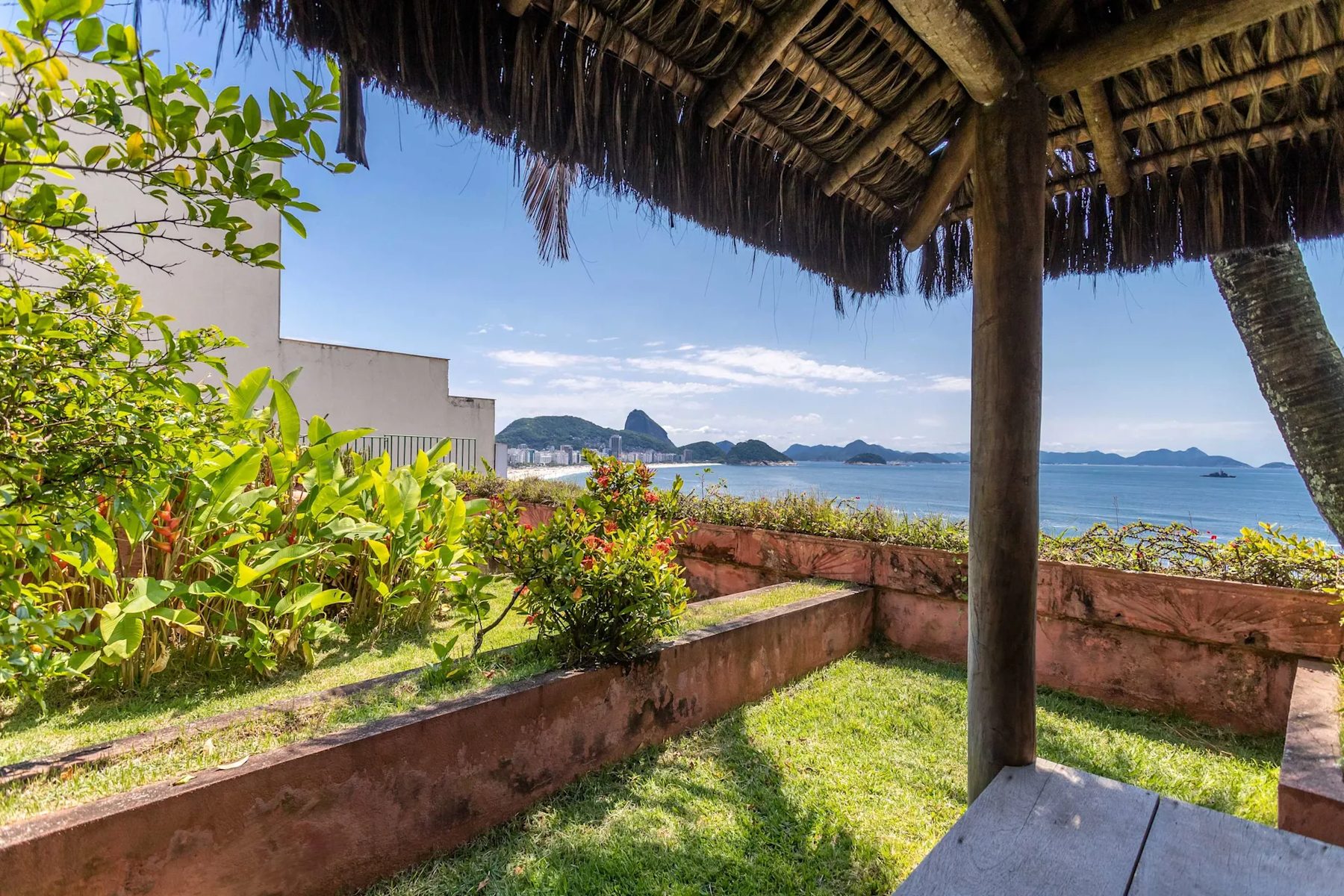
Photograph courtesy of Art de Vivre.
On most Airbnb stays of up to 27 nights, the platform starts paying the host by close of business on the first business day after the guest's scheduled arrival. A guest who arrives on a Friday is therefore followed by a payout initiated by the end of the next Monday. For a flat in Rio de Janeiro whose owner lives in another country, that release is the first of several dates and deductions that end, days or weeks later, in a bank account abroad and in another currency.
One Rio operator has set the whole chain out in one place. Art de Vivre is a licensed brokerage in Ipanema, founded in 2011 by Charles Jonas, its principal broker, which also manages short-stay rentals and addresses much of its management material to owners based outside Brazil. A guide on its site about getting paid, signed by Jonas and updated in August 2026, sets the route out as seven links: the guest, the platform, a payout in Brazil, the tax withheld, conversion, remittance to the owner and the statement. Most of those links carry a timing or a percentage, and most are set by someone other than the manager: the platforms fix release dates and fees, Brazil's income-tax regulation fixes the withholding, and the management contract fixes the manager's share and the figure it is taken from.
This report follows the money link by link, opening each section with the figure that governs the step and the name of whoever published it. Where nobody publishes a figure, it says so, and calculations made by this desk are marked as desk arithmetic. Art de Vivre's pages appear as one operator's description of the chain and of the statement at its end, not as data about the market.
| Step | Timing | What comes off or applies | Published by |
|---|---|---|---|
| Guest pays; the platform holds the money | Until the platform releases a payout | On Airbnb's split fee, a guest fee of 14.1% to 16.5% of the subtotal | Airbnb Help Center; Art de Vivre (description of the chain) |
| Airbnb release, most stays of 27 nights or less | By the end of the business day after scheduled check-in | Host fee for a listing in Brazil: 16% (single fee) or 4% (split fee) | Airbnb Help Center |
| Airbnb release, new hosts and listings with ground-rule issues | By the end of the business day after scheduled check-out | The same host fee | Airbnb Help Center |
| Booking.com bank-transfer payout | After check-out; daily, weekly or monthly where offered (exact days not published) | Commission (set by contract; no Brazil rate published) and a payment service fee | Booking.com Partner Help and developer documentation |
| Airbnb payout reaches the account | Bank 3 to 5 business days; international wire 3 to 7; PayPal within 1 | Any charge made by the bank or payout method | Airbnb Help Center |
| Possible Airbnb review | Up to 45 days after check-in | Funds delayed, paused or, in rare cases, removed | Airbnb Help Center |
| Manager's share | Set by the management contract | 20% to 30% of gross for full service in standard US markets (vendor estimate); base set by contract | PriceLabs; Art de Vivre gives 20% to 30% for the Rio market |
| Tax on rent paid to an owner abroad | Withheld by the representative in Brazil | 15%; 25% for listed low-tax jurisdictions | Decree 9.580 of 2018, arts. 763, 781 and 748 |
| Conversion and remittance abroad | No published timing | Exchange rate and bank charges: not published | None found |
| Owner statement | Usually a month (Hostaway); at least monthly (Art de Vivre's advice) | Itemised per booking, in vendor guides and one operator's advice | Hostaway; Art de Vivre |
| Desk arithmetic: Airbnb check-in to bank account | About 4 to 6 business days; 4 to 8 by international wire | Before any review hold | Booked News, from Airbnb's published timings |
Airbnb's processing times are those it calls typical. The manager's share, its base and the remittance terms are set in each owner's contract, not by any published rule.
Source: Airbnb Help Center; Booking.com Partner Help and developer documentation; PriceLabs; Hostaway; Decree 9.580 of 2018; Art de Vivre; Booked News arithmetic
Table 1 lines the published timings and rates up in order. Two links have no published figure: how long conversion into the owner's currency takes, and when the remittance lands abroad once the tax is settled. Both happen after the platforms have paid out, in the hands of a bank and of the owner's representative in Brazil.
When Airbnb releases the money
One business day after the guest's scheduled check-in is the deadline Airbnb sets itself for initiating the payout on the majority of home stays up to 27 nights long, according to its Help Center article on when hosts get paid, read in October 2026. The trigger is the arrival, not the reservation: a booking taken in March for a stay that begins in July is paid out in July.
Stays of four weeks or longer follow a second rule. On 28 nights or more, the first month's money goes out on the same next-business-day timetable and the remainder in monthly instalments until the reservation ends. The page adds that co-hosts are normally paid alongside the host.
Three kinds of host wait until the other end of the stay, when Airbnb moves the release to the business day after the scheduled check-out: hosts with fewer than two completed stays whose listing is not verified; hosts with a listing carrying ongoing ground-rule problems, low ratings and frequent host cancellations being the examples given; and hosts who have got around its enforcement measures or misrepresented a listing's quality. On a monthly stay in the same cases, the first release moves to 28 days after check-in. Desk arithmetic: on a seven-night booking, the gap between the two rules is seven days of the owner's money held by the platform.
Art de Vivre's guide puts the release in the same place, around check-in, and sends it to an account in Brazil, where the income arises and the tax on it is due.

How long the transfer takes
Three to seven business days is how long an international wire takes to arrive once Airbnb has released a payout, on the same Help Center page. A transfer to a bank account takes three to five. PayPal takes up to one business day, Western Union one depending on the country, a Payoneer prepaid card up to 24 hours, and Fast Pay or a payout to a card 30 minutes or less, in eligible regions only; direct deposit by ACH, three business days, exists only in the United States and Puerto Rico. Airbnb calls these typical timeframes that vary by provider and region.
Weekends and holidays lengthen every count, because, in Airbnb's words, “Banking systems don’t process transactions on weekends or holidays”. Fast Pay and Payoneer are the two methods the page says keep working through them. The bank or payout method may also charge fees of its own, which Airbnb does not list.
Added together, the release rule and the processing times give the length of the Airbnb part of the chain. Desk arithmetic: for a stay of under 28 nights paid to a bank account, the money arrives roughly four to six business days after the guest checks in, or four to eight by international wire. Each weekend day or bank holiday inside that window adds a calendar day.
The exception has no fixed length. Airbnb says it may review any transaction before sending it, fraud prevention being one reason, and that a review can hold the money for as long as 45 days after check-in, pause it, or in rare cases take it out of the host's account. During a review it may restrict the account and ask the host to verify their identity. The page calls such reviews a standard process for companies that must prevent fraud and comply with regulations, and gives no indication of how often they happen.
What Airbnb takes in Brazil: 16% or 4%
16% is the fee Airbnb deducts from the host's payout under its single fee structure for listings in Brazil and Mexico, according to its Help Center page on service fees. Most hosts elsewhere pay 15.5% under that structure, and the rest typically between 14% and 16%. The page defines its service fees as a percentage of the nightly rate plus host-charged fees, with taxes and the guest fee left outside the base, and under the single fee the guest sees one price.
The older split fee divides the charge in two. The host pays 3% in most countries and 4% for listings in Brazil and Mexico, while the guest is charged a fee of its own, 14.1% to 16.5% of the booking subtotal depending on the booking. When a guest pays in a currency other than the one the host set for the listing, Airbnb adds an amount to that guest fee, taking it to as much as 16.5%. The clause bears on any market that sells to visitors from abroad; no source used here measures how many Rio bookings are paid in a foreign currency.
The single fee is the structure Airbnb is making standard. Its page says it is mandatory for most hosts, among them hotels, serviced apartments, users of property-management software and hosts in countries subject to it, and that every home host is being moved onto it, after which the split fee will be withdrawn. A host who has switched cannot switch back, and bookings made before the switch keep their old terms.
October 2025 is when the move began, according to Airbnb's third-quarter letter to shareholders, filed with the US Securities and Exchange Commission; its fourth-quarter letter says that by December most other single-fee hosts were on 15.5% and could reprice to keep their net earnings unchanged.
% of the nightly price and host fees
Host fee, most hostsHost fee, listings in Brazil
| Structure | Host fee, most hosts | Host fee, listings in Brazil | Guest service fee | Who it applies to |
|---|---|---|---|---|
| Split fee | 3% | 4% | 14.1% to 16.5% of the booking subtotal | Being phased out as all home hosts move to the single fee |
| Single fee | 15.5% | 16% | None charged separately; the whole fee comes off the host's payout | Mandatory for most hosts, including those who use property-management software |
Host fees are a percentage of the nightly price and any fees charged by the host, excluding the guest service fee and taxes. Remaining hosts on the single fee typically pay 14% to 16%.
Source: Airbnb Help Center, Airbnb service fees, read 24 October 2026
The two structures cannot be compared line for line. Desk arithmetic for a Brazilian listing taking R$ 10,000 in nightly rates and cleaning: the single fee deducts R$ 1,600 from what the host receives and charges the guest nothing extra, while the split fee deducts R$ 400 from the host and charges the guest between R$ 1,410 and R$ 1,650 on top, at the published range of the guest fee. Because Airbnb expects hosts on the single fee to reprice to hold their net earnings, the R$ 1,200 gap on the host's side is the net a host would have to make up through price to stand still.
Booking.com pays after check-out
Three payout frequencies, daily, weekly or monthly, are offered for bank transfers under Payments by Booking.com, though not in every country, according to the company's developer documentation, and its partner help pages say bank-transfer payouts are processed after the guest checks out. That puts Booking.com's release at the opposite end of the stay from Airbnb's usual one: desk arithmetic, seven days later on a seven-night booking, before the schedule and the bank add their own days. The one faster route the documentation names, Stripe payouts released on the check-in day, is available only for home properties in the United States and Canada.
The deductions come out before the money moves. Where Booking.com collects every guest payment for a property, it takes its commission and its payment service fee out of each payout before sending it. For partners paid by bank transfer, that service fee is charged as a share of each completed reservation's value, at a rate that depends on the property's location; partners paid by virtual credit card instead pay their own bank or provider a transaction fee per reservation. Joining the payments service carries no setup fee, and Booking.com says payment fees fall only on completed stays.
The commission has no published rate for Brazil. Booking.com's partner page on understanding commission, updated around May 2026, describes it as a fixed share of the whole booking amount, charged on completed stays, on a base that takes in the room rate and the partner's extra charges, cleaning included. The rate itself, it says, varies with the country, the type of property and the agreement the partner signed on joining. A statement showing more than the contract rate may mean the property is in a marketing programme; Preferred Partner and Visibility Booster are the two it names. This desk found no Booking.com page that states a Brazilian rate, and the percentages that circulate in host forums are not published by the company.
The commission invoice runs a month behind. It arrives once a month and covers every reservation whose guest checked out in the month before; the page's own example is a guest who arrives on 31 January, leaves on 1 February and appears on the March invoice. For partners paid by bank transfer, the yearly payout documents in the extranet list every reservation, adjustment and transfer, a record Booking.com calls suitable for most tax authorities, with monthly, weekly or daily overviews for more detail. On both platforms, then, the percentage is taken from a base that includes cleaning.
The third channel has the fewest published numbers. Art de Vivre's management page lists direct bookings alongside Airbnb and Booking.com, and a direct booking carries no platform commission or platform release date. Brazil's tenancy law, Law 8.245 of 1991, defines a season let as a temporary stay, for leisure among other purposes, contracted for no more than 90 days, and its article 49 lets the landlord take the rent and charges for one in a single payment, in advance. The firm's property pages say no payment is taken when a guest asks for dates; Jonas confirms the stay and then sends a secure payment link.
The manager's share in published ranges
20% to 30% of gross booking revenue is the range PriceLabs, a company that sells pricing software to rental managers, gives for full-service management in standard leisure and urban markets in the United States, in a blog post by Aishwarya Iyer last updated on 19 May 2026. The same post puts the standard range for full service under the percentage model at 20% to 35% of gross revenue, co-hosting or channel management alone at 10% to 15%, partial service at 15% to 20%, and full service in luxury or remote markets at 30% to 45%. It gives no method and no data source. The figures are one vendor's estimate for American markets.
For Rio, the published range comes from an operator. Art de Vivre's management page, signed by Jonas and reviewed in August 2026, says full-service management in the city is generally charged as a percentage of revenue and that “the market sits broadly in the 20–30% range depending on scope.” The firm publishes no rate of its own; the page says each owner's fee is agreed in writing before the work begins. Another Rio operator with a different model, the studio manager Lobie, charges 12% of the owner's net result, InvestNews reported in February 2026. A percentage of a net figure and a percentage of a gross one cannot be set side by side without the costs that separate them.
| Range as published | Low | High | Base | Publisher and scope |
|---|---|---|---|---|
| Co-host only | 10% | 15% | Not stated for this tier | PriceLabs, US markets, May 2026 |
| Partial service | 15% | 20% | Not stated for this tier | PriceLabs, US markets, May 2026 |
| Full service, US | 20% | 30% | Gross booking revenue | PriceLabs, standard US leisure and urban markets, May 2026 |
| Standard range | 20% | 35% | Gross revenue | PriceLabs, percentage model at full service, May 2026 |
| Luxury or remote | 30% | 45% | Not stated for this tier | PriceLabs, US markets, May 2026 |
| Rio, full service | 20% | 30% | Revenue | Art de Vivre, describing the Rio market, August 2026 |
PriceLabs sells pricing software and gives no method or data source. Art de Vivre publishes no rate of its own. Lobie's 12% is charged on the owner's net result and is not comparable.
Source: PriceLabs blog (Aishwarya Iyer), last updated 19 May 2026; Art de Vivre management page, reviewed August 2026
PriceLabs addresses the base directly. Most managers, it says, charge on gross revenue, the total booking value before platform fees and taxes, because that figure is simple to calculate and to check against booking confirmations, and it advises managers to write the base into the management contract before any percentage is discussed. Art de Vivre's guide for owners abroad makes the same point from the owner's side of the table: the fee line on a statement should apply the written rate to a number the owner can check.
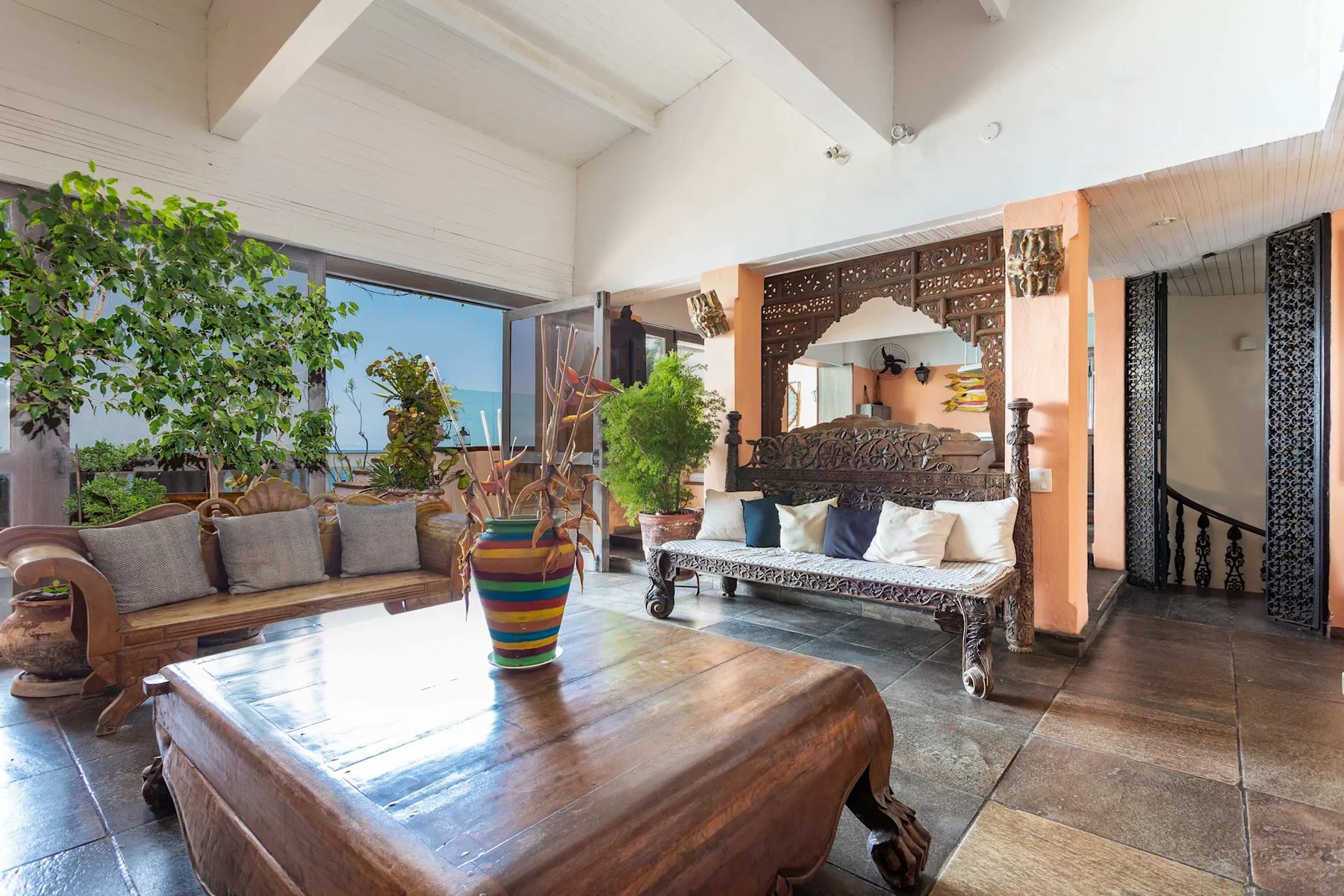
The commission base: $360 against $350
$10 on a $500 booking is the difference the order of two percentages makes in a worked example published by Guesty, a property-management software company, in its Help Center article on revenue share in owner statements. In both versions a booking made up of $480 of accommodation and $20 of cleaning carries a 10% channel commission of $50, and the manager takes 20%. When the channel commission is subtracted first, the manager's 20% applies to $450 and comes to $90, and the owner receives $360. When it is not, the 20% applies to the full $500 and comes to $100, and the owner receives $350.
US dollars
| Manager's 20% taken | Booking total ($) | Channel commission at 10% ($) | Base for the manager's 20% ($) | Manager's commission ($) | Net to owner ($) |
|---|---|---|---|---|---|
| After channel fee | 500 | 50 | 450 | 90 | 360 |
| On the full $500 | 500 | 50 | 500 | 100 | 350 |
The booking is $480 of accommodation fare plus a $20 cleaning fee. Desk arithmetic: the $10 difference is 20% of the $50 channel commission, or 2% of the booking.
Source: Guesty Help Center, Revenue share in owner statements, read 24 October 2026
Guesty states the mechanism in one sentence: “Including the channel commission also affects the PMC commission amount, as this is calculated on a lower net rental income amount.” PMC stands for the property-management company. Desk arithmetic: the $10 gap is the manager's 20% applied to the channel's $50, or 2% of the booking, so the gap grows with the size of the platform's deduction, and Airbnb's 16% single fee in Brazil is a larger deduction than the 10% in Guesty's example. By default, the page says, the software counts the accommodation fare alone as net rental income, and fees and channel commission enter the calculation only if the manager's business model is set up to include them.
Guesty's help page calls the accounting module behind those statements a premium feature. Hostaway, another software company, says in a guide updated on 19 July 2026 that a statement usually covers a month and that a PDF version has room for about 12 to 13 columns, so the manager chooses which figures an owner sees. Both vendors are describing what their software can produce, which is not evidence of what any manager sends.
Art de Vivre's own guides ask for a statement at least once a month, itemised booking by booking down to the exchange rate applied, which an owner can check against the platform's payout history.
The tax: 15% at source, 25% for listed jurisdictions
15% is the income-tax rate withheld at source on amounts paid, remitted or credited to a resident abroad from income produced by property in Brazil, under article 763 of Decree 9.580 of 2018, the federal income-tax regulation. Article 781 gives the withholding on rents of property owned by residents abroad to the owner's procurador, the representative in Brazil. Article 748 sets the rate at 25% for residents of countries or dependencies classed as having favoured taxation, under Law 9.779 of 1999. How the tax is filed is outside this report; the rates are what this chain needs.
Desk arithmetic: on every R$ 1,000 of taxable base, the two rates take R$ 150 and R$ 250, a difference of R$ 100. The base is not automatically the full rent. The sole paragraph of article 763 allows the expenses listed in article 42 of the same decree to be deducted, with proof, before the rate is applied, so the receipts behind a statement can reduce the tax. Art de Vivre's guide for owners abroad wants the tax line supported by the DARF itself, the federal tax-payment slip, rather than by the manager's word.
What follows the tax has no published clock. No platform, vendor or statute cited here says how long conversion into the owner's currency takes or when the remittance arrives abroad. Art de Vivre's management page calls the net that reaches the owner, in the owner's currency, “the only number that counts.” No published rule fixes when it arrives.
Messaging against email: 90.2% and 61.2%
90.2% of Brazilians who used the internet in the reference period sent or received messages through apps other than email, according to the information-technology supplement to the PNAD Contínua household survey by IBGE, the national statistics institute, carried out in the last quarter of 2025. Only 61.2% sent or received email. The survey counted 168.7 million internet users aged ten or over, 90.5% of the 186.4 million people in that age group. Messaging was the second most reported use, after voice or video calls at 95.3%, and was close to its 2024 level of 90.1%; in 2019 it was the most reported use, at 95.8%. In the Southeast region, which includes Rio, the messaging share was 91.2%.
IBGE does not name the apps. Desk arithmetic: the gap between the two channels is 29 percentage points, so a confirmation sent by both covers the users of each. That is how Art de Vivre's app page describes the stay code a guest needs: it “arrived with your booking confirmation on WhatsApp or email.” The same page invites guests to message the firm's team on WhatsApp from anywhere in the app.
These messages sit at the point where the money starts to move, because on Airbnb the usual release follows the guest's check-in. Airbnb shows guests the check-in method in advance but withholds the detailed instructions until 48 hours before check-in, its Help Center says. A Harris Poll survey for Expedia Group, which owns Vrbo, lists a host who responds quickly when something goes wrong (79%) and clear, detailed check-in instructions (75%) at the top of the operational signals travellers look for, and found that 56% expect a host to respond in an hour or less when a problem comes up.
On an iPhone, a web app can send push notifications only after it has been added to the Home Screen, under the rule Apple's WebKit team set out when it brought web push to iOS and iPadOS 16.4 in February 2023. Art de Vivre's guest app, which installs from its website rather than an app store, asks iPhone users to add it to the Home Screen before turning on reminders, which it describes as “A nudge the day before” arrival.
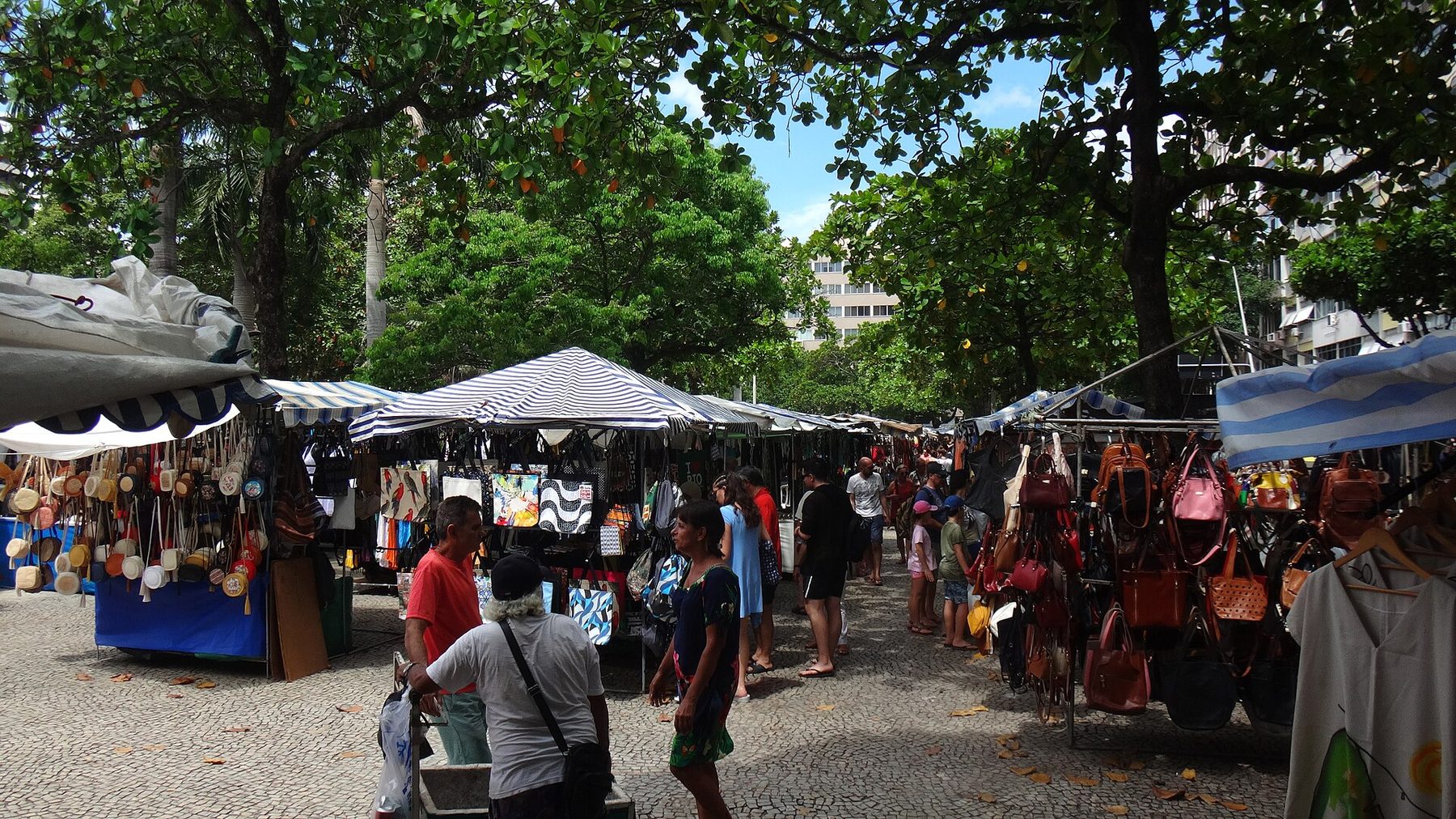
Photographs and reviews: 8.98% and 48%
8.98% higher occupancy is what a study in Management Science found for Airbnb properties with verified images, taken by Airbnb's own photographers, compared with properties whose images were taken by the host. The authors, Shunyuan Zhang, Dokyun Lee, Param Vir Singh and Kannan Srinivasan, used deep learning and difference-in-differences analysis on a panel of 7,423 properties over 16 months, in a paper published in August 2022 (doi 10.1287/mnsc.2021.4175). The abstract does not say where the properties were. The finding measures what one platform's photographers did to demand on that platform; it is not a forecast for any Rio flat.
Listing content also touches the payout date. Airbnb's ground rules for home hosts say the photos and description on a listing should accurately represent the space, and that Airbnb will ask hosts to remove content where AI or other digital technology has been used to edit flaws, hide damage or add amenities a listing does not have. Its payout page lists misrepresenting a listing's quality, and ongoing ground-rule issues such as low ratings, among the reasons a release moves from after check-in to after check-out.
Occupancy is the top of the chain: every percentage in this report is taken from a gross that depends on how many nights are sold. Art de Vivre's management page puts the link in its own terms: “A good listing is the single biggest lever on what a home earns.” Its furnishing guide goes further: “In this market the photos are the listing.” Those are one operator's views, and no figure for the firm's own homes is used here.
A commissioned survey measures the traveller's side. The Harris Poll ran it online for Expedia Group from 22 to 24 April 2026 among 1,758 adults in the United States, Canada, Mexico, the United Kingdom, France, Germany and Australia who had stayed in a vacation rental in the previous 12 months, and Vrbo released the results on 30 July 2026. 68% rated verified reviews very or extremely important, 66% the overall review score, 64% the recency of reviews and 62% detailed written reviews. Asked about deal breakers, 66% named a total price not shown clearly upfront, 59% high or unclear cleaning fees, 49% additional fees for using amenities and 48% a lack of clear photos of important rooms. The survey was commissioned by the platform's owner, and its seven countries do not include Brazil.
The scale: 48,193 listings
48,193 is the number of active short-stay listings Inside Airbnb found in Rio in June 2026, up from about 42,500 a year before, in data G1 reported first and Portas published in July. Every one of them that is paid through a platform passes through the release and fee rules described above; only those whose owners live abroad also pass through the 15% or 25% withholding. Art de Vivre's account of the chain and the statement is one operator's description among the managers of those listings, and nothing in it measures what the others do.

What the figures do not tell you
Airbnb's timings are the ones it calls typical and apply to most stays, not all. Booking.com publishes neither its commission rate for Brazil nor, in the pages read for this report, the exact days of its daily, weekly and monthly payouts. The management-fee ranges come from a software vendor describing US markets without a stated method, and from one Rio operator describing its own market; neither is a survey of Rio managers. Guesty's example uses round dollar figures and a 10% channel commission. The occupancy study does not say where its properties were, and the traveller survey was commissioned by Vrbo's owner and left out Brazil. IBGE does not name the messaging apps. No source gives the time taken by conversion and remittance abroad, or how often Airbnb's reviews hold a payout.
What the figures do and do not tell you
4 to 6 business days is the ordinary length, by this desk's arithmetic on Airbnb's published timings, from a guest's check-in to money in a bank account, and 4 to 8 by international wire, unless a review holds the payout for up to 45 days. Booking.com releases money once the guest has left, on a daily, weekly or monthly schedule. Airbnb takes 16% from a Brazilian host's payout under the single fee, or 4% under the split fee with a separate charge to the guest. Booking.com's commission depends on a contract it does not publish. The withholding on rent paid to an owner abroad is 15%, or 25% in listed jurisdictions.
Everything else is set between the owner and the manager: the percentage, which one software vendor puts at 20% to 30% of gross for full service in standard US markets and one Rio operator gives as the local range; the base it is taken from, worth $10 on a $500 booking in Guesty's example; the speed of conversion and remittance; and the frequency of the statement. Four lines on an owner's statement or contract carry those figures:
- The release rule for each listing, including whether it falls under Airbnb's after-check-out exceptions, and the Booking.com payout schedule chosen.
- The platform fee: 16% single or 4% split for a listing in Brazil on Airbnb, and the Booking.com commission written in the signed agreement.
- The manager's percentage and the figure it is applied to, before or after the platform's deduction.
- The withholding rate, 15% or 25%, the expenses deducted from its base, and the payment slip that shows it was paid.
Art de Vivre publishes its management page, and the guides on payouts and on running a Rio rental from a distance quoted here as one operator's account of the chain, at artdevivre.com.br.
Common questions
When does Airbnb pay a host for a stay in Rio?
Airbnb's Help Center says that on most home stays of up to 27 nights it starts the payout by the end of the first business day after the guest is due to arrive. Hosts with fewer than two completed stays and unverified listings, and listings with ongoing ground-rule issues, wait until after check-out. By this paper's arithmetic, money reaches a bank account about four to six business days after check-in.
What fee does Airbnb charge hosts in Brazil?
Under the single fee, which Airbnb says is mandatory for most hosts, it deducts 16% of the nightly price and host fees from the payout for listings in Brazil. Under the split fee, which is being phased out, the host pays 4% and the guest pays a separate fee of 14.1% to 16.5% of the subtotal.
Does Booking.com publish its commission for Brazil?
No. Booking.com says the percentage depends on the country, the property type and the agreement signed, and that marketing programmes can raise it. Commission is charged on the total booking amount, including cleaning fees, and bank-transfer payouts are processed after check-out.
How much tax is withheld on rent paid to an owner who lives abroad?
Under Decree 9.580 of 2018, 15% is withheld at source by the owner's representative in Brazil, or 25% for residents of jurisdictions classed as having favoured taxation. Expenses listed in article 42 of the decree may be deducted from the base, with proof.
Why does the base of a management fee matter?
In a worked example from the software company Guesty, a 20% management fee taken after a 10% channel commission leaves the owner $360 of a $500 booking, against $350 when the 20% is taken on the full amount. The difference grows with the size of the platform's deduction.
Sources
- Airbnb Help Center, When you'll get your payout (read 24 October 2026).
- Airbnb Help Center, Airbnb service fees (read 24 October 2026).
- Airbnb Help Center, Ground rules for home hosts (read 24 October 2026).
- Airbnb Help Center, Add check-in instructions to your listing (read 24 October 2026).
- Airbnb, Inc. (US Securities and Exchange Commission), Shareholder letter, third quarter 2025 (Form 8-K, exhibit 99.1) (2025).
- Airbnb, Inc. (US Securities and Exchange Commission), Shareholder letter, fourth quarter 2025 (Form 8-K, exhibit 99.1) (2026).
- Booking.com Partner Help, Joining Payments by Booking.com (updated October 2026).
- Booking.com for Developers, Understanding payouts (Payments by Booking onboarding API) (read October 2026).
- Booking.com Partner Help, Understanding your commission (updated about May 2026).
- Guesty Help Center, Revenue share in owner statements (read 24 October 2026).
- Hostaway, Owner statements (vacation rental guide) (19 July 2026).
- PriceLabs (Aishwarya Iyer), Entendendo as taxas dos property managers de aluguel por temporada (19 May 2026).
- InvestNews, Estúdios para locação de curta duração avançam na Zona Sul do Rio (Lobie's fee model) (16 February 2026).
- Presidência da República (Planalto), Decreto 9.580 de 2018, Regulamento do Imposto sobre a Renda, arts. 748, 763 and 781 (22 November 2018).
- Presidência da República (Planalto), Lei 8.245 de 1991 (Lei do Inquilinato), arts. 48 and 49 (18 October 1991).
- IBGE, PNAD Contínua: Acesso à Internet e à televisão e posse de telefone móvel celular para uso pessoal 2025 (2026).
- WebKit (Brady Eidson and Jen Simmons), Web Push for Web Apps on iOS and iPadOS (February 2023).
- Management Science (Zhang, Lee, Singh and Srinivasan), What Makes a Good Image? Airbnb Demand Analytics Leveraging Interpretable Image Features, vol. 68, no. 8, pp. 5644-5666 (August 2022).
- Vrbo, as published by Hospitality Net, Quality pays: new Vrbo research finds travelers will spend more on vacation rentals they trust (Harris Poll for Expedia Group) (30 July 2026).
- Portas, Copacabana tem maior densidade de aluguel por temporada do mundo (Inside Airbnb data, via G1) (29 July 2026).
- Art de Vivre, Rental management page, signed by Charles Jonas (reviewed August 2026).
- Art de Vivre, Journal: getting paid from a Rio short-stay (updated August 2026).
- Art de Vivre, Journal: running your Rio Airbnb from abroad (updated August 2026).
- Art de Vivre, Journal: choosing an Airbnb manager in Rio (updated August 2026).
- Art de Vivre, Journal: furnishing a Rio apartment for short stays (updated August 2026).
- Art de Vivre, Guest app page (read 24 October 2026).
A note on this story: Booked News's publisher works with Art de Vivre on its marketing and built its website. The facts here come from the firm's published pages and the public sources listed above. Sources were read on or before 24 October 2026. To report an error, write to the desk; see the corrections policy.

More features
 Photograph by Wilfredor, CC0, via Wikimedia Commons.Market report · ReturnsForeign Buyers in Rio's South Zone by the NumbersBy Callum Reid · 20 min read
 Photograph by Ekrem Canli, CC BY-SA 4.0, via Wikimedia Commons.Market report · OccupancySouth Maui Vacation Rentals in 2026 by the NumbersBy Amara Osei · 19 min read
 Photograph by CaptJayRuffins, CC BY-SA 4.0, via Wikimedia Commons.Market report · ReturnsSt. Croix Against St. Thomas and St. John in Villa and Home-Price NumbersBy Ruth Okafor · 20 min read
Comment thread