Docking Village to Vote on Proposal Restricting New Homes to Primary Residences
With a third of village properties designated as lock and leaves, Docking residents vote on proposals to restrict future open market residential construction.
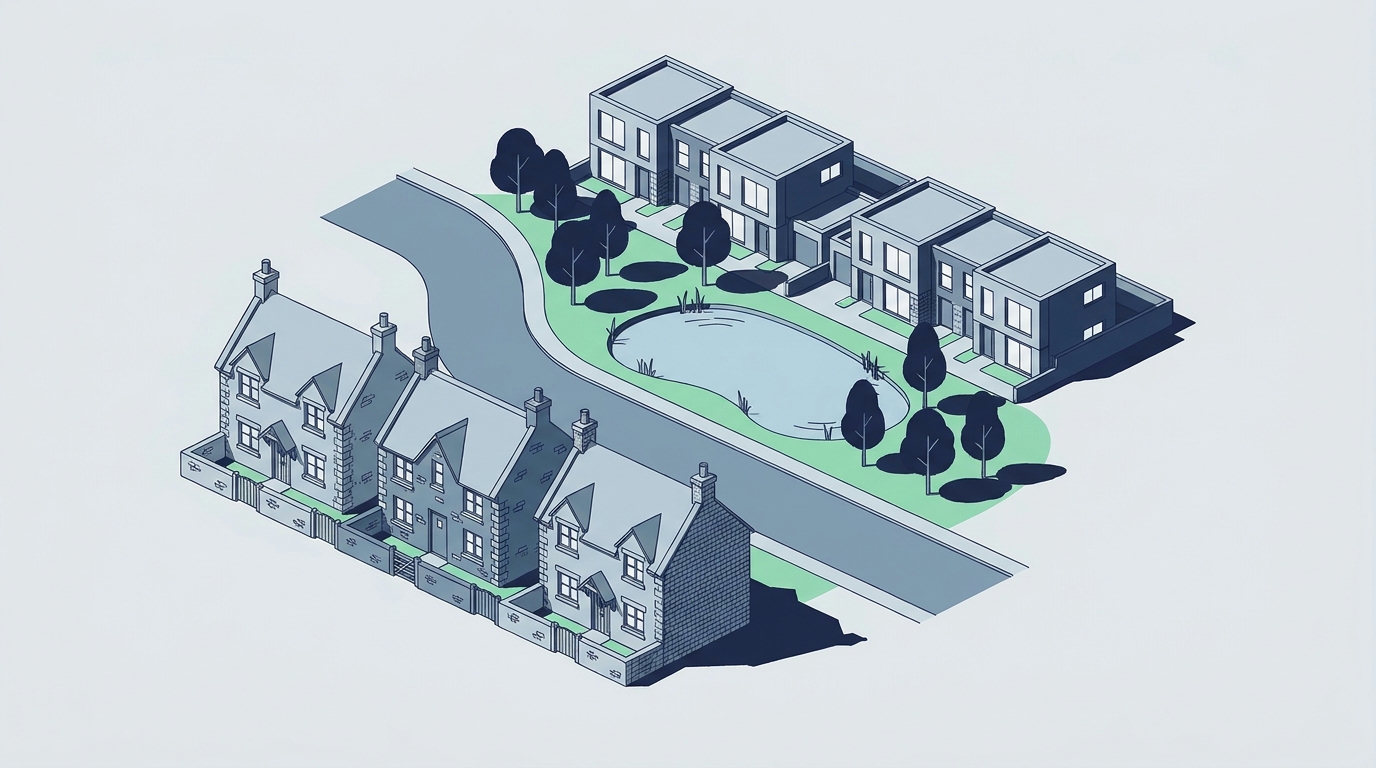
A third of homes in the Norfolk village of Docking are lock and leaves, according to the draft Docking Neighbourhood Plan prepared for an upcoming parish referendum. Residents in the village, located near Hunstanton, go to the polls on Thursday, November 26 to decide on adopting local planning policies designed to curb second homes and holiday accommodation.
The draft plan at the center of the referendum stipulates that any new housing development in the parish must serve as a principal residence. The measure is designed to address housing market pressures in a community where average property prices have increased significantly over the past decade.
What the data shows
House prices in Docking have expanded substantially in recent years, according to figures included in the neighbourhood plan documentation. The average house price in the village stood at £230,000 in 2014 before rising to £500,000 in 2023. This price movement represents more than a doubling of average values in less than a decade.
At the same time, the village has experienced considerable physical expansion. Planning records cited in the plan report that three new housing estates were constructed in recent years, adding 144 homes to the local housing stock. Despite this addition of residential capacity, local survey data indicates that market availability for permanent residents remains constrained.
A third of all residential properties in Docking are classified as lock and leaves, indicating that they are utilized as second homes or holiday lets rather than primary dwellings. To evaluate community priorities, the parish council conducted a consultation survey in which 200 people took part. Following the feedback, the parish council noted:
If new homes were built in the parish many said they want to see more affordable homes and first homes.
The council further reported that the majority of people did not want to see any more holiday accommodation in the parish. To align future housing delivery with local needs, the plan states that most new homes built in the parish should be of three bedrooms or less, explaining that this requirement:
“Would provide for families, households downsizing or needing to access more affordable dwelling types and sizes.”
In addition to housing policies, the plan reflects local desire for environmental protections, noting that residents want Docking’s green spaces, including its ponds, to be protected for posterity.
How it was measured
The data driving the referendum policies originated from local parish surveys, housing market price trackers, and municipal development statistics. Docking Parish Council led the policy development process by issuing a local community survey to gather resident views on housing, growth, and holiday lets. A total of 200 people took part in the survey process, providing the primary qualitative and directional consensus for the draft plan.
The house price comparison relies on market data comparing the average price of £230,000 recorded in 2014 with the average price of £500,000 recorded in 2023. The figures reflect baseline property value changes across the village over a nine-year timeframe.
Housing inventory figures were measured using planning records from recent residential developments. These metrics isolate the contribution of three new estates, which added 144 homes to Docking’s existing building stock. The proportion of non-primary dwellings was measured by assessing residential occupancy characteristics, establishing that a third of homes function as lock and leaves.
Principal residence restrictions
The core mechanism of the proposed neighbourhood plan is a main residence condition placed on future housing permissions. The text drafted by the parish council explicitly details the policy restriction:
“Due to the impact upon the local housing market of the continued uncontrolled growth of dwellings used as second homes or holiday homes Docking Neighbourhood Plan will restrict further new open market housing or any net new additional dwellings on a site which have replaced a single property being for second homes or holiday lets.”
The draft plan explicitly defines the goal of this rule, stating:
“The purpose of this policy is to safeguard and strengthen the residential community in Docking.”
Docking is not the first parish in the region to introduce main residence mandates. The draft plan highlights that many nearby communities have already voted through neighbourhood plans containing identical or similar stipulations requiring new housing to be used as a principal residence. Surrounding Norfolk communities that have enacted these policies include Burnham Market, Wells, Heacham, Old Hunstanton and Ringstead.
By capping the use of new open market housing to primary residents, the neighbourhood plan seeks to halt the further conversion of future residential supply into short-term rentals or secondary homes. The inclusion of size limits restricting most new housing to three bedrooms or less further focuses future construction on lower-cost and mid-tier residential units rather than larger executive properties that often attract second-home buyers.
Impact on property managers and investors
For short-term rental operators, property managers, and real estate investors, the pending vote on Thursday, November 26 introduces distinct regulatory conditions in the local market. If approved, the policy halts the growth of new short-term rental supply originating from newly built homes or replacement residential developments.
Investors looking to enter the Docking short-term rental market will no longer be able to purchase newly constructed open market units on new estates for use as holiday accommodation. Developers who previously targeted investor-buyers for new-build housing projects must shift marketing and sale strategies strictly toward primary occupants.
For existing holiday let owners and property managers, the vote creates a bifurcated market. Existing short-term rentals and second homes already functioning prior to the policy adoption remain operational. Because the proposed plan restricts net new additional dwellings from entering the holiday let supply, existing permitted short-term rentals may experience enhanced asset protection and sustained booking demand due to artificial supply caps.
However, secondary market transactions involving existing stock could face higher entry costs. With average home prices climbing from £230,000 in 2014 to £500,000 in 2023, purchasing existing properties that are exempt from the new principal residence condition requires larger initial capital commitments. Property management companies active in Norfolk must adjust expansion targets, recognizing that portfolio growth across Docking, Burnham Market, Wells, Heacham, Old Hunstanton and Ringstead cannot rely on new housing development pipelines.
What the figures do not show
While the draft neighbourhood plan outlines key structural shifts in housing stock and prices, several operational metrics remain unrecorded in the source data. The report does not detail performance metrics for existing short-term rentals in Docking, such as average daily rates, occupancy levels, revenue per available room (RevPAR), or seasonal turnover rates.
The published data does not specify the precise split between properties used purely as commercial short-term holiday rentals and those kept as private, non-commercial second homes within the single figure stating that a third of homes are lock and leaves. Furthermore, the overall baseline number of total dwellings in Docking is not provided, meaning the absolute volume of properties corresponding to that third cannot be determined directly from the report.
Regarding community sentiment, while the report records that 200 people took part in the survey and that a majority opposed further holiday accommodation, exact percentage breakdowns of survey responses were not disclosed. Finally, the source figures do not measure the broader economic contribution of tourism spending generated by short-term rental guests versus the financial impacts borne by local workers priced out of the housing market.
What to watch
Market participants tracking short-term rental regulations and housing developments in Norfolk should monitor several immediate markers:
- Check the formal outcome of the Docking neighbourhood plan referendum vote scheduled for Thursday, November 26.
- Review local planning application filings in Docking to evaluate whether developers apply main residence covenants on prospective housing proposals.
- Monitor resale listings for existing housing stock in Docking to assess whether non-restricted legacy properties command price premiums over new-build primary residences.
- Track regulatory announcements in neighbouring Norfolk parishes considering principal residence stipulations similar to those enacted in Burnham Market, Wells, Heacham, Old Hunstanton and Ringstead.
Figures checked by the standards desk (Paul Ostrowski): every figure in this story was matched to the source material listed below before publication.
Tally from the accuracy gate: 22 details tested, 20 found in the stored source, 1 allowed as background knowledge, 1 rewritten to match a public record, nothing cut.
Sources
- Yahoo News UK - reported October 25, 2026.
- Eastern Daily Press - Locals set to vote on new curbs on holiday homes in Docking.
Read and analysed by the Booked News desk.
Is a figure here wrong? Say so / The corrections procedure and the log

Related stories

Edinburgh councillors reject three Royal Mile short term let plans
Picture from Wikimedia Commons; licence CC BY-SA 4.0; photographer Eléonore Gaudry

UK property tax raid to hit Airbnb owners with 4pc income levy
Picture from Wikimedia Commons; licence CC BY-SA 4.0; photographer Tilman2007

Smoky Mountains Cabin With 61 Airbnb Bookings Faces Permit Loss Upon Owner Death
Picture from Wikimedia Commons; licence CC BY-SA 4.0; photographer Rhododendrites

Scottsdale logs 665 short-term rental police calls as city steps up enforcement
Read the desk every morning.
Leave your address for the Booked News briefing: the day's figures on rates, occupancy, demand, fees, supply and returns, each with its source, in one short email.
Comment thread