Las Vegas lodging metrics show 85.5% weekend occupancy as midweek rates soften
Official LVCVA reporting shows weekend occupancy reached 85.5% while midweek occupancy dropped to 69.4% amid broader RevPAR compression across Clark County.

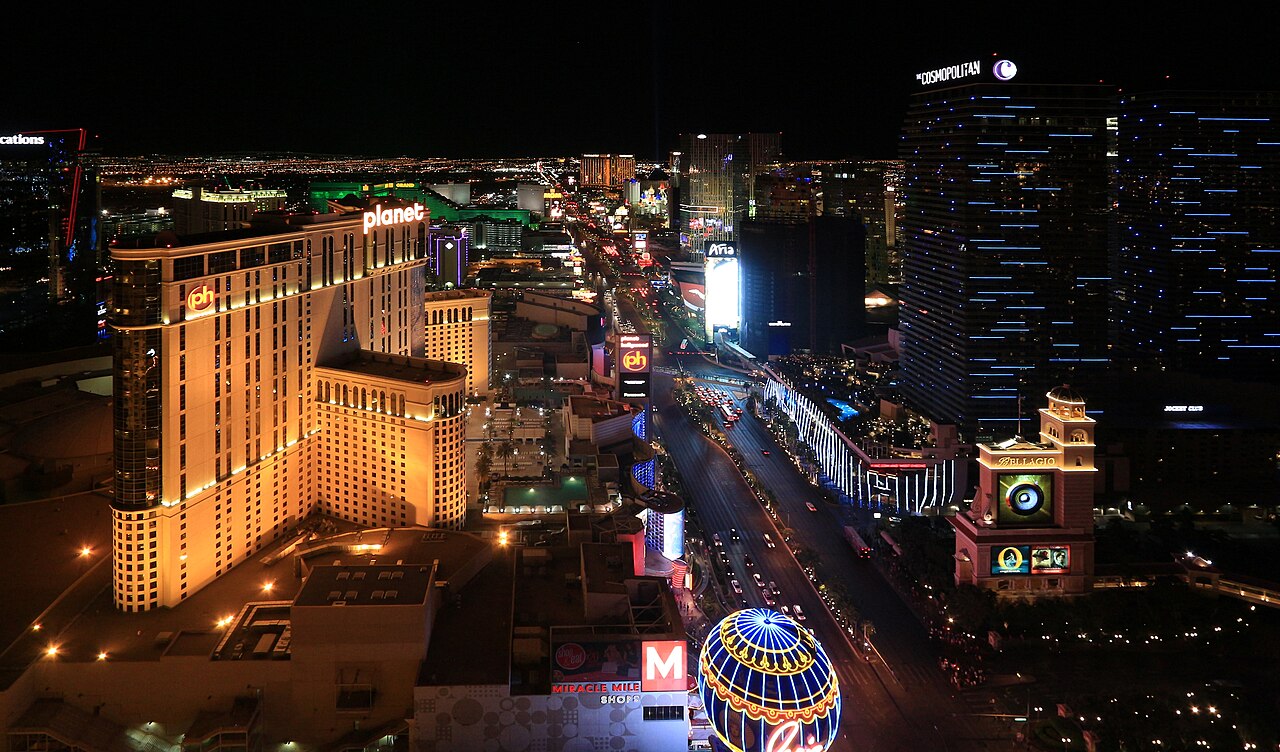
The Las Vegas Strip showing major resort hotels and casinos, photographed in 2021. Picture from Wikimedia Commons: “Las Vegas Panorama Bellagio to Paris 2014”. Photographer Paul Harrison. Licence CC BY-SA 4.0. Resized from the original.
Weekend hotel occupancy in Las Vegas reached 85.5% in August 2026, while midweek occupancy fell to 69.4%, according to official monthly reporting from the Las Vegas Convention and Visitors Authority (LVCVA). The gap highlights a widening divide between weekend leisure demand and softening Tuesday-to-Thursday room stays across major commercial lodging submarkets.
At the same time, citywide revenue per available room (RevPAR) tumbled 11.5% to $111.39, while the average daily room rate (ADR) dropped 7.4% year-over-year to $150.32, according to LVCVA figures. Measuring the spread between weekend demand and midweek discounting tells hosts, managers and accommodation investors a good deal about pricing friction, fee resistance, and market-wide revenue shifts.
How the metric works
The spread between weekday and weekend rates measures the relative strength of leisure demand on Friday and Saturday nights against commercial or baseline demand from Tuesday through Thursday. In high-density lodging markets, this dynamic manifests through both rate fluctuations and occupancy variance across different calendar windows.
When weekend hotel occupancy holds at 85.5% while midweek occupancy slips to 69.4%, as the LVCVA reported for August 2026, pricing power becomes highly concentrated in short weekend blocks. To maintain baseline occupancy during slow midweek windows, operators adjust base room prices downward. According to regional tourism updates, base room rates at four-star Strip resorts frequently fall under $75 per night before fees during Tuesday-to-Thursday stays. Conversely, weekend arrival rates spike by 150% to 200% over midweek base levels.
Understanding this spread requires evaluating total consumer cost, which includes fixed ancillary fees alongside base rates. In Las Vegas, mandatory daily resort fees ranging from $45 to $55 and Clark County lodging taxes of 13.38% create a high price floor regardless of how low the base daily rate falls. For example, a $60 advertised base room rate increases to $125 after adding daily resort fees and local lodging taxes. When secondary costs remain constant while base rates drop, consumer price sensitivity directly impacts midweek booking volume.
How it was measured
The operational statistics in this analysis originate from official monthly performance reporting published by the Las Vegas Convention and Visitors Authority (LVCVA) for August 2026, alongside preliminary September 2026 indicators highlighted by local broadcaster 8 News Now.
The LVCVA tracks lodging inventory across Clark County, measuring total monthly visitor volume, room rates, occupancy rates, and convention delegate counts across gaming and non-gaming properties. For August 2026, the LVCVA recorded total monthly visitors of 3,034,900, representing a 4.3% decline year-over-year. Total convention attendance reached 622,700 delegates, an increase of 6.0% over the prior year period. Overall citywide hotel occupancy slipped 3.4 percentage points to 74.1%.
Comparative traveler sentiment figures regarding alternative lodging choices originate from a nationwide survey conducted by Chase Travel. The study gathered data from over 4,000 U.S. participants to measure booking preferences across demographic groups, reporting that 74% of Gen Z and Millennials expressed interest in booking a vacation rental in the future.
Midweek occupancy compression and rate spreads
The drop in midweek hotel occupancy to 69.4% reflects changing consumer behavior in response to cumulative travel expenses. While convention attendance grew by 6.0% to 622,700 attendees in late summer 2026, providing a stable corporate lodging base, leisure travelers demonstrated price resistance against ancillary costs. Stacked resort fees, self-parking charges, and elevated food and beverage pricing across major resorts contributed to shortened trip durations and altered booking timing.
Rather than paying elevated total stay costs across four or five nights, domestic vacationers increasingly concentrated their travel around specific weekend events, sports fixtures, or entertainment residencies. This concentration supported the 85.5% weekend occupancy figure while leaving midweek inventory underutilized.
To mitigate softening midweek demand, destination marketing organizations and resort operators deployed targeted promotional campaigns. The LVCVA introduced the "Vegas 5-Day Sale" from September 22 to 26, 2026. Data presented to the tourism board in October confirmed that the digital campaign generated approximately 1,000,000 website page views and 210,000 referral clicks to resort booking engines, demonstrating the volume of promotional marketing required to stimulate midweek bookings.
Geographic disparities and short-term rental competition
Performance metrics reveal significant geographic variation across submarkets within the broader metropolitan area, so operators and suburban hosts face different competitive conditions from one area to the next:
- The Las Vegas Strip (77% Occupancy): Major resort properties along Las Vegas Boulevard maintained market share by combining sports fixtures at Allegiant Stadium, mega-concerts, and integrated convention facilities, capturing the majority of high-spending delegates despite downward pressure on room rates.
- Downtown Las Vegas and Fremont Street (53% Occupancy): Downtown properties recorded an occupancy rate of 53%, trailing the Strip by a 24-point occupancy split. While downtown venues offer lower table minimums, operators face direct competition from short-term vacation rentals and suburban casino hotels in Summerlin and Henderson.
The 24-point occupancy gap between the Strip and downtown demonstrates how price sensitivity alters traveler choices. Downtown and independent off-Strip lodging operators have responded by rolling back self-parking fees and adding midweek dining credits to fill empty rooms. For short-term rental hosts operating in nearby suburban submarkets such as Summerlin and Henderson, downtown occupancy drops indicate that price-conscious guests actively evaluate alternative accommodations outside the primary resort corridor.
Alternative inventory and platform expansion
As traditional hotel operators navigate RevPAR compression and midweek occupancy drops, premium distribution platforms are expanding short-term rental inventory to capture group travel demand. Chase Travel announced it will add over 10,000 vacation homes to its travel portfolio, coming to The Edit as of January 1, 2027.
The expansion targets premium cardholders using the Chase Sapphire Reserve, Sapphire Reserve for Business, or J.P. Morgan Reserve Card. Eligible cardholders will be able to apply annual credits of up to $250 per paid stay toward vacation home bookings. Annual credits for Chase Sapphire Reserve and J.P. Morgan Reserve accounts remain capped at $500, while the Sapphire Reserve for Business benefit will double to $1,000 as of January 1, 2027. Properties added to the platform are selected by Plum Guide based on comfort, design, and location, with stays including $150 of in-stay credit usable for practical amenities such as airport pick-ups or stocked fridges.
Chase Travel noted that the introduction of vacation rentals stems from the popularity of group trips where friends or family members seek to stay together under 1 roof rather than booking separate hotel rooms. With 74% of Gen Z and Millennial survey respondents interested in booking vacation rentals, institutional travel platforms are positioning single-family rental supply to directly compete with traditional hotel inventories during peak and off-peak booking windows.
What to watch
Market participants evaluating weekday and weekend rate dynamics should track specific operational metrics and distribution shifts across local lodging markets:
- Midweek rate discounting: Monitor whether regional hotel operators drop base rates below $75 during Tuesday-through-Thursday stay windows to combat low midweek occupancy.
- Resort fee transparency: Track consumer resistance to daily resort fees in the $45 to $55 range and whether off-Strip properties waive fees to gain market share.
- Suburban market capture: Observe occupancy changes in secondary submarkets like Summerlin and Henderson as downtown hotel occupancy lags primary resort corridors.
- Institutional platform integration: Follow the rollout of over 10,000 Plum Guide properties on Chase Travel's platform heading into January 1, 2027.
- Convention calendar strength: Assess whether delegate volume growth above 622,700 attendees can offset broader leisure footfall drops.
Figures checked by the standards desk (Paul Ostrowski): every figure in this story was matched to the source material listed below before publication.
Tally from the accuracy gate: 63 details tested; 63 found in the stored source; nothing cut.
Sources
- Upgraded Points - Chase Adding Over 10,000 Vacation Homes to The Edit, Will Qualify for $250 Credit (November 5, 2026).
- Nomad Lawyer - Las Vegas Travel 2026: Hotel Rates Drop and Occupancy Splits as September Tourism Stabilizes (October 30, 2026).
An analysis column by the Booked News desk. Every figure is taken from the sources above.

Related stories
Dar es Salaam short stay listings generate $9,200 annual revenue as supply drops
Picture from Wikimedia Commons; licence CC BY-SA 4.0; photographer LittleT889
Dare County short-term rental demand fell 8.1% in October
Picture from Wikimedia Commons; licence CC BY-SA 4.0; photographer Royian

Platform fee restructuring drives host price adjustments in short-term rental markets
Picture from Wikimedia Commons; licence CC BY 4.0; photographer Jakub Hałun

Greece Short-Term Rental Revenue per Available Night Rises 8.7% in 2026
Picture from Wikimedia Commons; licence CC BY-SA 4.0; photographer C messier
Comment thread