Dare County short-term rental demand fell 8.1% in October
Adjusted paid occupancy for short-term rentals dropped to 40.7% as nor’easters damaged N.C. 12 and cut off highway access to Hatteras Island.
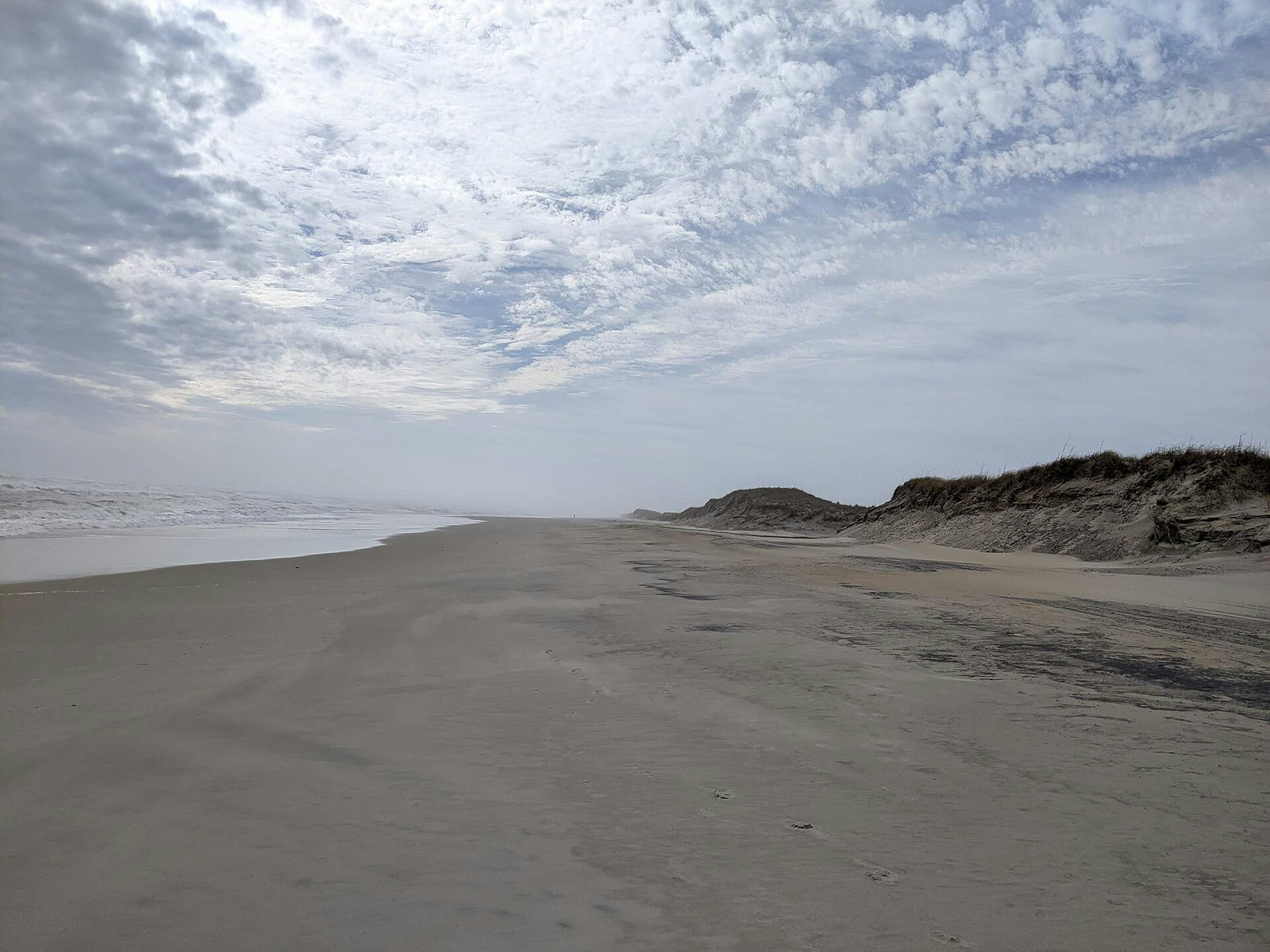
The sandy coastline and ocean dunes of Hatteras Island in the Outer Banks, photographed in 2022. Picture from Wikimedia Commons: “Beach at Hatteras, North Carolina”. Photographer Royian. Licence CC BY-SA 4.0. Resized from the original.
Short-term rental demand fell 8.1% in Dare County during October, according to data from lodging research provider KeyData published in the Outer Banks Visitors Bureau’s monthly review. The decline in booked guest nights occurred as severe autumn weather caused storm damage and cut off direct highway access along key coastal routes in the area.
The monthly performance figures compiled by KeyData and released by the Outer Banks Visitors Bureau reflect a mixed fall travel season across the region. While short-term rentals experienced lower occupancy levels and a drop in overall revenue per available unit, hotel properties in Dare County showed a contrasting trend, registering slight occupancy growth alongside lower average room rates.
What the data shows
The short-term rental sector in Dare County experienced reductions across several key operational metrics during October. KeyData reported that adjusted paid occupancy for short-term rentals averaged 40.7% across the county during the month. This level represents a decrease from the 43.5% adjusted paid occupancy recorded in October of the previous year.
Overall guest volume contracted during the period, with total booked guest nights dropping 8.1% year-over-year. The supply of available inventory listed by property managers and owners across Dare County also contracted, with available nights falling 2% compared to the prior year. Property owners also curtailed their personal usage and blockages during the month, as owner nights and holds decreased by 5% year-over-year.
Despite the decrease in guest nights and occupancy rates, pricing for short-term rental properties posted a slight gain at the county level. The countywide average daily rental rate rose 0.6% to reach $218 in October. However, because the minor rate increase was insufficient to counteract the lower occupancy levels, adjusted revenue per available rental fell 5.7% to about $89.
Market performance varied significantly across the three distinct geographic sub-regions analyzed in the bureau’s review. Hatteras Island was the only region among the three to record a year-over-year drop in adjusted paid occupancy. In contrast, both Roanoke Island and the northern beaches achieved year-over-year occupancy growth during October.
Roanoke Island achieved the highest adjusted paid occupancy in the county for the month at 52.8%. Hatteras Island recorded the second-highest adjusted paid occupancy at 49.1%. The northern beaches recorded an adjusted paid occupancy of 35.6%.
Average daily rates across the three sub-regions moved in opposite directions. On Hatteras Island, operators increased average daily rates to $177. On the northern beaches, average daily rates fell to $254. On Roanoke Island, average daily rates dropped to $146 during October.
How it was measured
The short-term rental performance figures presented in the report were gathered by lodging research provider KeyData and published by the Outer Banks Visitors Bureau in its monthly review. KeyData tracks operational figures including adjusted paid occupancy, booked guest nights, available nights, owner nights and holds, average daily rate, and adjusted revenue per available rental across short-term rental listings.
The bureau’s report breaks down short-term rental metrics across three primary geographic regions within Dare County: Hatteras Island, Roanoke Island, and the northern beaches. The reported statistics evaluate lodging performance across the full calendar month of October.
Hotel statistics cited in the monthly review were compiled from a specific sample monitored by KeyData consisting of 12 hotels that contain a combined total of 1,496 rooms. The Outer Banks Visitors Bureau noted that these figures reflect only that specific 12-hotel sample and do not represent total revenue or metrics for every hotel operating in Dare County.
Park visitation numbers included in the review were documented directly by public park authorities. Visitation figures for Cape Hatteras National Seashore were recorded by the National Park Service and compared against counts from October of the prior year. Additional regional attraction counts were reported directly by the North Carolina Aquarium on Roanoke Island, Fort Raleigh National Historic Site, and the Elizabethan Gardens.
Digital engagement figures were collected through the bureau’s social media tracking platforms. The report notes that these social media metrics measure online user engagement and platform activity rather than physical travel arrivals or lodging reservations.
Road closures and regional disruptions
Physical travel infrastructure across Dare County faced substantial challenges during October due to severe coastal weather events. A pair of nor’easters battered the coast during the month, causing recurring structural damage to N.C. 12. The road damage closed direct highway access to Hatteras Island on two separate occasions and prompted the issuance of visitor evacuation restrictions.
These severe weather disruptions had a direct effect on lodging operations on Hatteras Island. Road closures physically prevented incoming travelers from reaching short-term rental properties and hotels along the southern portion of the barrier island network. As a consequence of these access limitations, Hatteras Island emerged as the only geographic sub-region in Dare County to record a year-over-year decline in adjusted paid occupancy.
Despite facing physical access closures and declining occupancy, short-term rental operators on Hatteras Island raised average daily rates to $177 in October. This pricing movement differed from trends on the northern beaches and Roanoke Island, where property rates declined even as occupancy levels expanded.
The northern beaches reached an adjusted paid occupancy of 35.6% while average daily rates dropped to $254. Roanoke Island registered an adjusted paid occupancy of 52.8% while average daily rates fell to $146. Because these northern and inland locations remained accessible without passing through storm-damaged sections of N.C. 12, they maintained guest flow more effectively than Hatteras Island during the month.
Short-term rentals versus hotel benchmarks
The October data reveals a clear operational contrast between short-term rentals and traditional hotel properties across Dare County. While short-term rental occupancy fell from 43.5% to 40.7%, hotel properties monitored in KeyData’s sample recorded higher occupancy levels than in the previous year.
Hotel occupancy in the sample increased to 66.3% in October, up from 65.7% during October of the prior year. Total guest nights spent at the 12 sampled hotels increased by 0.9%. This positive volume trend in the hotel sector occurred while short-term rental guest nights declined 8.1% across the county.
However, hotel properties achieved this volume increase by reducing rates. The average daily rate across the 12 sample hotels fell 6.9% to about $144 in October. This reduction in room rates led to overall financial declines for the sampled hotel properties.
Total hotel revenue for the 12 sampled properties declined 6.1% to approximately $2.19 million in October. Revenue per available room at these hotels fell to about $96, compared with $102 recorded in October of the prior year. By contrast, short-term rental property owners maintained pricing power with a 0.6% increase in average daily rates to $218, though their adjusted revenue per available rental dropped 5.7% to about $89 due to the larger decline in occupancy.
Park visitation and community activity
Travel disruptions and access barriers influenced public site visitation across Dare County during October. Cape Hatteras National Seashore recorded 132,703 visits during the month. This visitation count represents a 42.3% decrease compared to the 230,057 visits recorded at the national seashore in October of the prior year.
Other major cultural and natural attractions across Dare County also documented drops in monthly attendance. Sites reporting lower visitor numbers included the North Carolina Aquarium on Roanoke Island, Fort Raleigh National Historic Site, and the Elizabethan Gardens.
Alongside lodging and travel tracking, the Outer Banks Visitors Bureau recorded local community engagement activities during the month. The bureau conducted the second annual Outer Banks Volunteer Week from Oct. 10-17. During this initiative, 11 Dare County nonprofits and municipalities organized 16 volunteer opportunities. Volunteers filled more than 140 spots and contributed more than 200 hours of service to community projects, which included beach and community cleanups, trail maintenance, and outdoor classroom improvements.
Local non-profit groups participated directly in environmental cleanups across the area. Outer Banks Relief Foundation Executive Director Patty McKenna reported that the organization’s beach cleanup event drew about 40 volunteers who removed 52 pounds of trash from local coastal areas.
Digital interest in the destination remained active during the storm disruptions. The bureau’s social media tracking recorded approximately 3.9 million impressions and 58,376 website sessions referred from social media platforms in October. The report noted that these digital metrics quantify online audience activity rather than physical travel visits or completed room reservations.
What to watch
Operators and investors tracking coastal market conditions can monitor several key operational factors in upcoming reporting periods:
- Highway infrastructure repairs and maintenance developments along N.C. 12 at Pea Island and Rodanthe.
- Sub-regional occupancy disparities between Hatteras Island, Roanoke Island, and the northern beaches.
- Rate strategies among short-term rental operators versus traditional hotels during shoulder season months.
- Park visitation figures at Cape Hatteras National Seashore as access conditions stabilize.
Figures checked by the standards desk (Paul Ostrowski): every figure in this story was matched to the source material listed below before publication. 1 figure that could not be matched was removed.
Tally from the accuracy gate: 58 details tested; 56 found in the stored source or in the sources listed below; 2 allowed as background knowledge; nothing cut.
Sources
- Island Free Press - reported November 18, 2026.
- nps.gov - Park Statistics - Cape Hatteras National Seashore (U.S. National Park Service).
Read and analysed by the Booked News desk.

Related stories
U.S. ski markets pace ahead in short-term rental revenue for 2026–27 season
Picture from Wikimedia Commons; licence CC BY-SA 4.0; photographer King of Hearts

U.S. short-term rental revenue paced 26% higher for September 2026, KeyData reported

Short-term rental rates drove $276.7 million World Cup revenue lift in July 2026
Dar es Salaam short stay listings generate $9,200 annual revenue as supply drops
Picture from Wikimedia Commons; licence CC BY-SA 4.0; photographer LittleT889
Comment thread