Malaysia drafts short-term rental rules with potential 180 night annual cap
The proposed federal framework requires mandatory local authority licensing and directs digital accommodation platforms to remove unlicensed property listings.

The skyline of George Town in Penang featuring the KOMTAR tower, photographed at night in 2024. Picture from Wikimedia Commons: “Skyline of George Town, Penang at night Nov2024-29-17”. Photographer HundenvonPenang. Licence CC BY-SA 4.0. Resized from the original.
A proposed operational threshold of 180 nights annually is under consideration in Malaysia as part of new uniform planning guidelines for short-term rental accommodation, according to Deputy Housing and Local Government Minister Datuk Aiman Athirah Sabu. The framework, drafted by the Ministry of Housing and Local Government through PLANMalaysia, establishes a national regulatory blueprint for short-term rental properties across all domestic jurisdictions.
Under the proposed structure, property operators across Malaysia must complete premise registration and secure local authority licensing before accepting bookings. The national policy framework expects digital accommodation platforms to take responsibility for removing unlicensed listings and properties that violate municipal planning rules or statutory laws.
What the data shows
Deputy Housing and Local Government Minister Datuk Aiman Athirah Sabu confirmed that the Ministry of Housing and Local Government, known as KPKT, is formulating uniform planning guidelines for short-term rental accommodation through its urban planning agency, PLANMalaysia. The drafting effort involves direct collaboration with the Ministry of Tourism, Arts and Culture, known as Motac, alongside state governments and municipal local authorities.
The policy document is undergoing final review with Motac prior to submission to the Cabinet. Following Cabinet review, the framework will be presented to the National Council for Local Government, known as MNKT, for federal policy approval.
The proposed regulatory framework sets out five core operational directives for short-term rental accommodation across Malaysia:
- Mandatory local authority licensing: STRA operators must register premises and satisfy local authority licensing conditions before legally commencing operations.
- Strata management compliance: Short-term rental operations in strata properties must continue to follow by-laws enacted by Joint Management Bodies, known as JMBs, or Management Corporations, known as MCs, pursuant to the Strata Management Act 2013.
- Automatic licence verification: The government is encouraging cooperation with digital accommodation platforms to introduce automatic status verification checks before new listings are published online.
- Removal of unlicensed listings: Digital booking platforms are expected to take responsibility for taking down listings that lack valid licences or breach municipal rules and existing legislation.
- Strengthened statutory enforcement: Municipal authorities and enforcement agencies are authorized to take formal legal action against non-compliant operators under the Town and Country Planning Act 1976 and the Street, Drainage and Building Act 1974.
The federal framework also addresses the potential imposition of operational day caps, contemplating a limit of 180 nights annually for short-term rental activities. Aiman Athirah stated that a regulatory impact assessment was conducted to evaluate how an annual threshold of 180 nights annually balances host income opportunities, tourism accommodation demands, public safety standards, and local community residential wellbeing.
At the state level, Penang has already enacted local statutory controls. Guidelines for the Operation of Private Accommodation in Strata Property Schemes took effect in Penang on April 1, 2023. Subsequently, Penang formally gazetted its Private Accommodation (Local Authority) By-Laws on August 1, 2026.
Broader housing and development metrics published alongside regional property updates show that Penang nears 80% of its 2030 affordable housing target. Industrial and infrastructure targets in the state indicate that Silicon Island’s 1st factory is expected to begin operations in 2028, while the RM33mil Mount Erskine underpass targets 2030 Completion. Residential development filings across Penang state include proposed projects such as 134 landed homes near Jalan Fajar Indah in Nibong Tebal, 64 units of landed homes near Taman Bidara, and commercial project launches including SkyWorld Cassia in Batu Kawan with units priced from RM288,800, while Iconic targets a new Penang property launch in 1H 2027.
How it was measured
The operational directives and legislative details were disclosed by Deputy Housing and Local Government Minister Datuk Aiman Athirah Sabu on behalf of KPKT. PLANMalaysia served as the technical drafting authority, coordinating policy provisions with Motac, state administrative branches, and local municipal bodies across Malaysia.

To evaluate the inclusion of an operational ceiling of 180 nights annually, KPKT conducted a formal regulatory impact assessment. This assessment examined economic returns for property owners alongside municipal safety protocols, residential neighborhood impacts, and national tourism capacity needs.
State enforcement timelines reflect official administrative implementation dates in Penang, where strata property accommodation guidelines became active on April 1, 2023, and dedicated municipal by-laws were gazetted on August 1, 2026. The ministry did not publish the full empirical dataset, statistical sampling, or economic modeling behind the regulatory impact assessment.
Regulatory framework and licensing
The proposed federal framework introduces direct structural obligations for short-term rental accommodation hosts, property management entities, and digital booking intermediaries. Under the provisions outlined by PLANMalaysia and KPKT, premise registration and local authority licensing become prerequisites for legal commercial activity in short-term residential rentals.
By mandating local authority licensing, the federal framework delegates operational approvals to local municipal councils. Operators must submit individual properties for municipal review to verify compliance with local planning designations, structural standards, and health standards prior to listing properties on digital distribution networks.
A primary mechanism within the framework is the establishment of automatic licence status verification checks. The government is asking digital accommodation platforms to integrate regulatory verification systems into property onboarding flows. This measure aims to check licensing credentials automatically before a listing becomes active and visible to potential guests.
Furthermore, digital platforms are assigned explicit operational accountability for content moderation on their systems. Under the guidelines, platforms are expected to take immediate action to remove listings that operate without valid local authority licences or fail to conform with municipal conditions and national legislation.
Enforcement provisions rely on existing statutory laws rather than creating entirely new legal codes. Enforcement officers and municipal authorities will utilize powers under the Town and Country Planning Act 1976 and the Street, Drainage and Building Act 1974 to prosecute illegal operators, issue operational stops, or institute legal proceedings against non-compliant properties.
Strata management and enforcement
The federal planning guidelines preserve the autonomous authority of residential strata governance structures. Short-term rentals located within multi-unit residential developments must strictly comply with regulations established by local Joint Management Bodies and Management Corporations operating under the Strata Management Act 2013.
Under the Strata Management Act 2013, residential communities retain legal authority to enact building by-laws through general meetings. These building rules can explicitly restrict or completely prohibit short-term rental accommodation operations within individual strata schemes, regardless of whether an operator holds a local municipal licence.
This dual-layer regulatory architecture means property owners in strata buildings face two distinct approval thresholds. Operators must obtain formal regulatory approval from local municipal authorities while maintaining compliance with building-level by-laws enforced by their respective Joint Management Body or Management Corporation.
Failure to satisfy building-level rules under the Strata Management Act 2013 allows management bodies to impose internal management fines, restrict property access for commercial guests, or pursue civil injunctions against non-compliant hosts, independent of municipal legal enforcement.
State-level implementation and Penang precedent
While the guidelines drafted by PLANMalaysia and KPKT establish a uniform nationwide policy benchmark, land administration and municipal governance in Malaysia remain state-level competencies. State governments and local councils must formally adopt and implement the federal framework within their respective administrative boundaries.

Penang serves as an early operational reference for local short-term rental regulation in Malaysia. The state pioneered local restrictions by enacting Guidelines for the Operation of Private Accommodation in Strata Property Schemes on April 1, 2023. Penang expanded its legal framework on August 1, 2026, when it formally gazetted the Private Accommodation (Local Authority) By-Laws.
These local regulations operate within a broader state property context. Official figures show Penang nears 80% of its 2030 affordable housing target. Local infrastructure and industrial investment continue alongside housing regulation, with Silicon Island’s 1st factory expected to begin operations in 2028 and the RM33mil Mount Erskine underpass targets 2030 Completion.
Concurrently, private residential development continues across Penang, including proposed developments of 134 landed homes near Jalan Fajar Indah in Nibong Tebal, 64 units of landed homes near Taman Bidara, SkyWorld Cassia freehold units in Batu Kawan starting from RM288,800, and a planned launch by Iconic in 1H 2027. The interaction between expanding residential inventory and local accommodation rules illustrates the multi-faceted urban planning landscape across Malaysian municipalities.
What the figures do not tell you
The public details released by the Ministry of Housing and Local Government do not state the exact timeline for Cabinet submission or when the National Council for Local Government will formally vote to adopt the uniform guidelines. Consequently, the concrete calendar date for nationwide implementation remains unspecified.
The disclosures do not clarify whether the potential cap of 180 nights annually will be enforced as a mandatory uniform limit across all Malaysian states or whether individual local authorities will retain legal discretion to set lower or higher night thresholds based on local tourism conditions.
Furthermore, the source material does not outline technical specifications or implementation deadlines for digital platforms to build automatic licence verification systems. It also leaves unstated the total number of active short-term rental accommodation units currently operating across Malaysia or the proportion of existing listings that currently lack local municipal approval.
“The guidelines are being prepared by the Ministry of Housing and Local Government (KPKT) through PLANMalaysia, in collaboration with the Ministry of Tourism, Arts and Culture (Motac), state governments and local authorities.”
What to watch
Property hosts, asset managers, and rental platform operators in Malaysia should track several immediate administrative and legal steps as the regulatory framework progresses:
- Monitor official announcements from the National Council for Local Government (MNKT) regarding formal adoption dates for the national short-term rental planning guidelines.
- Audit property compliance against local authority licensing criteria and verify building-level by-laws established under the Strata Management Act 2013 by Joint Management Bodies or Management Corporations.
- Track technical platform requirements for automated licence verification and registration status checks on primary booking distribution channels.
- Review municipal gazettes in individual operating states to determine local authority enforcement schedules under the Town and Country Planning Act 1976 and the Street, Drainage and Building Act 1974.
Figures checked by the standards desk (Paul Ostrowski): every figure in this story was matched to the source material listed below before publication.
Tally from the accuracy gate: 41 details tested; 41 found in the stored source; nothing cut.
Is a figure here wrong? Say so / The corrections procedure and the log

Related stories

Airbnb revenue rises 17% as host fee and rule changes reshape supply economics

Sarasota sets vacation rental occupancy limits as city listing count reaches 700
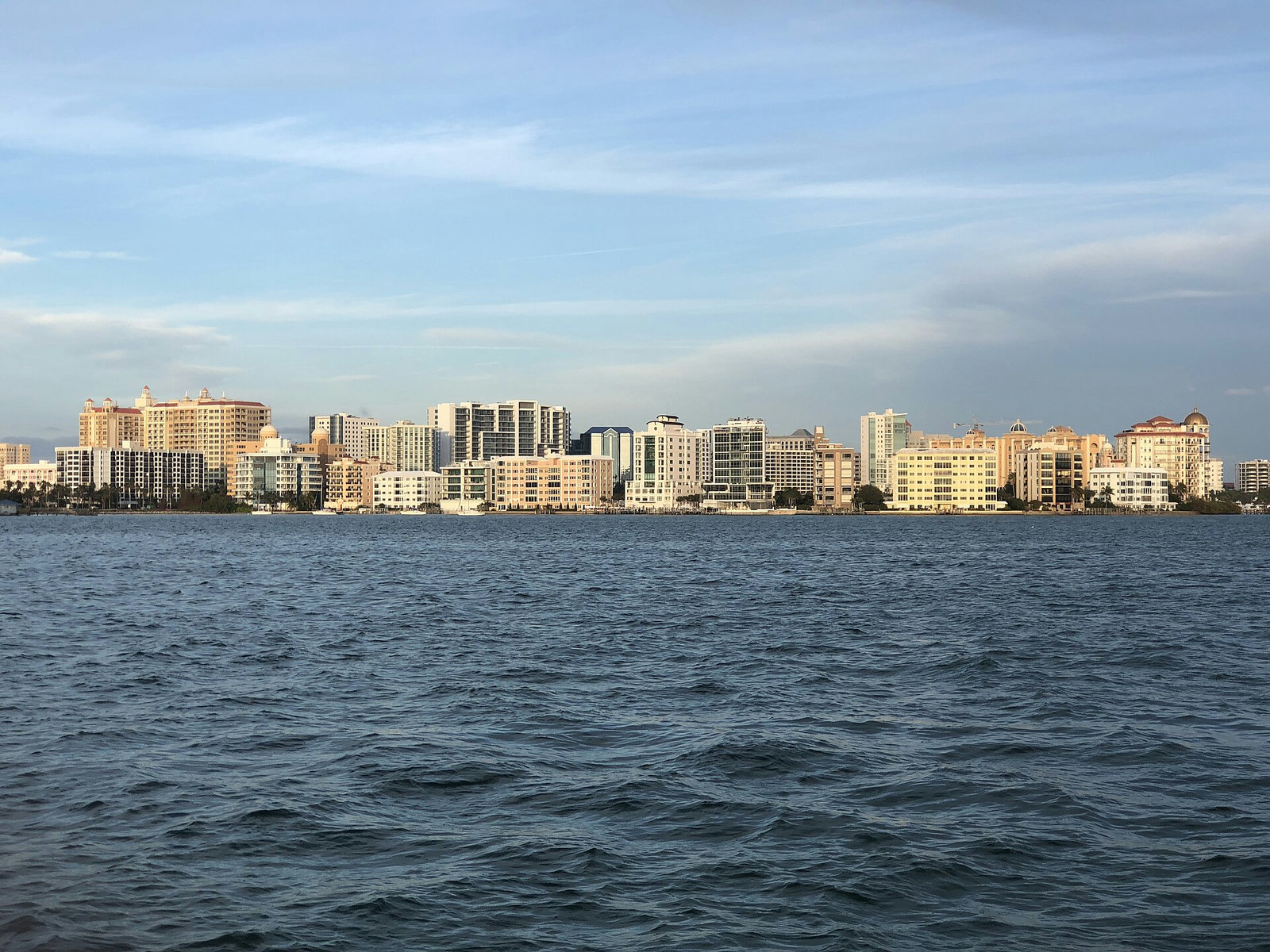
Sarasota Vacation Rental Registration Fees Rise to $500 as Listing Count Reaches 700
Picture from Wikimedia Commons; licence CC BY 4.0; photographer Cullen Morgan

Lisbon short-term rental accommodations drop 37% as cancelled units stay off housing market
Read the desk every morning.
Leave your address for the Booked News briefing: the day's figures on rates, occupancy, demand, fees, supply and returns, each with its source, in one short email.
Comment thread