Vacation rental supply expansion squeezes market occupancy as local caps loom
KeyData reports 64.2% of managers expect higher guest competition in 2027 as municipal caps threaten to reduce active listing counts in coastal markets by up to 80%.
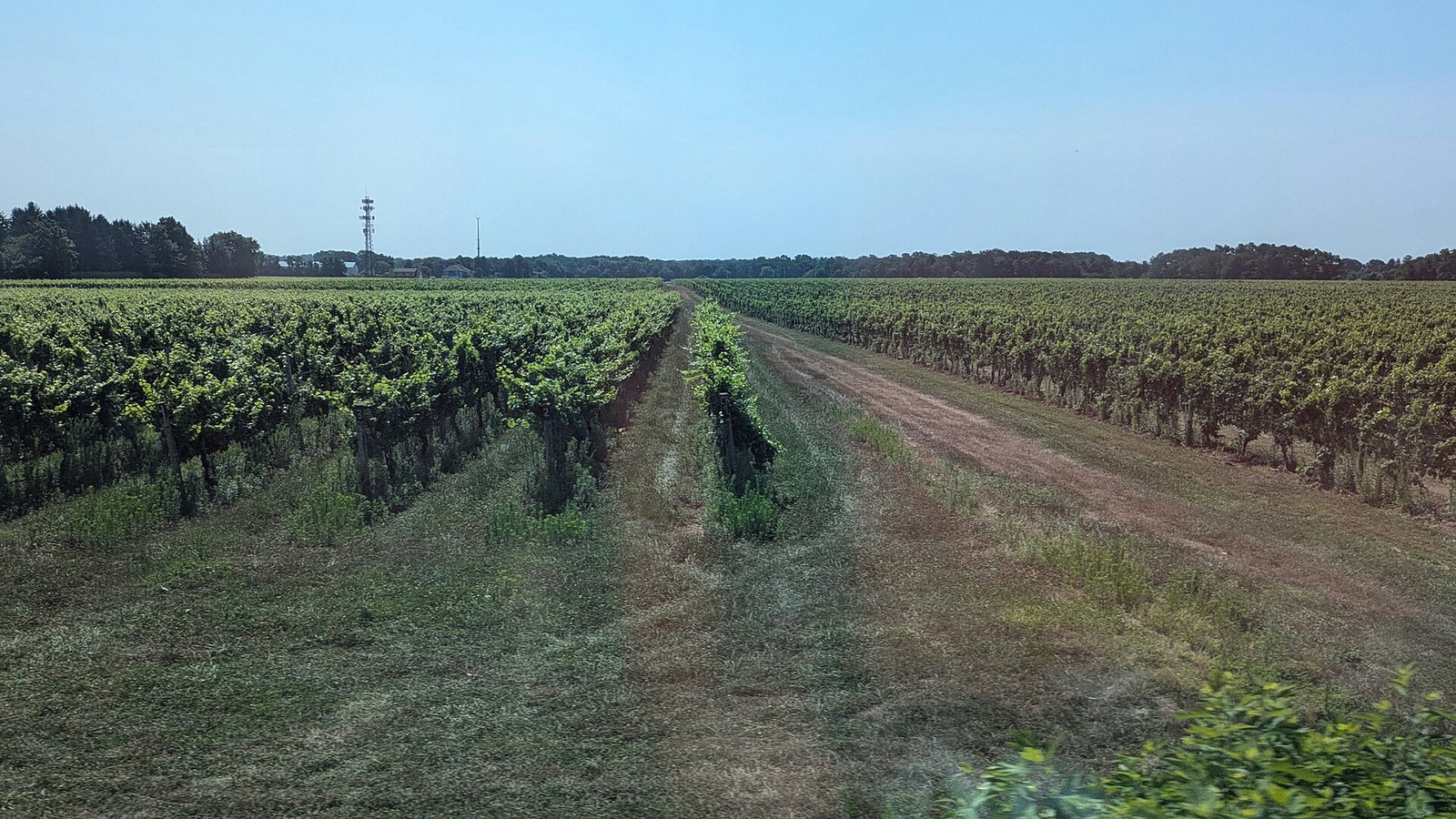
Vineyards stretching across the countryside on the North Fork of Long Island, photographed in 2024. Picture from Wikimedia Commons: “North Fork vineyards from LIRR 240727”. Photographer ComplexRational. Licence CC BY-SA 4.0. Resized from the original.
KeyData reported on 5 October 2026 that 64.2% of professional vacation rental managers expect guest competition to increase in 2027. The continued expansion of active property supply across leisure destinations is altering inventory dynamics, forcing operators to adapt pricing strategies as listing counts grow faster than total guest stay nights.
In mature resort areas like Southold on Long Island's North Fork, market tracking via Rentalscape software identified 640 active short-term rental properties generating $27.5 million in total host revenue, according to Southold Town Attorney Ben Johnson. While inventory has expanded across popular coastal corridors, local municipalities are simultaneously moving to cap listing density. Southold officials proposed capping vacation rental permits at 1% of single-family homes in each hamlet, which would reduce permitted properties to 119 homes, representing an 80% decrease from current active listings.
How the metric works
Active listing supply measures the volume of residential homes, apartments, and dedicated vacation properties offered for short-term booking within a specific geographical market. When listing growth outpaces traveler demand growth, individual properties experience occupancy compression, meaning each home captures fewer booked nights across the calendar year.
KeyData projections show that while 76.8% of professional property managers expect total revenue growth in 2027, only 55.5% anticipate raising their average daily rate. Instead, 65.2% of operators plan to drive revenue gains by increasing occupancy rates. This indicates an industry-wide pivot away from steep rate increases toward driving calendar density and booking volume.
AirDNA data reveals how baseline rates in seasonal coastal destinations experienced significant growth over recent years. In Southold, average summer nightly rates rose from $463 in 2019 to $764 in 2026, marking a 65% increase. However, AirDNA metrics show that the median summer reservation lasted just 3 nights, demonstrating that short weekend trips remain the core driver of leisure stays.
“A 30-night minimum removes the weekend and short-stay premium, and a whole-season lease must cover all of an owner's income in a single booking.”
When short-stay stays represent the bulk of consumer demand, expanding overall listing supply forces individual property owners to compete more aggressively for weekend bookings, reducing calendar buffer days during shoulder periods.
How it was measured
Industry supply and performance metrics derive from market analytics firms, municipal tracking software, and official government records. KeyData published its 2027 Vacation Rental Industry Outlook on 5 October 2026, surveying professional property management firms regarding revenue expectations, pricing strategies, channel reliance, and technology integration.
At the municipal level, Southold Town monitored illegal and active short-term rentals using Rentalscape software. Southold Town Attorney Ben Johnson reported that latest software figures showed about 640 short-term rental properties operating in town, generating $27.5 million in host revenue with a town-reported average nightly rate of $902.
Historical pricing data compiled by AirDNA examined ZIP-code-based North Fork markets, including separately regulated Greenport Village, tracking summer nightly rates from 2019 to 2026. Contextual housing data originates from the U.S. Census Bureau and local government studies. Southold's 2023 Community Housing Plan noted that seasonal residences accounted for nearly 37% of the town's total housing stock in 2020. U.S. Census Bureau figures show Southold's median household income stands at $116,667, while 54% of town renters spend at least 30% of their income on housing costs.
Property valuation data published by Newsday showed the median home sale price on the North Fork reached $1.25 million in the third quarter, while Realtor.com reported a median single-family home price of $999,000 at the end of 2025.
Pricing power and channel distribution
As listing supply saturates local geographic submarkets, operators lose individual pricing power and rely heavily on major distribution portals to maintain booking volume. KeyData reported that 25.1% of property managers plan to increase their reliance on Online Travel Agencies in 2027, whereas 17.8% intend to scale back direct booking pushes in favor of channel visibility.
To support higher operational volume without escalating labor overhead, property managers are rapidly incorporating software automation. KeyData reported an overall artificial intelligence adoption rate of 89.0% among vacation rental property managers. Specific operational uses include guest messaging automation at 50.5%, social media content generation at 42.0%, and portfolio performance insights at 39.8%.
Rising listing competition is compounded by local opposition and regulatory barriers. KeyData metrics show that 64.2% of managers expect increased guest competition, 39.5% struggle with permitting hurdles, and 28.2% encounter active opposition from local residents. Only 28.5% of surveyed operators reported facing no major regulatory or community challenges.
Regulatory caps and housing market effects
In response to short-term rental growth and rising local housing pressures, municipal authorities are adopting strict permit caps. Southold has banned stays under 14 days since 2015, but officials noted enforcement proved virtually impossible. The town's proposed draft legislation replaces the old rule with a cap restricting short-term rental permits to 1% of single-family homes in each hamlet, distributed through a random lottery.
Based on Southold's town planning analysis, the 1% cap would make 119 homes eligible for permits, cutting active vacation rental listings by 80%. Southold budgeted $120,000 in its 2027 budget for a full-time code enforcement director ahead of launching the permit lottery, with full system enforcement scheduled for 2028. Fishers Island, a 4-square-mile island accessible only by ferry from New London, Connecticut, is excluded from the law due to practical enforcement limitations.

“We understand this is a seasonal economy. ... Most of the complaints we get are from people that it’s just a revolving door next to their house.”
Proposed operational mandates require permit holders to maintain $1 million in general liability insurance, establish parking and waste management plans, pass two-year safety inspections, and maintain an owner or representative available to respond to complaints within 60 minutes. Properties with cesspools are excluded from permit eligibility.
Local business leaders emphasize the balance between tourism revenue and housing access. Amanda Giuliano, co-chair of Southold's Economic Development Committee, noted that residential affordability directly impacts the tourist economy workforce.
If we don’t have people working, there will be no tourism.”
However, academic research indicates that restricting short-term vacation rental supply does not automatically return properties to the long-term housing market. Alexander Marsella, an economist at Berry College, authored an August 2026 working paper examining New York City's 2023 short-term rental restrictions. The study found that active Airbnb short-term listings dropped 87% following regulatory enforcement, yet long-term rental inventory showed no significant increase and residential rent prices remained unaffected. Marsella noted that second-home owners in seasonal beach markets frequently retain properties for personal family use or traditional seasonal leases rather than renting to full-time residents.
What to watch
When assessing potential vacation spots, resort leads, executives, and property buyers can watch a few key indicators to measure market overcrowding and local policy threats:
- Monitor local municipal council agendas for proposed permit caps, liability requirements, or minimum stay threshold changes.
- Track baseline occupancy rates across shoulder seasons rather than relying exclusively on peak summer performance.
- Compare channel distribution costs between direct booking platforms and major OTAs as competition increases.
- Review property infrastructure compliance, including septic systems and local safety inspection requirements, prior to capital allocation.
Figures checked by the standards desk (Paul Ostrowski): every figure in this story was matched to the source material listed below before publication.
Tally from the accuracy gate: 74 details tested; 74 found in the stored source; nothing cut.
Sources
- Newsday - Southold to limit number of Airbnbs and other short-term vacation rentals (November 8, 2026).
- Realtor.com - Why a Long Island Town’s Crackdown on Vacation Rentals May Not Fix Its Housing Crisis (November 3, 2026).
- Nomad Lawyer - US Vacation Rental Market 2027 Outlook: 76.8% of Property Managers Predict Revenue Growth (October 7, 2026).
An analysis column by the Booked News desk. Every figure is taken from the sources above.

Related stories
Dar es Salaam short stay listings generate $9,200 annual revenue as supply drops
Picture from Wikimedia Commons; licence CC BY-SA 4.0; photographer LittleT889



Comment thread