Swiss Non-Hotel Stays Rebound on Mountain Demand as Campgrounds Lead Summer Volume
TCS Camping posted a 9 percent gain in summer overnight stays while Interhome recorded a 13 percent increase in bookings for the upcoming winter break.
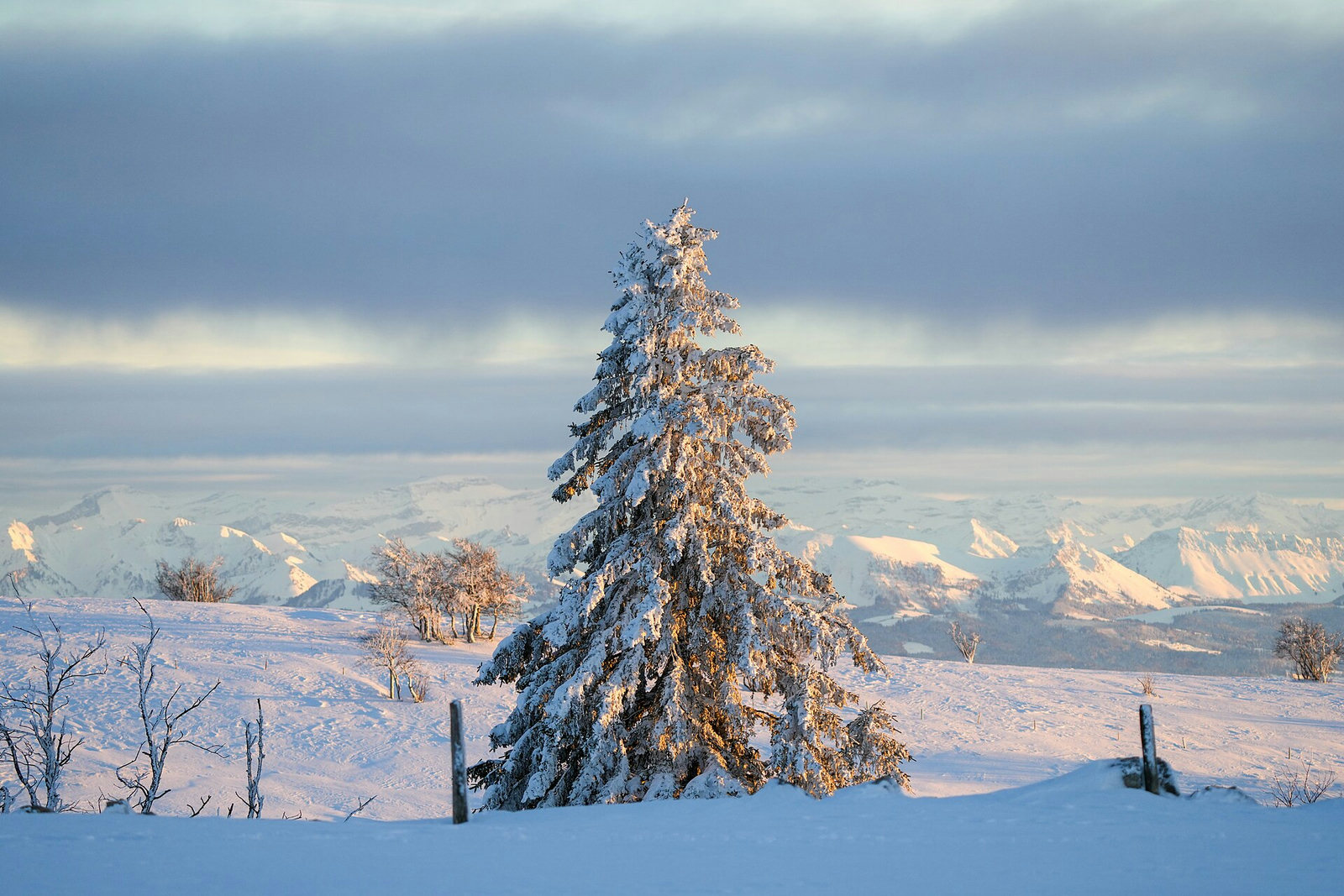
The Swiss Alps seen across a snowy landscape from Creux du Van in 2021. Picture from Wikimedia Commons: “036 Snow Tree and Swiss Alps at Creux du Van Photo by Giles Laurent”. Photographer © Giles Laurent , gileslaurent.com , License CC BY-SA. Licence CC BY-SA 4.0. Resized from the original.
Swiss campground operator TCS Camping recorded a 9 percent increase in overnight stays during the summer season, leading a broader recovery across the country’s non-hotel lodging sector, according to figures released on Tuesday by the Swiss Parahotellerie Association. The summer gains followed an opening quarter in which overnight stays dropped 6 percent across the sector, before lodging demand stabilized with an increase of 0.4 percent in the second quarter.
The collective performance figures released by the industry group show that individual lodging providers achieved modest to substantial gains during the summer months, with rural properties and alpine destinations outperforming urban centers. While campgrounds captured the largest gains, traditional holiday rental agencies maintained steady volume, and forward bookings for the 2026/27 winter season show elevated demand for core holiday windows.
What the data shows
The performance metrics published by the Swiss Parahotellerie Association trace an uneven recovery across accommodation segments through the first three quarters of the operating calendar. Non-hotel accommodations—a category that Swiss official statisticians define to include vacation apartments, vacation homes, youth hostels, and collective campgrounds—opened the year under pressure. Overnight stays fell by 6 percent in the first quarter compared to the prior year. The trajectory shifted in the second quarter, when sector-wide volume recorded a modest increase of 0.4 percent.
Momentum broadened during the summer trading months, which the association identified as especially vital for outdoor and campground operators. Performance varied significantly by business model and accommodation format:
- TCS Camping generated the largest relative gain among reported organizations, logging a 9 percent increase in overnight stays.
- Vacation property provider Reka registered a 2 percent increase in overnight stays.
- Swiss Youth Hostels recorded an increase of 0.5 percent in overnight stays.
- Vacation rental agency Interhome recorded stable overnight stays, matching its performance from the prior summer.
Geographic performance diverged sharply across cantons and municipal markets. Guest demand concentrated heavily in mountain areas and rural regions. In contrast, non-hotel operations situated in Swiss cities faced softer demand, with business activity falling short of prior-year volumes in multiple urban areas. Favorable weather conditions late in the summer cycle altered late-season volumes, as warm weather throughout September produced additional overnight stays that flowed primarily to outdoor campsites.
For the upcoming 2026/27 winter season, the association reported that reservation levels across major lodging organizations are tracking mostly at or above levels seen twelve months earlier. Individual operators report distinct booking profiles across the winter calendar:
- Swiss Youth Hostels posted a 6.7 percent increase in winter season reservations, assisted in part by the operational launch of new hostel locations.
- Reka reported that reservation volumes for the winter season are tracking on par with the previous year.
- Interhome documented a split winter schedule, with bookings for the traditional winter break period running 13 percent higher than last year, while reservations across the Christmas and New Year’s holiday window are running 9 percent lower.
- The Swisscamps camping association stated that it anticipates an increase of about 3 percent in winter overnight stays.
How it was measured
The findings were compiled and announced on Tuesday by the Swiss Parahotellerie Association, the primary trade body representing non-hotel lodging operators across Switzerland. In Swiss statistical methodology, the parahotellerie sector encompasses accommodation establishments outside the conventional hotel classification, including managed vacation apartments, privately rented vacation chalets, collective hostels, and outdoor campgrounds.
The underlying figures reflect self-reported operational results and reservation registry data from several of Switzerland’s largest commercial and cooperative lodging entities: TCS Camping (the touring club camping division), Schweizer Reisekasse (Reka), Swiss Youth Hostels (Schweizer Jugendherbergen), and Interhome (the vacation rental division of the Hotelplan Group), alongside forward projections collected from the Swisscamps camping association. The source announcement did not disclose exact underlying transaction tallies, absolute guest counts, room-night sums, or currency revenue totals for the respective reporting periods.
Divergence between rural and urban markets
The operational split between rural, alpine inventory and urban accommodation illustrates a continuing shift in consumer preference within the Swiss domestic and incoming travel market. Rural and mountain lodgings captured the bulk of summer interest, supported by sustained leisure traveler focus on open spaces, outdoor recreation, and altitude destinations during warm weather intervals. Warm temperatures extending through September extended the operational season for campsites and countryside holiday homes past the typical August peak.

Conversely, parahotellerie providers operating in metropolitan zones struggled to match prior-year booking velocity. The association reported that urban non-hotel accommodation fell short of the previous year’s performance in several cases. In metropolitan markets, short-stay holiday apartments and municipal hostels compete directly with business travel hotels and institutional hospitality assets. Without the tailwind of leisure outdoor demand or extended September recreational travel, urban parahotellerie units faced stagnant or contractionary booking flows.
This divide indicates that property portfolios concentrated exclusively in Swiss metropolitan districts endured an underperforming summer compared to operators holding diversified assets in alpine valleys, lakeside regions, or rural cantons. For decentralized operators, portfolio balance across geographic zones insulated overall company performance against localized weakness in urban centers.
Calendar shifts in winter reservations
Forward pacing figures for the 2026/27 winter cycle reveal marked volatility based on calendar timing and customer scheduling patterns. At Interhome, where bookings for the winter break period stand 13 percent above last year’s figures, reservations for Christmas and New Year’s lag last year by 9 percent. This divergence underscores how holiday placement and school vacation scheduling influence consumer commitments to private home rentals.
The lag in early winter bookings indicates that travelers are hesitating to commit capital to high-rate peak holiday weeks far in advance, particularly when early-season snow cover remains uncertain. The Swiss Parahotellerie Association pointed out that subsequent booking volume for the rest of the winter season remains heavily reliant on weather conditions and natural snowfall levels. When early-season alpine snow cover is delayed, holidaymakers defer bookings until operational ski conditions are confirmed.
In contrast, family-oriented winter break windows in February and early March show strong early commitment. The 13 percent surge at Interhome suggests that guests are prioritizing guaranteed access during dedicated school vacation weeks where lodging availability in prime mountain resorts is strictly limited. Meanwhile, Swiss Youth Hostels’ 6.7 percent overall increase demonstrates sustained advance demand across budget-conscious leisure segments, further boosted by expanding unit capacity through new network openings.
Campground resilience and winterization
The summer expansion at TCS Camping, marked by a 9 percent increase in overnight stays, confirms the structural strength of the outdoor hospitality category in Switzerland. Outdoor lodgings benefited from consumer demand for flexible domestic leisure options, with September’s warm weather extending operational viability and boosting walk-in and short-notice volume. This outperformance positioned campgrounds as the fastest-growing parahotellerie sub-segment during the summer months.
The momentum developed during the summer is carrying directly into cold-weather operations. Swisscamps, the national camping association, projected an increase of about 3 percent in overnight stays for the winter season. Winter camping has transformed from a niche pursuit into an established operational sub-sector in the Swiss Alps, providing steady off-season occupancy for sites equipped with insulated pods, heated utility infrastructure, and direct transit access to ski infrastructure.
For independent property owners, the durable performance of campgrounds and rustic outdoor units highlights consumer interest in flexible, self-contained travel models. These accommodations often trade at lower baseline operational overheads than fully staffed urban properties, allowing site managers to retain operating margins even when consumer booking patterns turn volatile.
What to watch
Lodging managers, regional property operators, and short-term accommodation investors tracking the Swiss market should monitor several operational variables ahead of the winter season:
- Early winter snowfall patterns and temperature drops across primary Swiss ski resorts, which the association flagged as the decisive trigger for late-reservation volumes.
- Pricing strategies for remaining Christmas and New Year’s inventory, where operators facing a 9 percent booking lag may need to adjust minimum stay requirements to attract late commitments.
- The pace of winter break occupancy conversions, tracking whether the 13 percent booking lead at vacation rental agencies translates into complete mid-winter sellouts.
- Urban parahotellerie recovery indicators, to see if city-based apartments can reverse summer demand deficits during winter commercial events and urban holiday markets.
- Expansion plans by organized hostel networks and branded campground chains, following Swiss Youth Hostels’ use of new physical locations to generate a 6.7 percent reservation gain.
Figures checked by the standards desk (Paul Ostrowski): every figure in this story was matched to the source material listed below before publication.
Tally from the accuracy gate: 34 details tested; 31 found in the stored source or in the sources listed below; 3 allowed as background knowledge; nothing cut.
Sources
- Bluewin - reported November 17, 2026.
- de.wikipedia.org - Schweizer Reisekasse – Wikipedia.
- youthhostel.ch - Unternehmen & Organisation | Schweizer Jugendherbergen.
Read and analysed by the Booked News desk.

Related stories

European short-term rental rates rose in December 2025 as Christmas market demand grew
How last minute discounts affect average daily rates in beach markets
Picture from Wikimedia Commons; licence CC BY-SA 4.0; photographer Ryan Sholin
Greece Short-Term Rental Revenue per Available Night Rises 8.7% in 2026
Picture from Wikimedia Commons; licence CC BY-SA 4.0; photographer C messier
Fall short-term rental reservation nights projected to crack 100,000 as regional demand grows
Picture from Wikimedia Commons; licence CC BY-SA 4.0; photographer RomanKahler
Comment thread